Why Gutter Guards Benefit Apartment Buildings in 2026
Why Gutter Guards Benefit Apartment Buildings in 2026
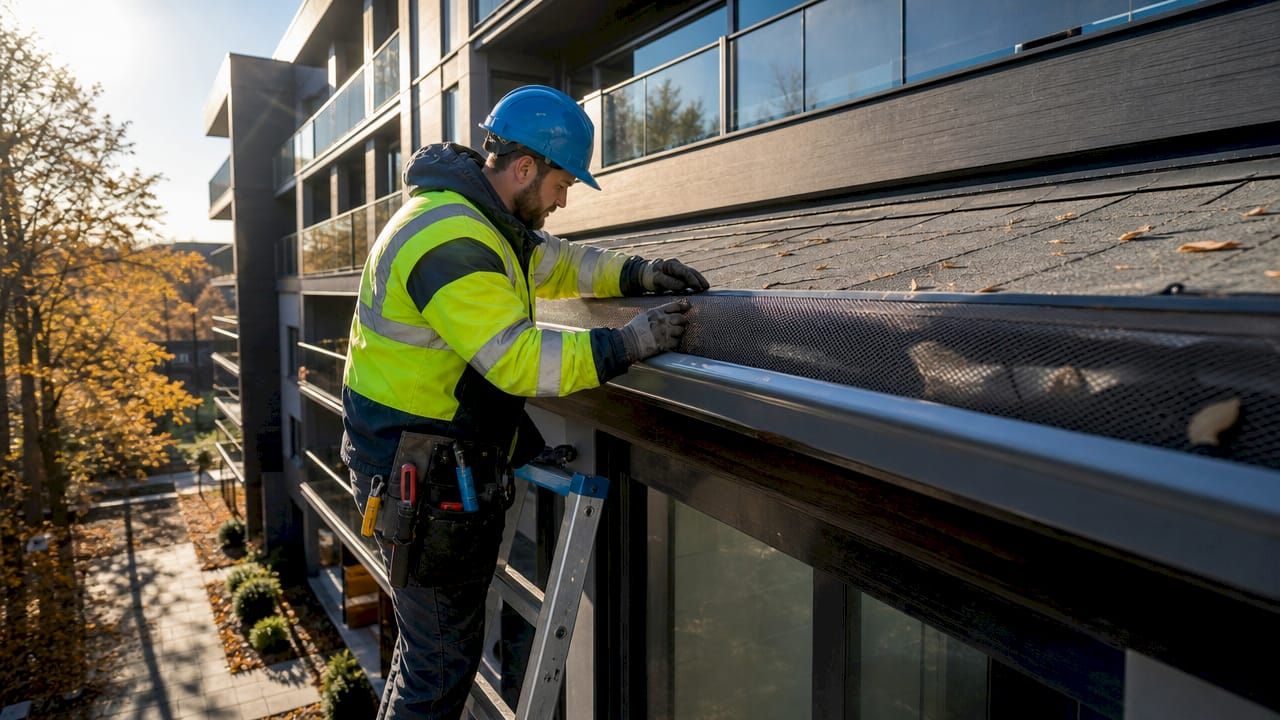
Gutter guards are debris-filtering systems installed over gutters to block leaves, twigs, and sediment while keeping water flowing freely. For apartment buildings, they are not optional upgrades. They are a core part of responsible property management. Understanding why gutter guards benefit apartment buildings comes down to three realities: water damage is expensive, maintenance disruptions frustrate tenants, and liability from neglected gutters adds up fast. Nearly 40% of property issues stem from exterior water management failures like clogged gutters, leading to mold and structural decay. That number alone should move gutter protection to the top of your maintenance checklist.
Why gutter guards benefit apartment buildings more than single-family homes
Apartment buildings face a compounding risk that single-family homes do not. A single clogged downspout can trigger water intrusion and mold growth across multiple units simultaneously. That means one blocked drain can generate multiple tenant complaints, multiple repair invoices, and multiple potential insurance claims at the same time.
The EPA's moisture control guidance classifies persistent interior moisture as a direct health hazard. When gutters overflow against a building's fascia and foundation, water finds its way inside through seams, window frames, and wall cavities. In a multifamily structure, that path runs through shared walls and ceilings, spreading damage far beyond the original entry point.
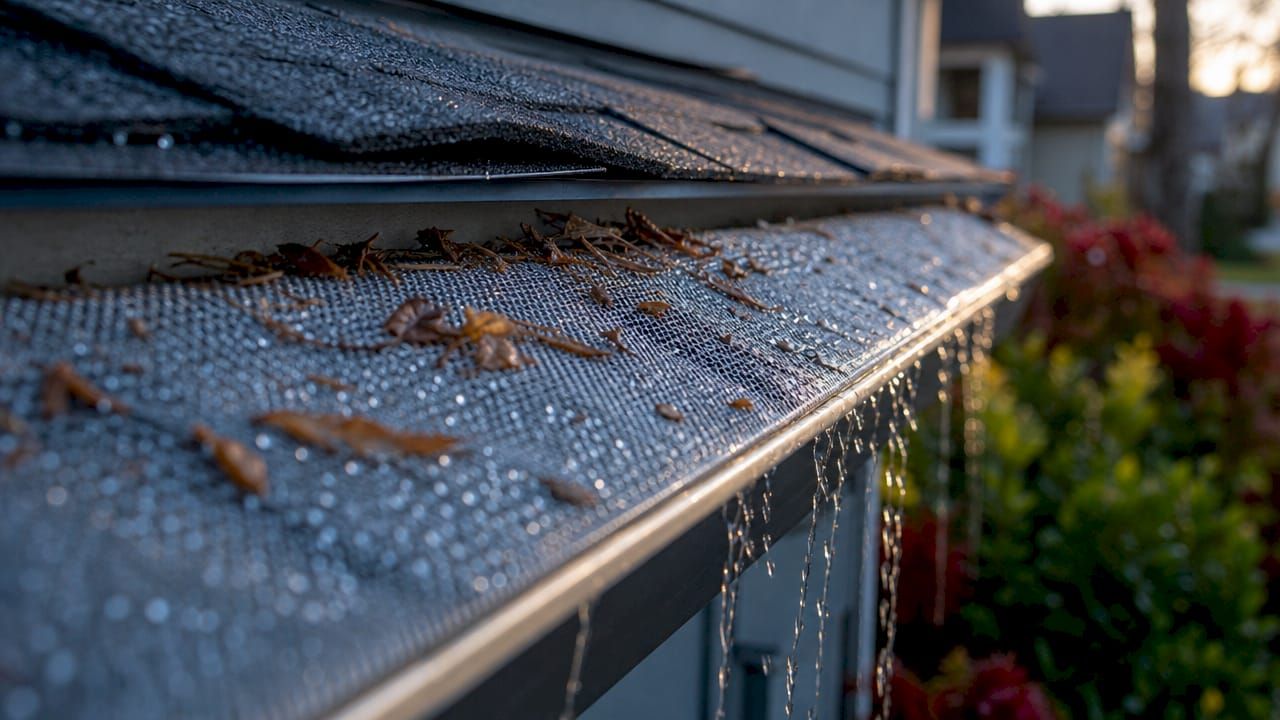
Gutter protection for apartments works by stopping debris before it reaches the downspout. Mesh and micro-mesh guards filter out leaves and roof grit while surface tension pulls rainwater into the gutter channel. The result is consistent drainage without the blockages that cause overflow.
The table below summarizes the types of water damage that gutter guards directly prevent in apartment settings.
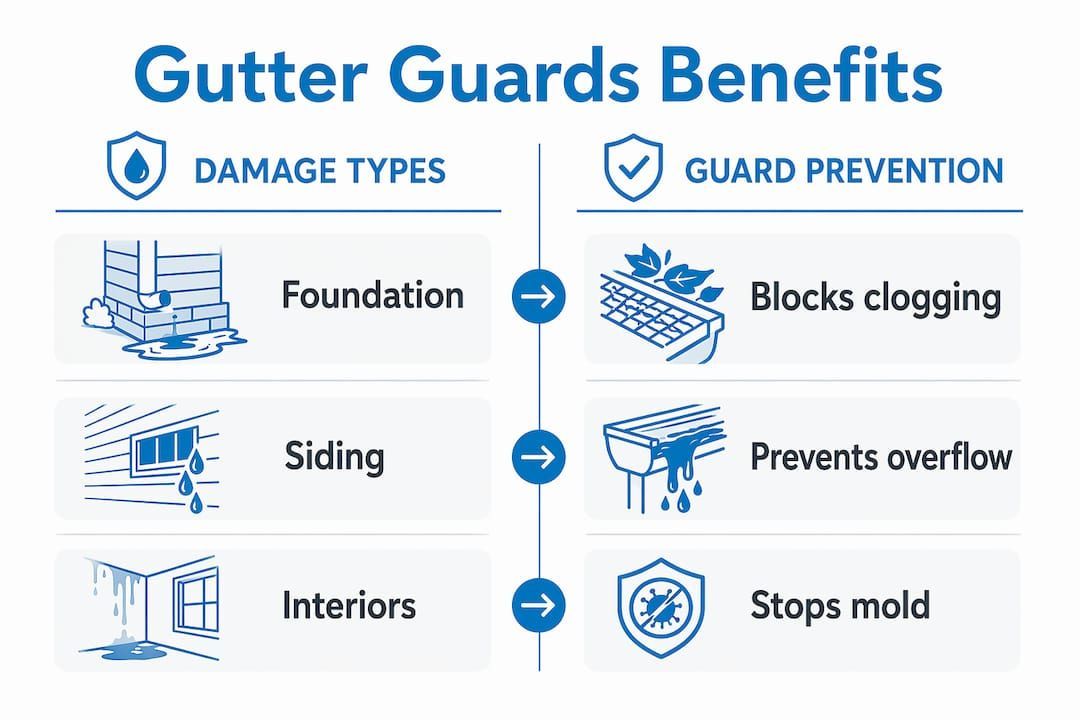
| Water damage type | How clogged gutters cause it | How gutter guards prevent it |
|---|---|---|
| Foundation settling | Overflow saturates soil around the base | Guards maintain consistent drainage away from the foundation |
| Fascia and soffit rot | Standing water in gutters soaks wood trim | Debris-free gutters drain quickly and stay dry |
| Mold in wall cavities | Water intrusion through seams and frames | Proper drainage eliminates the moisture source |
| Siding staining and erosion | Overflow runs down exterior walls | Guards keep gutters clear and water directed downward |
| Basement and crawl space flooding | Saturated soil migrates water inward | Redirected drainage keeps soil dry around the perimeter |
22.6% of water-related home insurance claims are linked to gutter overflow damage. For a property manager overseeing multiple buildings, that statistic represents real financial exposure across your entire portfolio.
Is installing gutter guards cost-effective for apartment properties?
The short answer is yes, and the math is straightforward. Gutter guards reduce how often you need professional cleaning, which cuts labor costs directly. They also reduce the frequency of emergency calls caused by sudden overflow during heavy rain, which are always more expensive than scheduled maintenance.
The cost advantages of gutter protection for apartments go beyond cleaning fees:
- Fewer ladder jobs. Gutter guards reduce the need for frequent ladder use, cutting liability exposure and the logistical complexity of coordinating crews across a multistory building.
- Lower emergency repair costs. Proactive gutter care reduces emergency service calls and extends the life of both gutters and roofing materials.
- Reduced insurance risk. Some insurance providers require evidence of proactive gutter maintenance for buildings to avoid denial of water damage claims.
- Long-term asset value. Clean, functional gutters protect siding, fascia, and foundation integrity across every building in your portfolio.
Pro Tip: To calculate your return on investment, add up your annual gutter cleaning costs, any emergency repair invoices from the past three years, and your insurance deductible for one water damage claim. Compare that total to the installed cost of gutter guards across your buildings. Most property managers find payback within two to four years.
Standardizing gutter guard installations across multiple properties also creates operational efficiencies. When every building uses the same system, your maintenance team learns one protocol, orders one set of parts, and schedules inspections on a unified calendar.
What types of gutter guard systems work best for complex apartment rooflines?
Not all gutter guard systems perform equally on apartment buildings. The architecture of multifamily properties creates drainage challenges that standard residential products are not built to handle.
Complex roofs with parapets, valleys, and box gutters require customized gutter guard configurations to maintain effective drainage. A universal product designed for a simple gabled roof will fail under the debris loads and water volumes that a large apartment complex generates.
The four main types of gutter guards each have distinct strengths and weaknesses in multifamily applications:
| Guard type | How it works | Best for apartment use | Key limitation |
|---|---|---|---|
| Micro-mesh | Fine stainless steel mesh filters all debris | High-volume drainage, complex rooflines | Higher upfront cost |
| Screen | Perforated cover blocks large debris | Budget-conscious properties with light tree cover | Fine debris and seeds pass through |
| Solid (reverse curve) | Water clings to curved surface and drops in | Low-pitch gutters and box gutter systems | Can overflow in heavy rain |
| Hybrid | Combines mesh and solid cover features | Mixed roofline geometries | Requires professional sizing |
When selecting the best gutter systems for apartment buildings, prioritize these factors:
- Debris volume. Properties near mature trees need micro-mesh or hybrid systems.
- Roof pitch and geometry. Parapets and valleys concentrate water flow; guards must handle surge volumes.
- Gutter width. Commercial box gutters often require custom-width guards not sold off the shelf.
- Material durability. Aluminum and stainless steel outperform plastic in Northern California's temperature swings.
You can review commercial gutter system types in detail to match the right configuration to your building's specific geometry.
How do gutter guards improve tenant satisfaction?
Tenant satisfaction connects directly to how little disruption tenants experience from building maintenance. Gutter guards reduce that disruption in ways that are easy to underestimate until you add them up.
Tenant satisfaction improves with gutter guards because fewer maintenance visits mean fewer interruptions to daily life. Crews working near windows, balconies, and walkways create noise, safety concerns, and access issues. Reducing those visits is a direct quality-of-life improvement for your tenants.
"Gutter protection is a critical infrastructure investment, not just a maintenance expense. Property managers who treat it as infrastructure protect their building's foundation and avoid thousands in remediation costs while keeping tenants in a safe, well-maintained environment."
The health angle matters too. Mold caused by water intrusion is a documented trigger for respiratory issues. When gutters fail and moisture enters wall cavities, tenants in adjacent units face health risks they did not sign up for. Preventing that outcome with proper gutter protection is part of your duty of care as a property manager.
Curb appeal also plays a role in tenant retention. Overflowing gutters stain siding, kill landscaping, and signal neglect to prospective tenants. Clean, functional gutters are invisible when they work correctly, and that invisibility is exactly what you want. You can learn more about how roofing inspections protect tenants as part of a broader maintenance strategy.
Pro Tip: When scheduling gutter maintenance, send tenants a 48-hour notice with a specific time window. Brief, predictable visits cause far less frustration than unannounced crews showing up at random.
What are the best practices for maintaining gutter guards on apartment buildings?
Gutter guards reduce maintenance frequency. They do not eliminate it. Fine debris like roof grit and biofilms accumulates on and inside guards over time, gradually restricting flow. A professional inspection catches this before it becomes a drainage failure.
Follow this maintenance schedule to keep your gutter guard systems performing at full capacity:
- Schedule professional inspections annually at minimum. For properties near heavy tree cover, biannual inspections in late fall and early spring are the standard.
- Clear the guard surface after major storms. Wind-driven debris can mat against mesh guards and block intake. A quick surface rinse restores flow without a full cleaning.
- Check downspout outlets at every inspection. Guards protect the gutter channel, but downspouts remain vulnerable to blockage from debris that passes through.
- Document every inspection with photos. Photo records protect you if an insurance claim arises and demonstrate proactive maintenance to your insurer.
- Integrate gutter guard maintenance into your roofing inspection schedule. A gutter maintenance guide for apartment complexes can help you build a unified calendar that covers gutters, guards, and roof surfaces in a single visit.
Pro Tip: Bundle gutter guard inspections with your annual roof inspection. One crew visit covers both systems, cuts coordination time, and gives you a complete picture of your building's exterior water management in a single report.
Multifamily properties with multiple buildings benefit most from a standardized protocol. When every building follows the same inspection cycle and uses the same guard system, your maintenance team works faster and your records stay consistent.
Key Takeaways
Gutter guards are a proven infrastructure investment for apartment buildings, reducing water damage risk, cutting maintenance costs, and improving tenant satisfaction across every building in your portfolio.
| Point | Details |
|---|---|
| Water damage risk is compounded | One clogged downspout can damage multiple units simultaneously in a multifamily building. |
| Cost savings are measurable | Fewer cleanings, fewer emergency repairs, and lower liability exposure add up to clear financial returns. |
| System selection matters | Complex rooflines require customized guard types; universal products fail under heavy debris loads. |
| Tenant satisfaction improves | Fewer maintenance visits and better mold prevention directly reduce complaints and improve retention. |
| Annual inspections are required | Guards reduce debris accumulation but do not eliminate it; professional inspections keep systems flowing. |
Why I think property managers underestimate gutter guards
After working with property managers across Northern California for years, I keep seeing the same pattern. Gutter guards get treated as a nice-to-have rather than a core infrastructure decision. That framing costs money.
The math is not complicated. One water damage claim from a clogged gutter can exceed the cost of guarding every building in a mid-size portfolio. Add in tenant turnover driven by mold complaints, and the case for proactive gutter protection becomes obvious. Yet reactive maintenance remains the default because the failure mode is invisible until it is expensive.
What I have found is that property managers who treat gutter protection as infrastructure, the same way they treat HVAC or fire suppression, make better decisions. They standardize systems across buildings, schedule inspections on a fixed calendar, and document everything. That approach does not just save money. It builds the kind of property record that insurers and buyers respect.
The other thing most articles miss is the tenant trust angle. Tenants notice when a building is well maintained. They may not see your gutters, but they see dry ceilings, clean siding, and crews who show up on schedule rather than in a crisis. That perception drives lease renewals more than most property managers realize.
— Cesar
Shieldguardroofing's gutter protection for apartment buildings
Shieldguardroofing works with property managers across Northern California to install and maintain gutter guard systems built for multifamily properties. The team brings over 75 years of combined roofing experience to every project, which means they size systems to your building's actual roofline geometry rather than applying a one-size-fits-all product.

Whether you manage a single apartment complex or a portfolio of buildings, Shieldguardroofing's gutter and gutter guard services cover professional installation, scheduled inspections, and long-term maintenance support. For properties that also need broader exterior work, the team's commercial roofing services integrate gutter protection into a complete building envelope plan. Contact Shieldguardroofing to schedule an assessment and get a clear picture of what your buildings need.
FAQ
Do gutter guards actually work on apartment buildings?
Yes. 70% of homeowners who install gutter guards report high satisfaction and significant maintenance time savings, and the same drainage principles apply to multifamily structures. The key is selecting a system matched to the building's roofline complexity.
How often should gutter guards be inspected on a multifamily property?
Professional inspections should occur at least once per year, and twice per year for properties near heavy tree cover. Fine debris and biofilms accumulate inside guards over time and require removal to maintain flow.
What type of gutter guard works best for apartment buildings?
Micro-mesh guards perform best on most apartment buildings because they filter fine debris while handling high water volumes. Properties with complex rooflines, parapets, or box gutters may require custom-width or hybrid systems.
Can gutter guards reduce my insurance liability as a property manager?
Yes. Insurance providers may require evidence of proactive gutter maintenance to approve water damage claims. Installing guards and documenting annual inspections creates a maintenance record that supports your coverage.
How much do gutter guards reduce cleaning frequency for apartment buildings?
Gutter guards significantly reduce how often full professional cleanings are needed, though they do not eliminate maintenance entirely. Most properties move from multiple cleanings per year to one annual inspection with occasional surface clearing after major storms.
Recommended