Stop Ember Ignitions: 3 Siding Fixes California Homes Must Do
Stop Ember Ignitions: 3 Siding Fixes California Homes Must Do
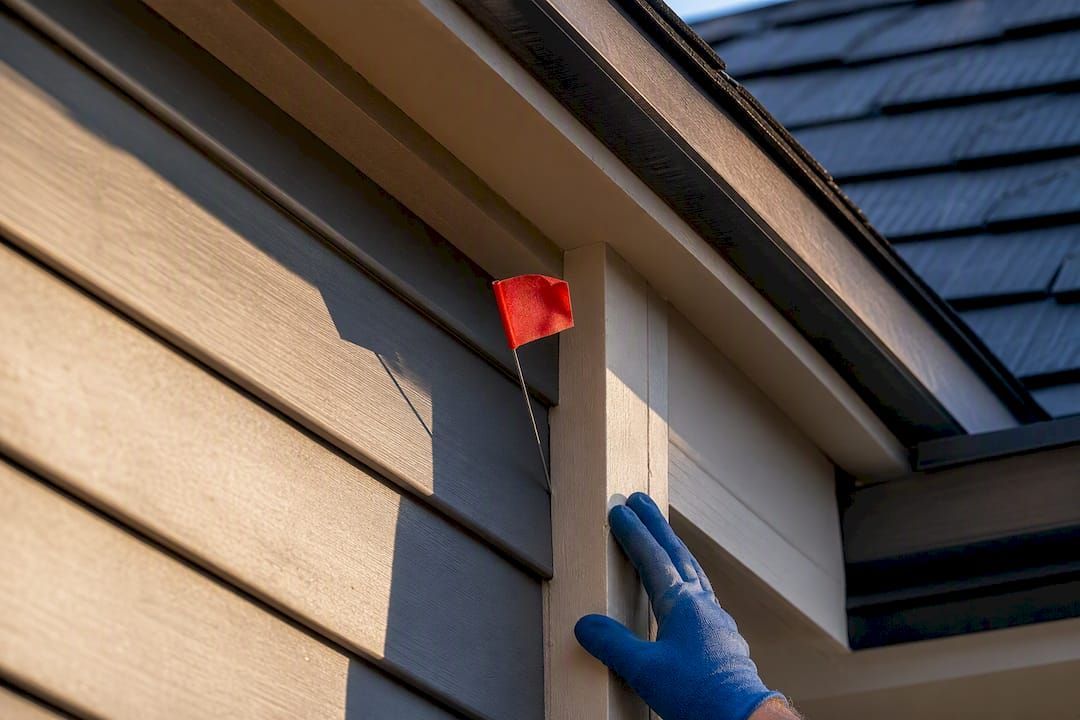
Noncombustible siding wins in California wildfire zones, but the material is only half the job. Fiber cement, three-coat stucco, and metal panels give you the best baseline protection, while vinyl and untreated wood are non-starters in most Wildland-Urban Interface areas. None of these matter if the vents, eaves, and ground-to-wall gap around that siding stay wide open to embers. Shield Guard Roofing treats every re-side as an assembly project, not a materials swap, and that's the mindset that actually protects a house.
TL;DR:
- Noncombustible siding options like fiber cement, stucco, and metal panels are the only materials that reliably meet California wildfire requirements, but installation quality and assembly details are critical.
- Proper sealing of vents, eaves, and ground-to-wall gaps is essential because embers can enter through these vulnerabilities regardless of siding material.
- California code mandates specific testing and listing, such as OSFM listing numbers, for siding products to pass inspections in wildfire zones, especially during full or major remodels.
- Emphasis on detailed assembly and proper installation, including sealed sheathing and ember-resistant vents, is more impactful than just choosing a fire-resistant material.
- Costs for wildfire-resistant siding vary, but prioritizing vulnerable details like vents and zone zero clearance offers cost-effective protection and can be integrated into roofing projects.
What Siding Materials Actually Meet California's Wildfire Rules?
Not all "fire-resistant" claims mean the same thing, and the gap between marketing language and code language is where a lot of homeowners get burned, literally and financially. California's framework sorts exterior materials into three practical buckets: noncombustible, ignition-resistant, and combustible. Knowing which bucket your siding sits in determines whether it passes inspection in a wildfire zone.
Noncombustible means the material passes ASTM E136, a lab test that measures whether something contributes fuel or heat when burned. Ignition-resistant is a lower bar. Treated wood products, for instance, resist ignition for a period but can still combust under sustained exposure. Then there's the surface-burning rating from ASTM E84, which produces the Class A, B, or C label you'll see on product spec sheets. Class A is what you want on a home in a fire hazard severity zone.
Here's what actually holds up on California exteriors:
- Fiber cement (plank, panel, or shingle profile) is noncombustible under ASTM E136 and typically carries a Class A rating, making it the most common choice for wildfire retrofits.
- Three-coat stucco over a code-compliant lath assembly is noncombustible and has decades of track record in fire-prone parts of the state.
- Metal siding (steel or aluminum lap and panel systems) is noncombustible and holds up well against radiant heat, though it can telegraph heat inward if the assembly behind it isn't properly detailed.
- Stone and brick veneer are noncombustible but add weight and cost that most retrofit budgets don't accommodate.
- Listed fire-retardant-treated (FRT) wood can satisfy ignition-resistant code paths, but the treatment weathers over time and loses effectiveness, which is why many specifiers steer clients toward noncombustible options instead for long-term reliability, according to guidance on fiber cement and stucco performance.
Vinyl siding is disqualified outright in most WUI applications. It melts and deforms at relatively low temperatures, and untreated wood siding is exactly the kind of fuel embers are looking for. Both categories also come with a durability tradeoff worth knowing: fiber cement noncombustible siding needs factory or field-applied coatings that require repainting on a maintenance cycle, and painted coatings are cosmetic, not fire-rated additions.
What Does California Code Require for Wildfire-Exposed Siding?
If your parcel sits in a designated Fire Hazard Severity Zone, your siding choice isn't optional. It's regulated under Chapter 7A of the California Building Code, provisions that are moving into Title 24, Part 7 effective in 2026. The rule set hasn't changed in substance. It's being consolidated so exterior wildfire requirements live in one clearer part of the code rather than scattered across chapters.
Whether Chapter 7A applies to your project depends on two things: your parcel's zone designation and the scope of your work. New construction in a designated zone triggers full compliance automatically. A substantial remodel, generally one that touches a large share of the exterior wall area or involves reroofing plus re-siding together, usually triggers it too. A single wall's cosmetic repair typically does not, though local building officials make the final call, and CAL FIRE's own Home Hardening guidance recommends checking with your building department before assuming a partial-repair exemption applies.
This is where product listings save you time and arguments at the permit counter:
- The Office of the State Fire Marshal (OSFM) maintains a WUI Listed Products Handbook, and a product's listing number tells the plan checker it has already passed SFM 12-7A series testing.
- SFM 12-7A tests simulate ember exposure, radiant heat, and direct flame contact against wall assemblies, not just the siding board in isolation.
- Bringing OSFM listing documentation to your permit submittal cuts review friction dramatically compared to arguing a prescriptive compliance path from scratch.
Listed assemblies and prescriptive paths aren't the same thing. A prescriptive path lets you build a code-compliant assembly using generic material specs (minimum thickness stucco, for example) without a specific product listing. A listed assembly ties your permit to one manufacturer's tested system, which is often faster to approve but locks in that exact product.
The Details That Undo Even the Best Siding
You can install the most fire-resistant board on the market and still lose the house, because wind-driven embers cause most wildfire home ignitions, not a wall of advancing flame. Embers travel miles ahead of a fire front and settle into whatever gap they can find. Siding stops a direct flame impingement. It does nothing about a half-inch vent screen or an unsealed crawlspace opening.
Three spots fail most often on homes that assumed new siding was enough:
- Vents and eave gaps. Standard attic and foundation vents have mesh sized for insects, not embers. Ember-resistant vents use finer mesh rated for wildfire exposure, and open eaves without a soffit enclosure give embers a direct path into the attic space.
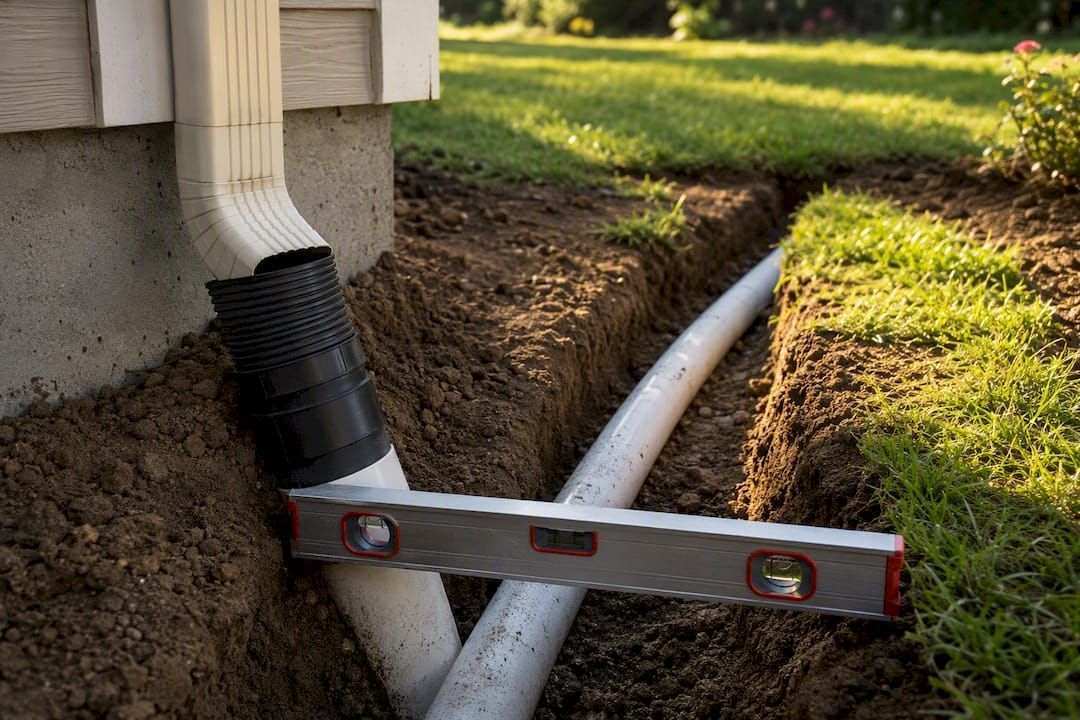
- The ground-to-wall transition, sometimes called Zone 0. Mulch, dead leaves, and stacked firewood against the foundation create a fuel bed right where siding meets grade. Siding installed without a proper termination detail, one that keeps the bottom edge clear of combustible debris and sealed against gaps, gives embers a foothold exactly where they land most often.
- Attached combustibles. Wood decks and fences that touch the house extend a fuel path straight to your wall. A fence rail bolted to fresh fiber cement siding defeats the purpose of the upgrade.
Pro Tip: Ask your contractor to walk the entire perimeter with you before work starts and point out every vent, gap, and combustible attachment. If the estimate only covers wall panels and doesn't mention vents, eaves, or the base termination detail, the scope is incomplete.
Choosing Materials and Scope Without Overspending
Budget rarely stretches to cover everything a wildfire-hardening project could include, so prioritization matters as much as material choice. Start with a decision checklist before you call a contractor:
- Confirm your parcel's Fire Hazard Severity Zone designation with your local building department or CAL FIRE's mapping tools.
- Ask any bidding contractor for OSFM listing numbers on the specific siding product they're proposing, not just a general "Class A" claim.
- Decide how much finish flexibility you want. Stucco and fiber cement both take paint; metal panel color is baked in at the factory and harder to change later.
- Require sealed bottom termination detailing in the written scope, not as a verbal assurance.
- Verify vent and eave upgrades are line items in the estimate, not assumed extras.
Installed costs vary by material and by how much trim, flashing, and scaffold work the job needs. Fiber cement plank siding tends to run in the moderate price range per square foot installed; three-coat stucco often costs more because of the multi-day, multi-coat labor process; metal panel systems can run higher still depending on panel profile and the amount of custom trim required at corners and openings. Complex rooflines and multi-story elevations add scaffolding costs that can rival the material cost itself.
When budget forces a choice, fix the vulnerable details first. Ember-resistant vents, sealed eave gaps, and a proper Zone 0 clearance around the foundation address the failure points responsible for most home ignitions, and they cost far less than a full re-side. A full material upgrade delivers the most complete protection, but a partial detail-first approach is a legitimate phase-one move if the whole project isn't affordable this year.
What to Expect During a Siding Retrofit
A wildfire-hardening re-side follows a sequence, and knowing it helps you spot a contractor cutting corners.
- Site assessment. A qualified crew walks the property, checks the Fire Hazard Severity Zone status, and notes every vent, eave condition, and combustible attachment.
- Coordination with roof work. If a reroof is happening at the same time, siding and roofing crews need to sequence flashing details together, especially at roof-to-wall transitions where noncombustible flashing closes ember entry paths.
- Sheathing prep. Old siding comes off, sheathing gets inspected and repaired, and any rot or gaps get addressed before anything new goes on.
- Weather-resistant barrier and flashing. A continuous WRB and properly lapped flashing go on before siding, sealing the wall against moisture and, indirectly, against ember intrusion through gaps.
- Rated siding and noncombustible trim installation. This is where cutting fiber cement demands silica precautions, wet-cutting or vacuum-shrouded saws, and respiratory protection for the crew.
- Vent and soffit upgrades. Ember-resistant vents go in, and open eaves get enclosed.
- Final inspection and documentation handover. Photos, listing numbers, and permit sign-off get compiled for the homeowner's records.
Keep every piece of that documentation. Insurance carriers and future buyers both care about proof that the exterior meets current wildfire standards.
Shield Guard Roofing's Approach to Wildfire-Hardening Siding
A family-owned company with a team providing combined roofing experience across Northern California, with in-house crews handling both roof and siding sequencing on the same project rather than passing work between subcontractors. That matters most at the roof-to-wall transition, where a disconnect between trades is exactly where embers find a gap. Homeowners get documentation covering material listings, warranty terms, and a final walkthrough before crews leave the site.
How Do Materials Really Compare Under California Conditions?
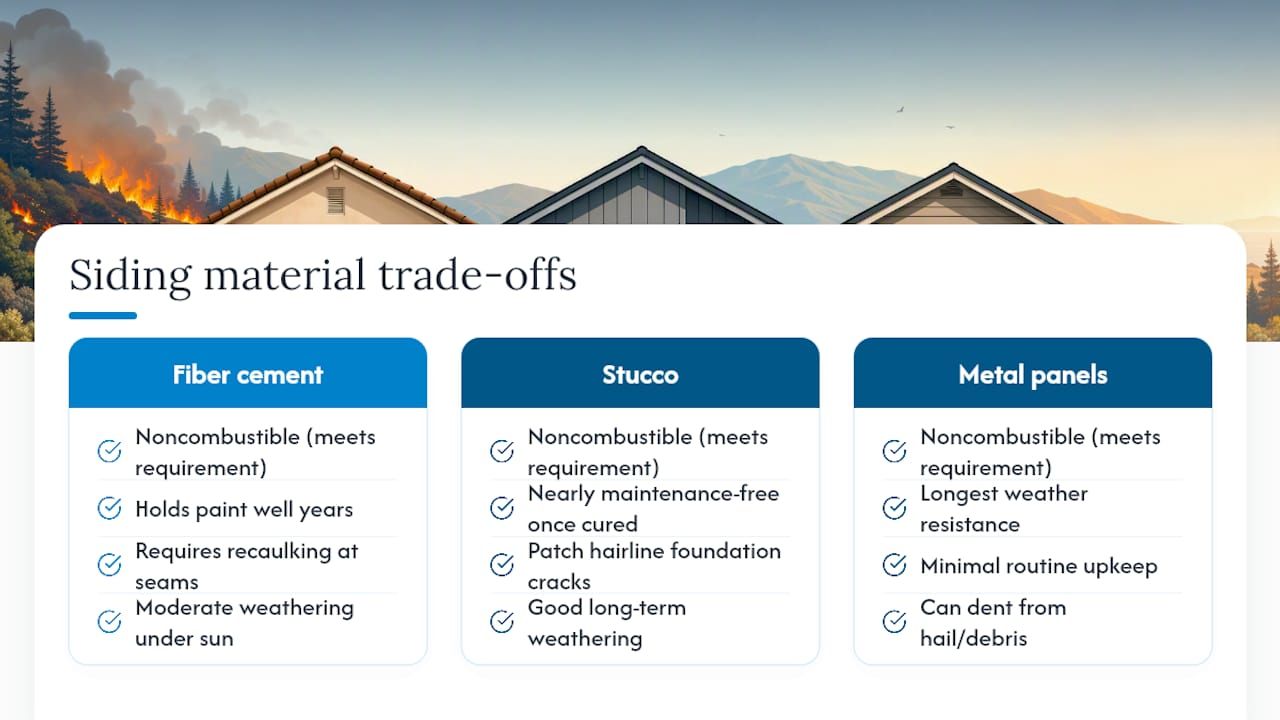
Fiber cement, stucco, and metal all clear the noncombustible bar, but they age differently once installed on a real California house facing sun, seismic movement, and seasonal humidity swings. Fiber cement holds paint well for years but needs recaulking at seams as the house settles. Stucco is nearly maintenance-free once cured, though hairline cracks from foundation movement need patching to keep the assembly's fire performance intact, since an unsealed crack is a gap embers can exploit. Metal panel systems resist weathering the longest with minimal upkeep but can dent from hail or debris impact, and a dented panel with a compromised seam defeats the ember-sealing purpose of the system.
Durability under fire exposure specifically comes down to the assembly, not just the board. A Class A fiber cement product installed with sealed cut edges and noncombustible trim performs closer to stucco's reliability than an identical product installed with exposed, unsealed cuts at every corner. Stone and brick veneer outperform everything on raw noncombustibility but rarely make sense for a retrofit budget unless the home already has masonry detailing to match.
The practical takeaway: pick the material that fits your finish goals and maintenance tolerance, then insist on installation quality that matches the product's rating. A premium board installed poorly underperforms a mid-tier board installed correctly.
Does Siding Color Affect Wildfire Performance?
Color and texture affect heat absorption, but they don't change a material's combustibility rating. Darker colors absorb more radiant heat during direct fire exposure, which can accelerate coating degradation or, on metal panels, increase surface temperature enough to affect adjacent materials like window seals. Lighter colors reflect more heat and tend to hold up cosmetically longer under repeated sun and radiant exposure.
Texture matters less for fire performance and more for ember capture. A deeply grooved or heavily textured panel profile can catch and hold embers and debris in its grooves longer than a smooth panel, giving embers more dwell time against the surface. Smooth or lightly textured fiber cement and metal panels shed debris more readily than deep wood-grain-embossed profiles.
None of this overrides material selection. A dark, textured Class A fiber cement panel is still noncombustible and still outperforms a light-colored, untreated wood board by a wide margin. Color and texture are refinements you consider after you've locked in a noncombustible material category, not substitutes for one.
Siding Alone Won't Save a House Surrounded by Fuel
Hardened siding paired with a fuel-loaded yard is a half-finished job. California's defensible space rules require a cleared zone immediately around structures, and that zone works hand in hand with your exterior materials rather than as a separate checkbox.
The first five feet from the foundation, the Zone 0 area referenced earlier, should be free of mulch, dead vegetation, and stacked combustibles regardless of what siding sits above it. Beyond that, defensible space guidance generally calls for spacing and trimming vegetation out to 100 feet where terrain allows, reducing continuous fuel that lets a ground fire reach the structure and expose your siding to sustained flame rather than brief ember contact.
Trees planted close to a home, especially resinous conifers and certain ornamental shrubs known for high flammability, undercut even the best siding investment by putting fuel and radiant heat right against the wall. Pruning tree limbs away from roof lines and keeping any wood fencing detached from the house, or transitioning to a noncombustible section at the point of attachment, closes the fuel path that attached combustibles create. Think of siding as your last line of defense. Landscaping is what keeps that line from ever being tested at full intensity.
Assessing Your Current Siding Before You Replace It
A full re-side isn't always necessary, and knowing how to evaluate what's already on your walls saves money and tells you where the real risk sits.
Start by identifying the material. Older homes in fire-prone areas frequently have wood shingle, wood lap, or vinyl siding installed decades before current code existed, and any of these categories signals a priority replacement rather than a maintenance patch. Check for gaps, warping, or loose boards, since even a noncombustible material installed with open seams or missing caulk gives embers the same entry point a combustible material would.
Look specifically at the ground-to-wall transition and the eaves. If you see open soffits, standard insect-screen vents, or mulch and debris piled against the foundation, those are the highest-priority fixes regardless of what the wall siding itself is made of. A home with older but intact stucco and poor vent detailing is often a better candidate for a detail-focused retrofit than a full re-side.
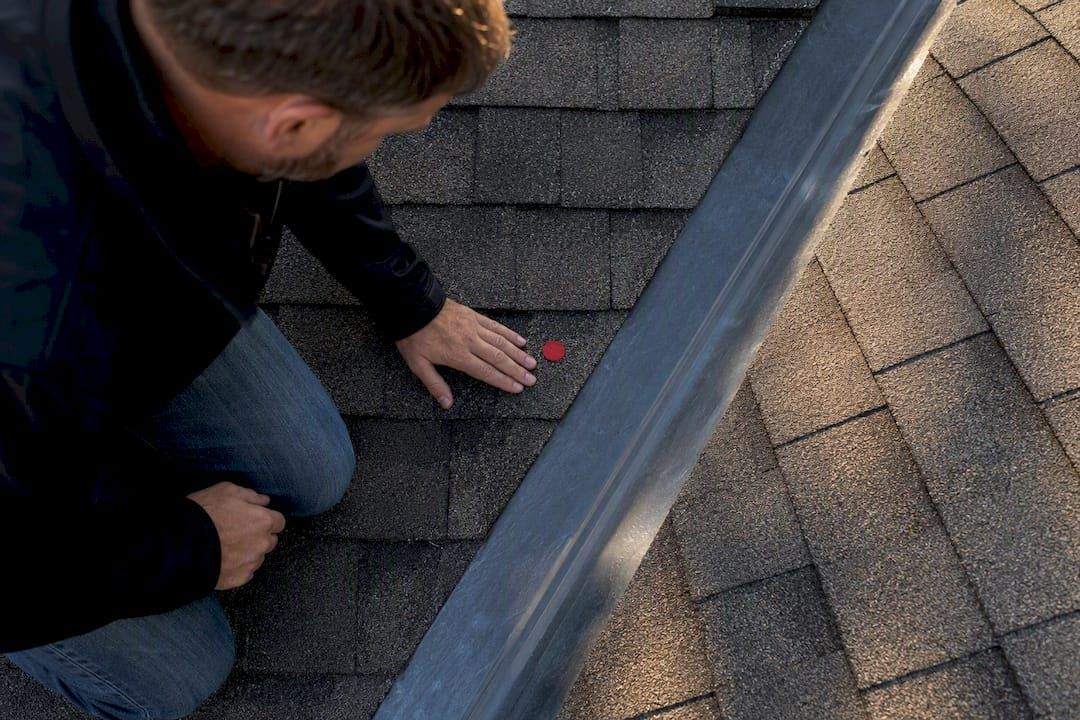
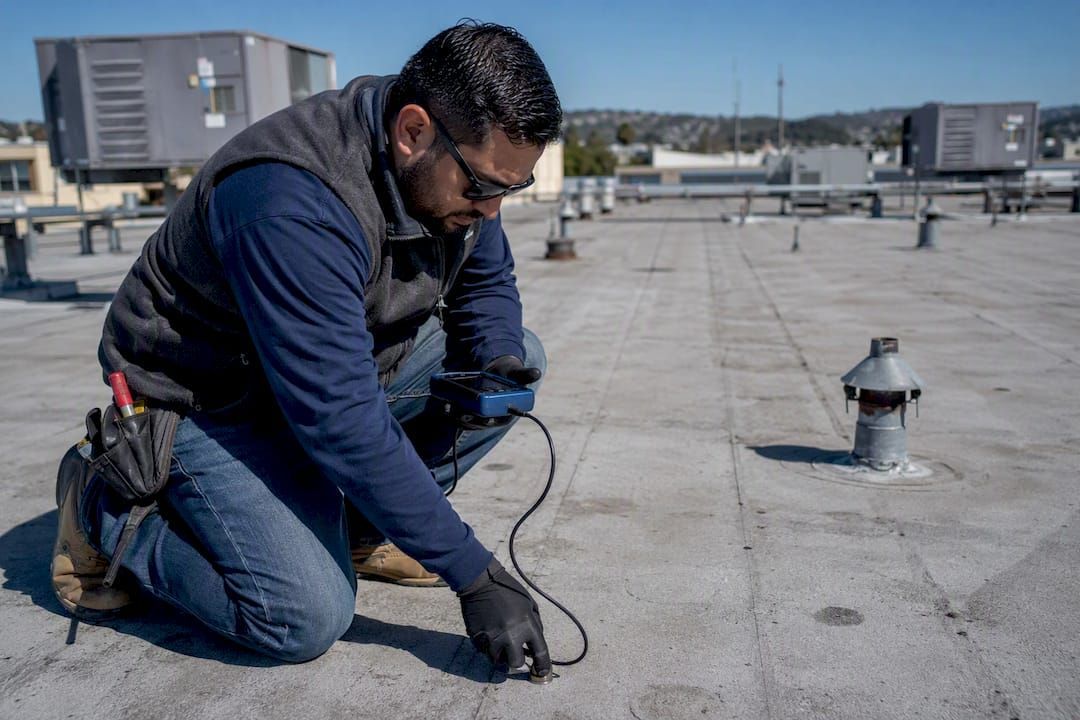
If you're unsure what you're looking at, a roof inspection paired with an exterior walkthrough from a qualified crew identifies both the siding material and the vulnerable details in one visit, giving you a prioritized list instead of a guess.
Are There Sustainable Siding Options for Wildfire Zones?
Fiber cement carries a heavier manufacturing footprint than wood but lasts decades longer with minimal replacement, which evens out its lifecycle impact compared to materials that need periodic replacement after storm or pest damage. Stucco uses widely available raw materials and, once cured, has an extremely long service life with almost no waste stream from maintenance.
Metal siding often contains a meaningful percentage of recycled content depending on the manufacturer, and it's fully recyclable at the end of its service life rather than heading to a landfill. That's a genuine advantage for homeowners weighing environmental impact alongside fire performance.
The most sustainable choice, though, is usually the one that avoids repeated replacement. A noncombustible material that survives a wildfire event, or simply survives decades of California sun without degrading, has a smaller lifecycle footprint than a cheaper material replaced twice in the same period. Durability and sustainability point in the same direction here more often than not.
The Trade-off Nobody Wants to Say Out Loud
Noncombustible siding costs more upfront than vinyl or untreated wood, and that gap discourages some homeowners from making the switch until code forces their hand. It's the wrong place to economize. The cost difference between fiber cement and vinyl shrinks fast once you account for how often vinyl needs replacement anyway, and stucco's near-zero maintenance profile pays that premium back over a couple of decades.
The smarter move, if scaffolding and crews are already on site for a reroof, is bundling vent, eave, and Zone 0 work into that same project. Doing it separately means paying for access twice.
Here's the part most homeowners miss entirely: the siding field rarely decides whether a house survives an ember storm. The weakest detail does, whether that's a mesh vent, an open eave, or a gap at the foundation.
— Cesar
How Shield Guard Roofing Can Help You Harden Your Home
If you're weighing a siding upgrade against a full home-hardening project, Shield Guard Roofing gives Northern California homeowners a single, in-house crew that handles the roof and siding assembly together instead of coordinating separate contractors and hoping the details align. That's the real advantage: one team responsible for the roof-to-wall transition where most retrofits actually fail.
When you request an estimate, ask for three things in writing: OSFM listing documentation for any siding product proposed, a specific line item covering vent and eave work rather than a vague "siding only" scope, and clear warranty language for both materials and labor. Come prepared with your parcel's fire zone status, your preferred finish, and a realistic budget range, and a written scope will come back faster and cleaner.
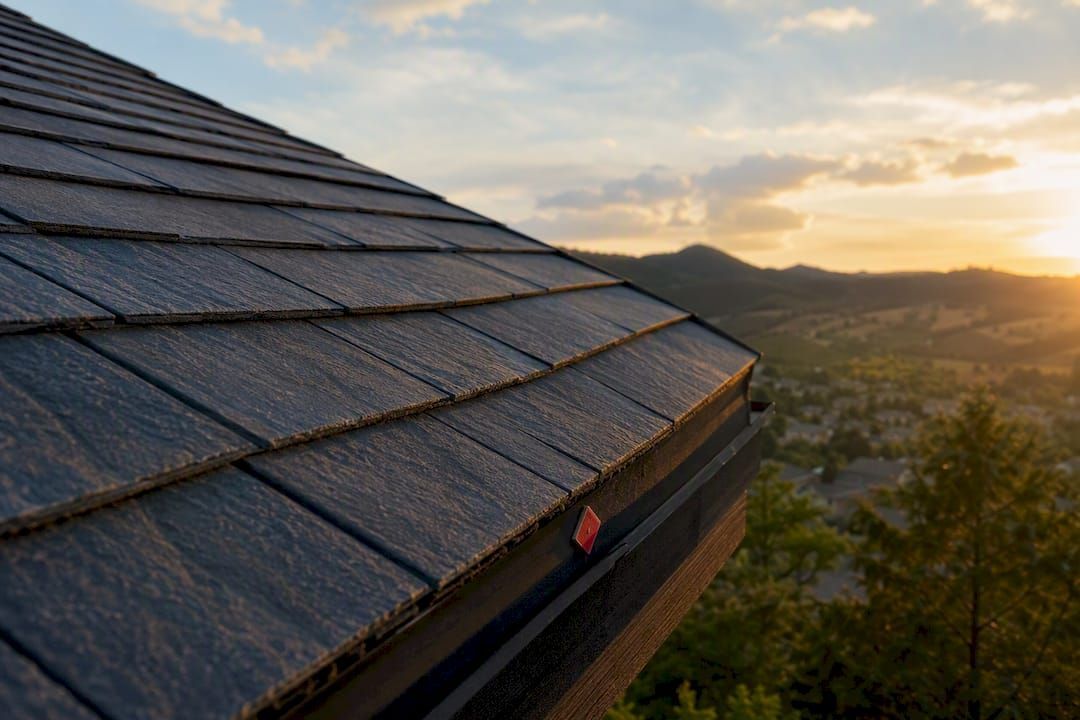
Shield Guard Roofing brings over 75 years of combined roofing experience, factory-certified installers, and premium material partnerships including GAF, GAF Energy, and Brava synthetic cedar shake roofing to residential projects across the region. If a reroof is on your radar alongside a siding upgrade, our guide to residential roofing materials for NorCal homes explains how the two projects sequence together. Start with a roof inspection to get an honest read on your current exterior, or reach out through our residential roofing page to schedule a full home-hardening estimate.
Where to Verify the Details Yourself
Don't take a contractor's word alone on code triggers or product listings. Cross-check with the sources that actually set the rules: CAL FIRE's Home Hardening guidance, NIST's wildland-urban interface hazard mitigation research, and NASA's climate research on lengthening fire seasons.
- Save your OSFM product listing numbers and permit paperwork together in one file.
- Keep that file for insurance claims and any future sale disclosure.
Sources
FAQ
What is the most fire-resistant siding?
Noncombustible materials tested to ASTM E136, fiber cement, three-coat stucco, and metal panel systems, offer the strongest fire performance among common siding options. The material only performs as tested when installed as a complete assembly with sealed edges and noncombustible trim, since gaps and unsealed cuts undercut the rating regardless of the board itself.
How do you fireproof a house in California?
No exterior can be made fireproof, but California's home-hardening approach combines noncombustible siding and roofing with ember-resistant vents, enclosed eaves, and a cleared Zone 0 around the foundation. CAL FIRE's Home Hardening guidance recommends starting with these vulnerable details, since ember intrusion drives most home ignitions rather than direct flame contact with walls.
Is Hardie Board fire rated for one hour?
Fiber cement products in the HardieBoard family are noncombustible under ASTM E136 and typically carry a Class A surface-burning rating under ASTM E84, but that's a surface-burning classification, not a standalone one-hour fire-resistance rating. A one-hour rating applies to a full tested wall assembly, not a single product, so check the specific OSFM listing for the assembly your contractor is proposing.
Which trees are the most flammable near a home?
Resinous conifers like certain pines and junipers, along with dense ornamental shrubs that hold dead material, tend to ignite faster and burn hotter than broadleaf, moisture-retaining species. Keeping any high-flammability plantings well clear of walls and rooflines protects your siding investment by reducing radiant heat and direct flame exposure at the structure.
What does it cost to replace siding for wildfire resistance in California?
Costs vary widely by material, home size, and how much trim and flashing detail the job needs, with fiber cement generally landing in a lower range than stucco or metal panel systems once labor is included. Shield Guard Roofing provides project-specific estimates after a site assessment; current details are available through Shield Guard Roofing's residential roofing page.
Recommended