Before 2026 Title 24: 5 Signs Your California Roof Needs Replacing
Before 2026 Title 24: 5 Signs Your California Roof Needs Replacing
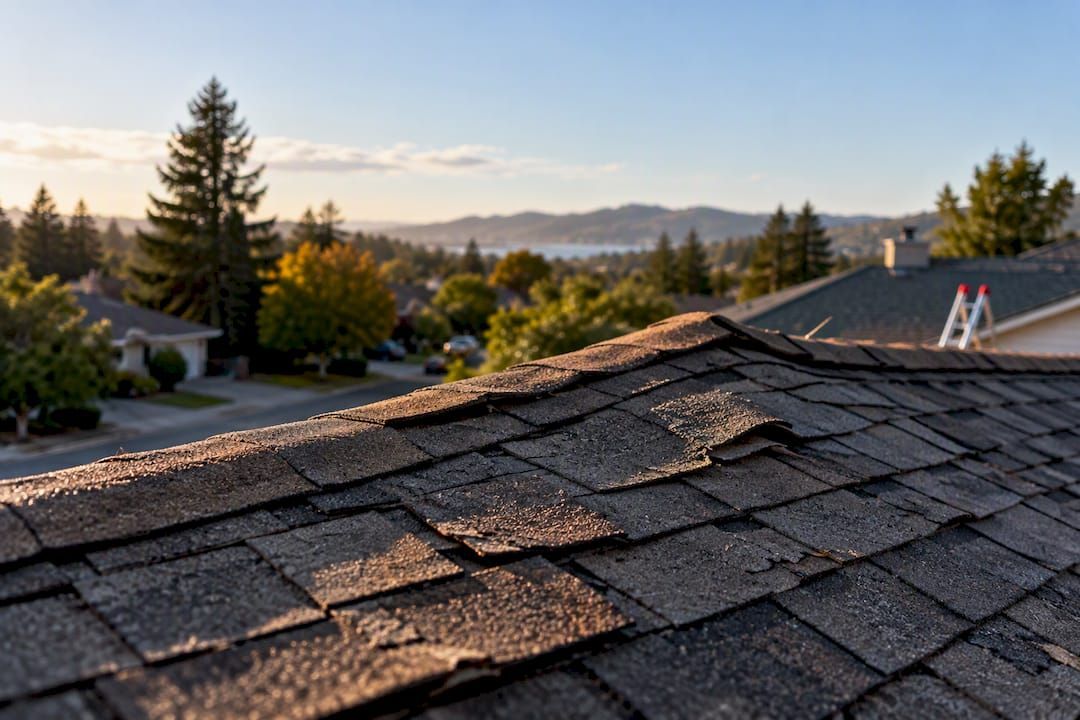
You need a new roof now if you see structural sagging, daylight through the roof boards, widespread bald shingles with heavy granule loss across multiple slopes, or leaks that keep coming back after repairs. Isolated damage, one bad flashing point, or a single small leak on an otherwise sound, properly decked roof usually means a repair will do. California's building code, wildfire zones, and coastal air can shift those thresholds, which we cover below.
TL;DR:
- Heavy granule loss across multiple slopes often indicates shingles are becoming brittle and water-resistant, signaling the need for replacement within a few years.
- Signs like a sagging roofline, soft or spongy decking in the attic, or persistent leaks after repairs point to structural failure requiring immediate replacement.
- California's updated building codes may necessitate cool-roof compliance and fire-resistant materials, increasing costs beyond simple material swaps of older roofs.
- Coastal areas with salt exposure need corrosion-resistant flashing, and wildfire zones require ember-resistant features, affecting material choices and inspection priorities.
- Attic inspections revealing water stains, moldy insulation, or daylight through the roof deck are critical indicators of underlying damage that may dictate the urgency of replacement.
Signs You Need a New Roof in California: What to Check From the Ground and the Roof
Most roof problems announce themselves before they become emergencies. You just have to know where to look.
Start with your gutters. If you find sandy, coffee-ground-like granules collecting at the downspouts, your asphalt shingles are shedding the protective coating that shields them from UV rays. A little granule loss is normal aging. Heavy accumulation across multiple slopes, though, is an early warning that your shingles are becoming brittle and losing their ability to block water, and it often precedes cracking within a few years.
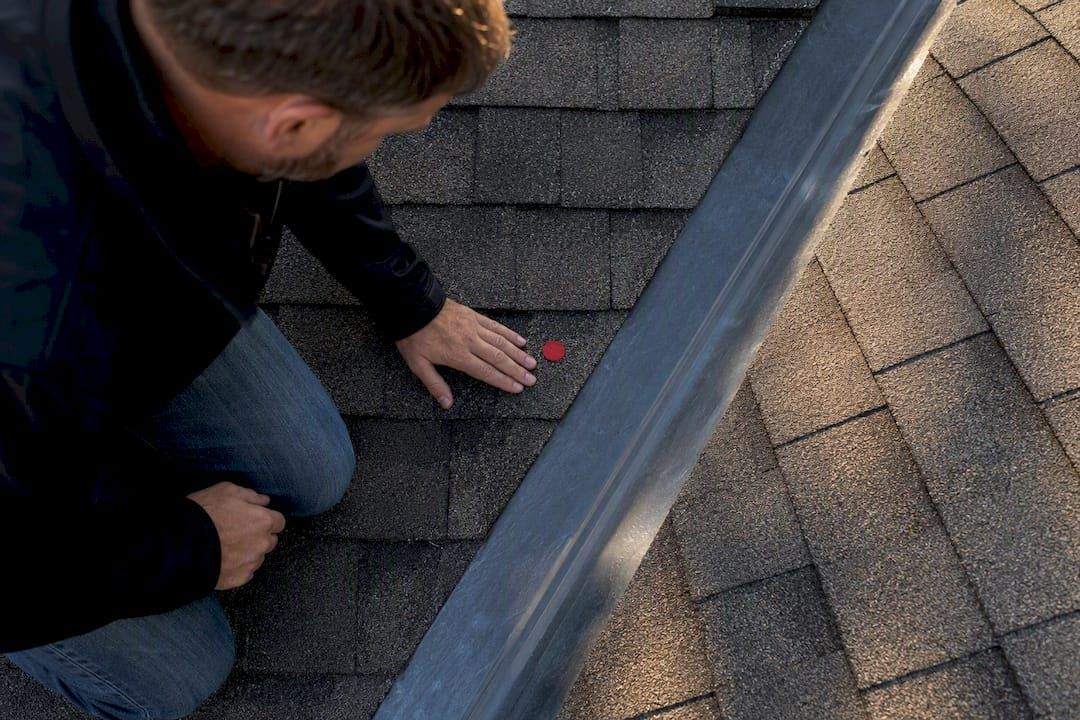
Next, look at the shingles themselves. Curling edges, cupped centers, and cracked or missing tabs all point to a roof that has aged past its functional life. One or two missing shingles after a windstorm is a repair job. A dozen bald or cracked shingles scattered across two or three slopes is a different story entirely. That pattern usually means the whole roof is failing at roughly the same rate, and patching one section just buys you a few months before the next section lets go.
A sagging ridge line or visible dips anywhere on the roof plane are the most serious visual signs. This usually means the decking underneath has softened from prolonged moisture exposure, or the rafters themselves are stressed. Do not wait on this one. A sagging roofline can progress into a partial collapse, especially after a heavy rain event.
Moss, algae, and dark streaking behave differently depending on where you live in California. Coastal and North Bay homes with fog exposure see algae streaking that is mostly cosmetic on newer shingles. But moss that has taken hold and thickened, especially on north-facing slopes that stay shaded and damp, holds moisture against the shingle surface. Given enough time, that trapped moisture works its way into the decking, and what looked like a cosmetic issue turns into rot.
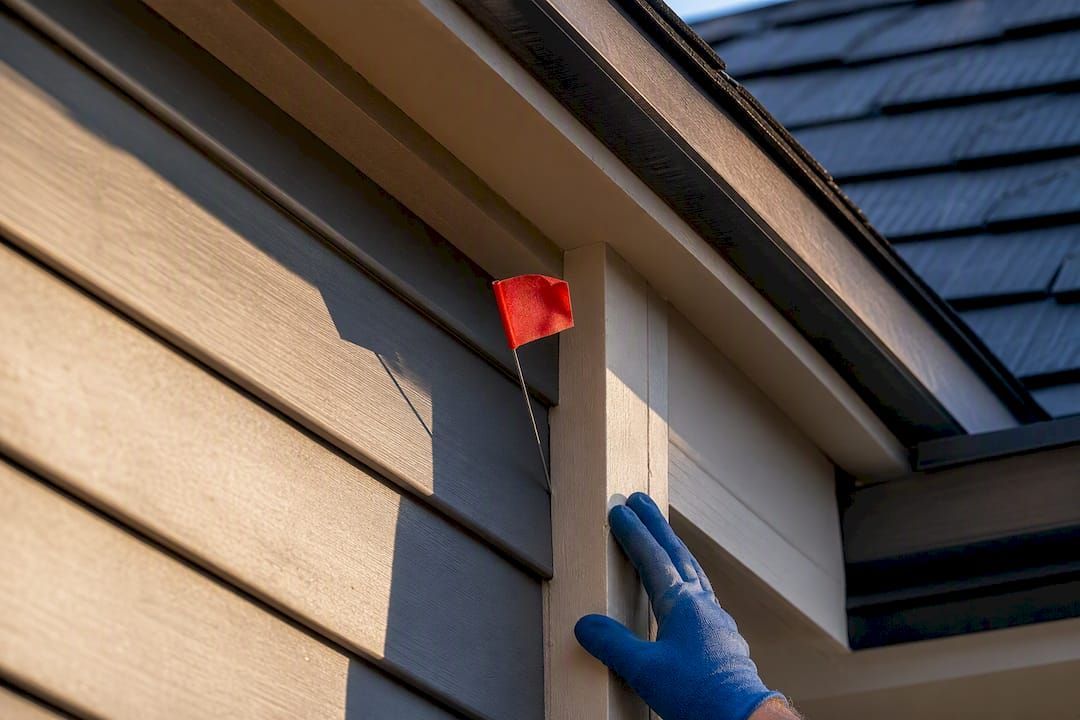
Finally, check your flashing, the metal strips sealing joints around chimneys, skylights, and vent pipes. Lifted, rusted, or missing flashing is one of the most common leak sources on the roof, according to the FORTIFIED resilience program. After any wind event above 40 mph, walk the perimeter and look for lifted shingle edges near roof valleys and eaves. That is where wind uplift does its damage first.
- Granules piling up in gutters or at downspouts
- Curling, cupping, or cracked shingles on multiple slopes
- A visibly sagging ridge or roof plane
- Thickening moss on shaded slopes, not just light staining
- Lifted, rusted, or missing flashing around penetrations
Pro Tip: Take a photo of your gutters after the first hard rain of the season. Comparing granule buildup year over year gives you an objective record instead of relying on memory, which is exactly what a contractor or insurance adjuster will want to see.
What Your Attic Reveals About Roof Damage
The attic tells the truth your ceiling can't hide. A roof that looks fine from the street can be failing quietly above your head, and a flashlight check takes fifteen minutes.
- Scan for water stains with a flashlight. Look at the underside of the roof deck, not just the insulation. Brown or gray staining, especially with a ring pattern, indicates water has been getting in for a while, not just during the last storm.
- Feel the insulation. Damp, compressed, or moldy insulation is a sign of an active or recent leak. Dry insulation with old stains suggests a leak that has already been repaired, which is still worth documenting.
- Look for daylight. If you can see pinpricks of light coming through the roof boards during the day, water is getting the same access from the outside.
- Check whether stains are spreading. A single stain in one spot near a vent pipe is often a fixable flashing issue. Stains appearing in new locations over a few months usually mean the roof covering itself is failing broadly, not just at one penetration. The HUD roofing guide notes that distinguishing an isolated leak from systemic failure is one of the most important calls in this whole process.
- Press on the decking if you can reach it safely. Soft, spongy, or flexible spots under your weight mean the wood has absorbed moisture and lost structural integrity. That almost never gets fixed with a patch. It needs a section of new decking, at minimum, and often points to a full replacement.
Document everything as you go. Photograph stains with a date stamp, note the weather conditions before you noticed them, and keep a simple timeline. This isn't overkill. It's the exact information a contractor needs to diagnose the problem correctly and the exact information your insurer will ask for if you file a claim later. Manufacturer guidance also points out that some ceiling stains come from bathroom vents or condensation, not the roof at all, so an attic check helps you rule that out before you call anyone.
How Long Should Your Roof Actually Last?
Material matters more than most homeowners assume, and California's climate doesn't treat every material equally.
- Architectural (dimensional) asphalt shingles: 18 to 30 years
- 3-tab asphalt shingles: 15 to 20 years
- Standing seam or metal roofing: 40 to 60 years
- Clay or concrete tile: 50-plus years for the tile itself, but the underlayment beneath it typically lasts only 20 to 25 years
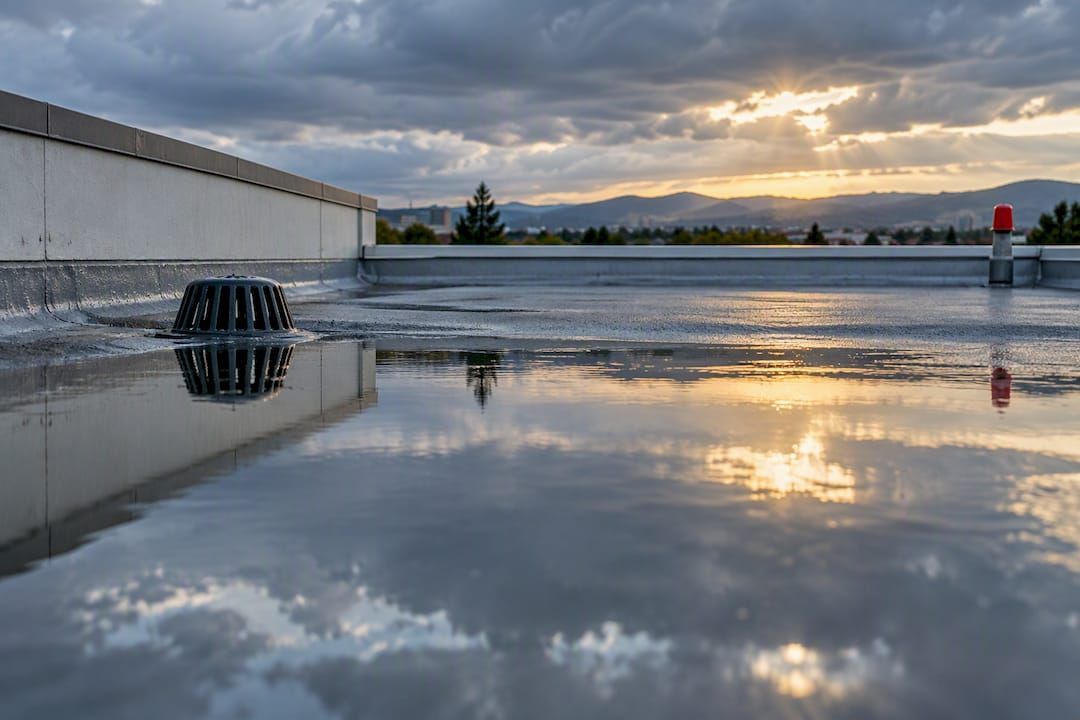
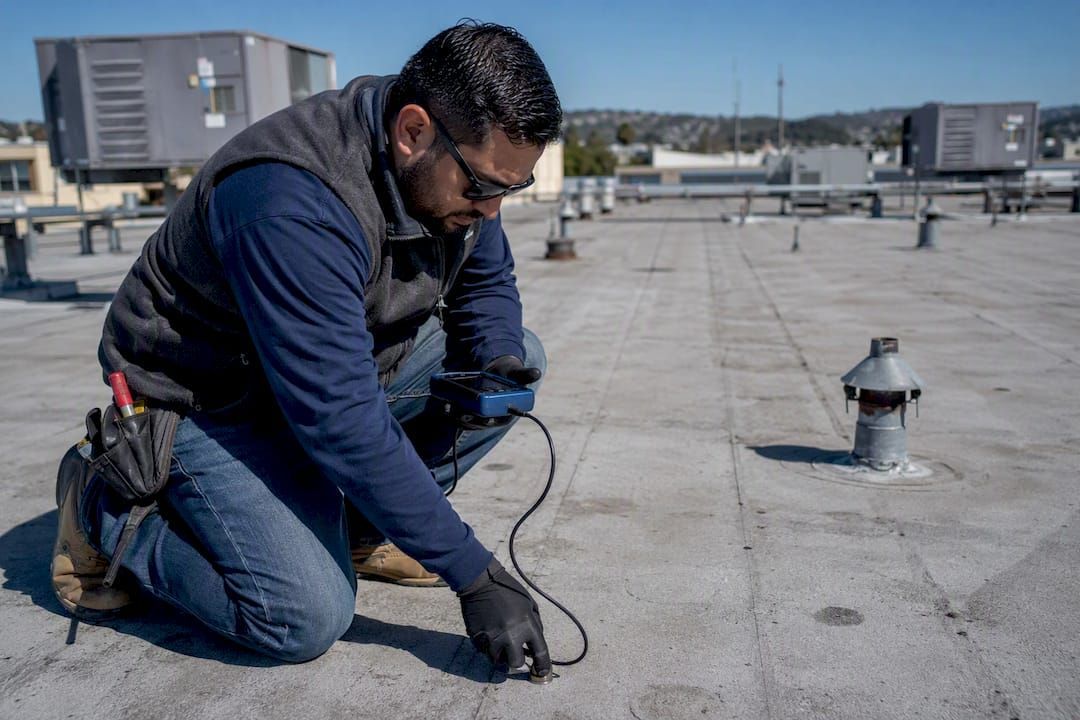
- Low-slope membrane roofing (flat or near-flat sections): 15 to 30 years, depending on the material
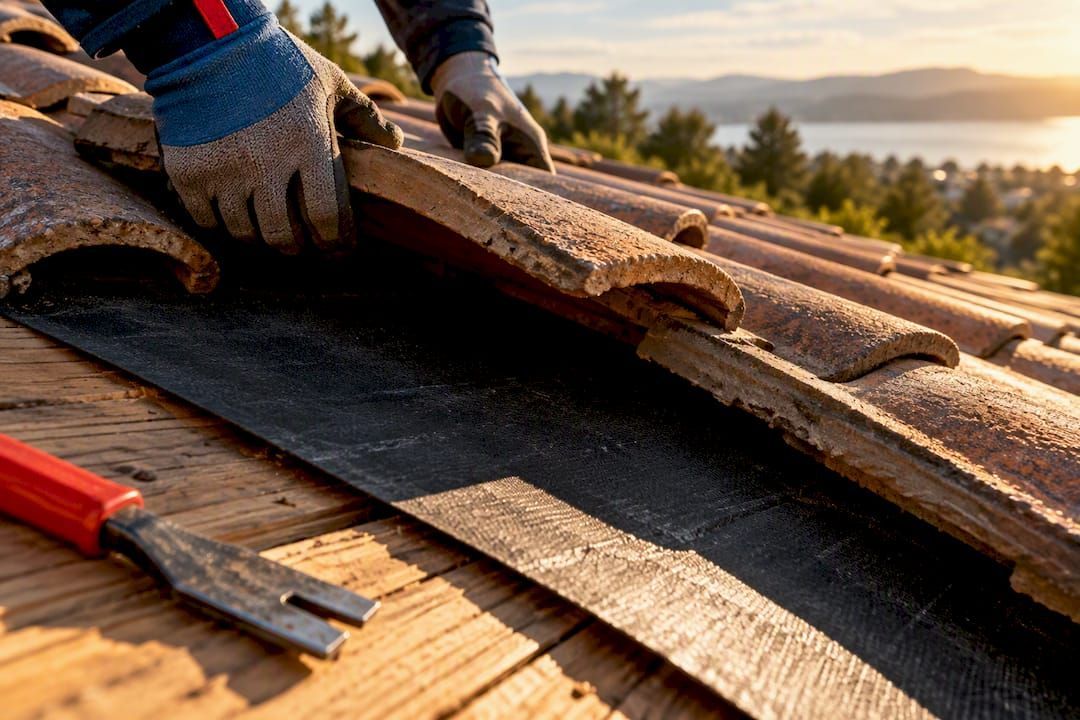
That tile figure catches a lot of homeowners off guard. Your Spanish or barrel tile can look pristine on a 25-year-old roof while the waterproofing layer underneath has already failed. Roofers call this a lift-and-relay: the existing tile gets removed carefully, the old underlayment is stripped and replaced, and the same tiles go back down. Skipping this step is how homeowners end up with leaks despite tiles that show zero visible damage.
California's UV intensity accelerates asphalt aging faster than in cloudier states, particularly in the Central Valley and inland areas where roof surface temperatures regularly climb well above ambient air temperature. Coastal homes face the opposite problem: salt air corrodes metal flashing and fasteners years before the shingles themselves wear out. And in wind corridors like the Sacramento River Delta or areas that see Santa Ana wind events further south, repeated uplift stress shortens shingle life regardless of the manufacturer's rated lifespan.
A practical rule of thumb: once a roof passes about 80% of its expected lifespan and shows two or more of the warning signs above, replacement planning should start even if it isn't leaking yet. Waiting for the leak means you're also paying for water damage repair, not just a new roof.
Repair, Re-Cover, Lift-and-Relay, or Full Replacement?
The right call depends on four factors working together, not any single sign in isolation: how much of the roof is damaged, what condition the decking is in underneath, how old the roof already is, and whether it has been patched multiple times before.
Several thresholds reliably tip the decision toward full replacement rather than another repair:
- Bald or damaged shingles on more than one slope. Isolated damage on a single slope facing prevailing wind or sun is repairable. The same pattern on three or four slopes means the whole roof is aging out together.
- A second or third leak in the same general area within a year or two. One leak is bad luck or storm damage. Repeated leaks after a repair mean the underlying material has failed, and you're chasing symptoms instead of fixing the cause.
- Soft or degraded decking discovered during a repair. This is the single most common reason a "simple repair" turns into a bigger project. Once a contractor opens up a section and finds compromised wood, patching around it rarely holds.
- Any visible structural sagging. This overrides every other factor. Sagging means replacement, and usually deck or rafter work, not repair.
When you do call a contractor, ask direct questions before signing anything. Confirm their CSLB license number directly on the state board's site, not just their word for it. Ask who is responsible for pulling permits (it should be them, in writing), what exactly is included in the scope (does it cover deck repair if they find rot?), what materials and warranty terms apply, and what the payment schedule looks like tied to project milestones rather than a large sum upfront. Our guide to repair versus full replacement walks through this decision in more depth if your situation sits in the gray zone.
Pro Tip: If a storm caused the damage, photograph everything before you touch it, including wide shots that show the whole slope, not just close-ups of the damaged spot. Insurers and contractors both rely on that context.
California Code and Climate Rules That Change the Timeline
California doesn't let you replace a roof exactly the way you'd want to in a state with looser rules, and that's mostly a good thing once you understand why.
Under the 2025 Title 24 Energy Code update, many steep-slope re-roofs on single-family homes now need to meet minimum aged solar reflectance or solar reflectance index requirements, unless the project qualifies for a prescriptive exception. Some tile and metal assemblies, and certain climate zones, have built-in exceptions, but asphalt shingle replacements in most of California's hotter climate zones will need to account for cool-roof compliance during material selection. This isn't a formality. Picking the wrong shingle line can mean a failed inspection and a redo.
If your home sits in a Wildland Urban Interface (WUI) zone, which covers large parts of the Sierra foothills, the North Bay, and much of Southern California's hillside communities, your replacement may need to meet Class A fire-rated assembly requirements, including ember-resistant venting and underlayment. Some insurers are now tying coverage renewal to these upgrades directly, which means a roof replacement in a fire zone often isn't optional even if the roof still technically holds water.
Coastal homeowners face a quieter but equally costly problem: salt air corrodes standard steel flashing and fasteners well before the roofing material itself fails. Stainless steel or coated aluminum flashing costs more upfront but avoids the repeat flashing failures that plague coastal roofs every eight to ten years.
- Confirm your climate zone before choosing materials, since Title 24 compliance paths differ by region
- Ask if your address falls in a WUI designation, since it changes both code requirements and insurance terms
- Specify corrosion-resistant flashing in coastal counties
- Verify your contractor holds an active California C-39 roofing license and will pull permits as part of the contract
The FORTIFIED program, backed by the Insurance Institute for Business & Home Safety, has now passed 100,000 resilience designations nationwide. That growth reflects a broader shift: more homeowners and insurers are treating wind and fire resilience as a standard part of a replacement decision, not an optional upgrade.
Foundation and Structural Problems That Start on the Roof
A failing roof doesn't stay contained to the roof. Water that gets past shingles and decking eventually finds its way down exterior walls and into the soil around your foundation, and that's where a roofing problem quietly becomes a structural one.
Watch for new cracks in exterior stucco or interior drywall that appear near roof lines, especially after a wet winter. If you notice doors or windows sticking that opened fine before, or gaps forming between walls and ceilings, moisture intrusion from the roof is worth ruling out before you assume it's a soil or foundation issue on its own. Prolonged roof leaks near an exterior wall can saturate the soil at the foundation line unevenly, contributing to settling on one side of the house.
Inside, check where roof rafters meet exterior walls. Sagging that starts at the roofline and seems to pull the wall inward, rather than just dipping downward, suggests the load path from roof to foundation has been compromised by sustained water damage to structural members. This is more common in older homes with original 1960s and 1970s framing that has already absorbed decades of minor leaks nobody documented.
None of this means every stucco crack points to a bad roof. But if you're seeing structural symptoms alongside any of the roof warning signs covered earlier, get both assessed together. A roofer can tell you whether water intrusion is the root cause; a structural engineer can confirm whether it has affected your foundation. Treating them as separate problems, when they share one cause, usually costs homeowners more in the long run.
Why an Aging Roof Is Quietly Raising Your Energy Bills
A worn-out roof doesn't just leak. It stops doing its job of keeping heat where it belongs, and that shows up directly on your utility bill.
Aging or damaged shingles lose reflectivity as granules wear away, which means your roof absorbs more solar heat instead of bouncing it back. In Central Valley and inland Southern California homes, that translates into an attic running hotter, which pushes your air conditioning to work harder through long summer stretches. Compromised or missing insulation from attic leaks compounds the problem, letting conditioned air escape and outside heat in.
This is part of why California's Title 24 cool-roof requirements exist in the first place: reflective, code-compliant roofing materials measurably reduce cooling demand in the state's hottest climate zones. If you're already facing a replacement, it's worth treating the energy angle as a built-in opportunity rather than an afterthought. GAF Energy's solar shingle systems, for instance, let you combine a new roof surface with integrated solar generation in a single install, which is worth asking about if you're planning a full replacement anyway rather than a straight repair.
Gaps around roof penetrations, poor attic ventilation, and degraded underlayment all contribute to energy loss in ways that are easy to miss until you compare bills year over year. If your summer cooling costs have crept up without an obvious cause and your roof is past the midpoint of its expected lifespan, the roof itself deserves a look before you assume it's just the thermostat or the HVAC system.
Wildfire Damage That Isn't Obvious Char Marks
Wildfire damage to a roof rarely looks like a scorch mark, and that's exactly why so many homeowners miss it after a nearby fire event.
Ember intrusion is the bigger threat. Embers carried on wind can travel over a mile from an active fire and lodge in roof vents, gutters clogged with dry debris, or gaps around skylights and chimneys. Ember-resistant vent screens are designed to block exactly this, but older homes without them, or homes where vent screens have degraded, remain vulnerable even when the fire itself never reaches the property.
Heat exposure without direct flame contact can still degrade asphalt shingles, softening the asphalt binder and accelerating granule loss on the side of the roof facing the fire's direction, even a considerable distance away. This kind of damage often doesn't show up as an obvious problem until months later when that section starts failing faster than the rest of the roof.
Smoke and ash residue left sitting on a roof after a nearby fire can also hold moisture against shingles longer than normal rainfall would, particularly in roof valleys where debris collects. If your area has experienced a nearby wildfire, even one that didn't reach your structure, a post-event inspection focused on vents, valleys, and gutters is worth doing before the next rainy season, not after.
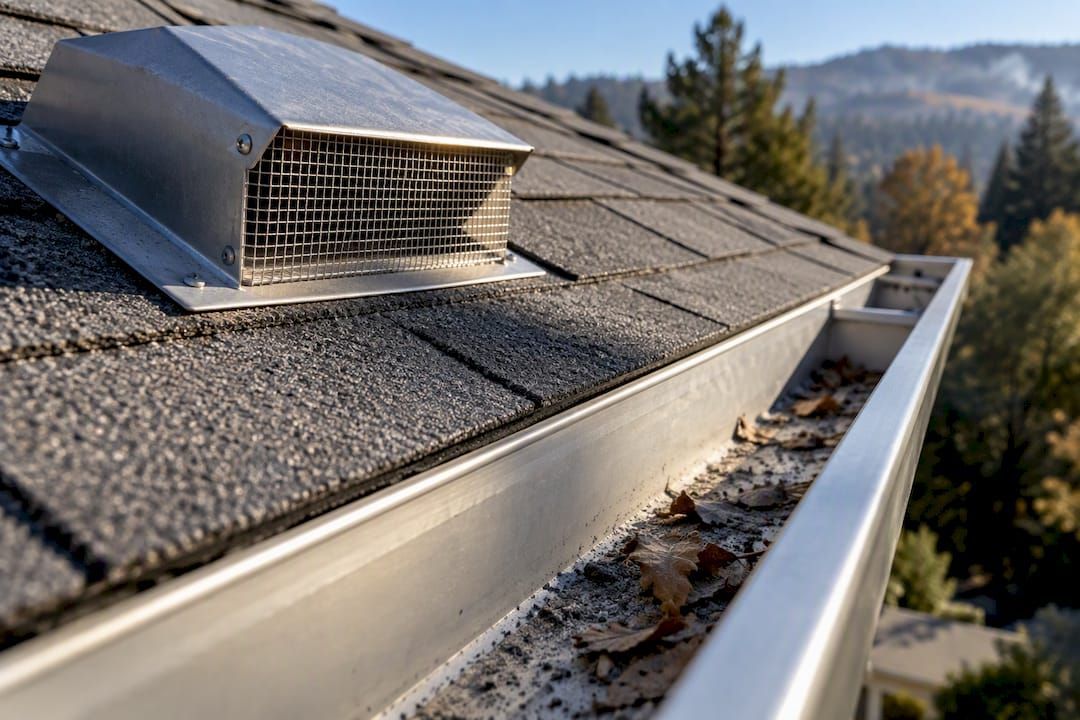
If you're rebuilding or replacing in a WUI zone following fire damage, Class A fire-rated assemblies and ember-resistant detailing aren't optional upgrades. In many jurisdictions they're required, and insurers increasingly expect them regardless of what the local code technically mandates.
How Shield Guard Roofing Approaches an Inspection
We've been doing this across Northern California as a family-owned company with more than 75 years of combined crew experience, and the pattern repeats: homeowners call about one visible problem and we find two or three more they never noticed.
A proper inspection starts in the attic, not on the roof. We probe the decking for soft spots, check flashing at every penetration, and document everything with photos before we ever hand over an estimate. Locally, the recurring issues are predictable: tile underlayment failing quietly under intact tile, coastal flashing corroding faster than the shingles around it, and wind-driven shingle loss after winter storm systems. The fix depends on what we find. Sometimes that's a lift-and-relay on tile, sometimes it's a full deck replacement, and sometimes upgraded corrosion-resistant flashing solves the problem on its own. Our factory-certified installers work with GAF and GAF Energy materials specifically because the warranty coverage backs up the workmanship, not just the shingle.
What the Data Actually Tells You
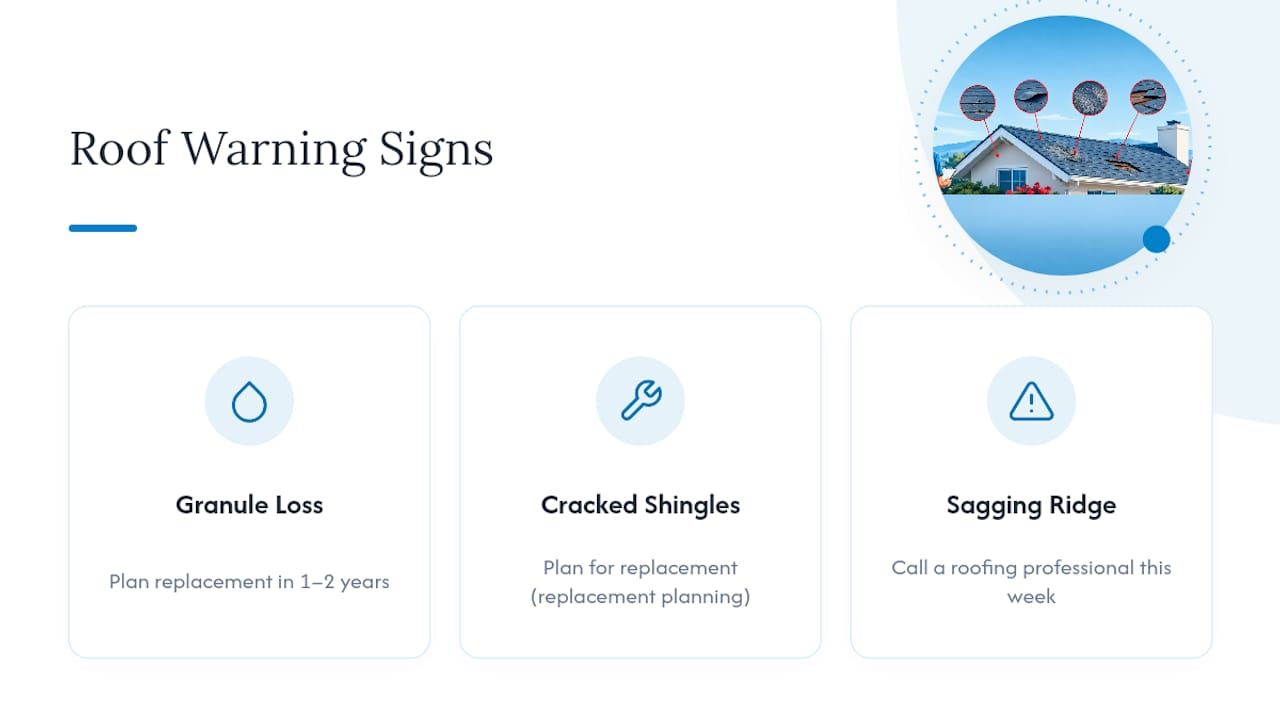
Most roofing content treats every warning sign as equally urgent, and that's the biggest disservice to homeowners trying to make a real decision. Granule loss in your gutters and a sagging ridge line are not the same emergency. One means "plan for a replacement in the next year or two." The other means "call someone this week."
The conventional advice also underweights how much California's code environment has changed the math. A roof that would have been a straightforward like-for-like replacement five years ago might now trigger Title 24 cool-roof compliance costs, or WUI fire-rated assembly requirements, that change both the price and the material choice. Homeowners who go in expecting a simple swap are often surprised, and that surprise is avoidable with one good inspection before you get quotes.
If there's one thing worth prioritizing above the rest, it's the attic check. It's the cheapest, fastest way to separate a cosmetic problem from a structural one, and it should happen before you sign anything, not after.
— Cesar
Get a Straight Answer on Your Roof, Not Just an Estimate
Shield Guard Roofing gives Northern California homeowners something most contractors skip: a written condition report before you commit to anything, backed by 100% in-house crews instead of subcontractors juggling five other jobs that week. That matters most right now, with 2025 Title 24 cool-roof rules and WUI fire-rated requirements changing what a compliant replacement actually costs, because a factory-certified installer who knows those code paths saves you from a failed inspection or a redo down the line.

If any of the signs covered above sound familiar, the next step is a real roof inspection, not a guess over the phone. We'll check the attic, the decking, and every flashing point, then give you a straight answer on whether you're looking at residential roof repairs or a full roof replacement, along with proof of our CSLB license and insurance, and permit handling built into the contract from the start. Homeowners weighing a bigger project can also ask about financing options before deciding.
Where to Verify These Claims Yourself
Don't take a contractor's word for licensing or code requirements. Check them directly:
- CSLB roofing contractor guide : verify any contractor's license before signing a contract
- CRRC's 2025 Title 24 summary : cool-roof compliance paths and exceptions
- FORTIFIED resilience program : wind and hail resilience standards
- HUD's roofing guide : baseline failure signs and attic inspection guidance
Your local building department is also the final word on permit requirements in your specific city or county, and it's worth a call before any project starts.
Sources
FAQ
What are five signs my roof needs to be replaced?
The clearest signs are a sagging roofline, daylight visible through the roof boards in your attic, heavy granule loss across multiple slopes, shingles that are curling or cracked in several areas, and leaks that keep recurring in the same spot after repairs. Any one of the first two means you need a professional evaluation immediately, according to HUD's roofing guidance.
How much does it cost to replace a roof on a 4,000-square-foot house in California?
Pricing depends heavily on material choice, roof pitch, Title 24 compliance requirements, and whether decking repair is needed, so there's no single reliable number to quote. Shield Guard Roofing provides written estimates after an in-person inspection rather than a phone quote, since the 2025 cool-roof code changes can shift material costs for larger homes.
What is the 25% rule in roofing?
Some jurisdictions apply a rule where if more than 25% of a roof surface needs repair, the whole roof (or that roof section) must be brought up to current code rather than patched piecemeal. Local building departments set the specific threshold, so check with yours before assuming a partial repair will pass inspection.
Is a 10-year-old roof considered old?
Not usually. Architectural asphalt shingles are rated for 18 to 30 years and 3-tab shingles for 15 to 20, so a roof still within those ranges is typically within its useful life unless it has visible damage from wind, poor installation, or California's intense UV exposure. Age alone isn't the deciding factor. Condition is.
Can I repair just part of my roof instead of replacing the whole thing?
Yes, when the damage is isolated to one slope or a single flashing point and the decking underneath is sound. Our repair versus replacement guide breaks down exactly which situations call for a targeted fix versus a full re-roof.
Recommended