After 48 Hours: Flat Roof Ponding Fixes That Protect Your Warranty
After 48 Hours: Flat Roof Ponding Fixes That Protect Your Warranty
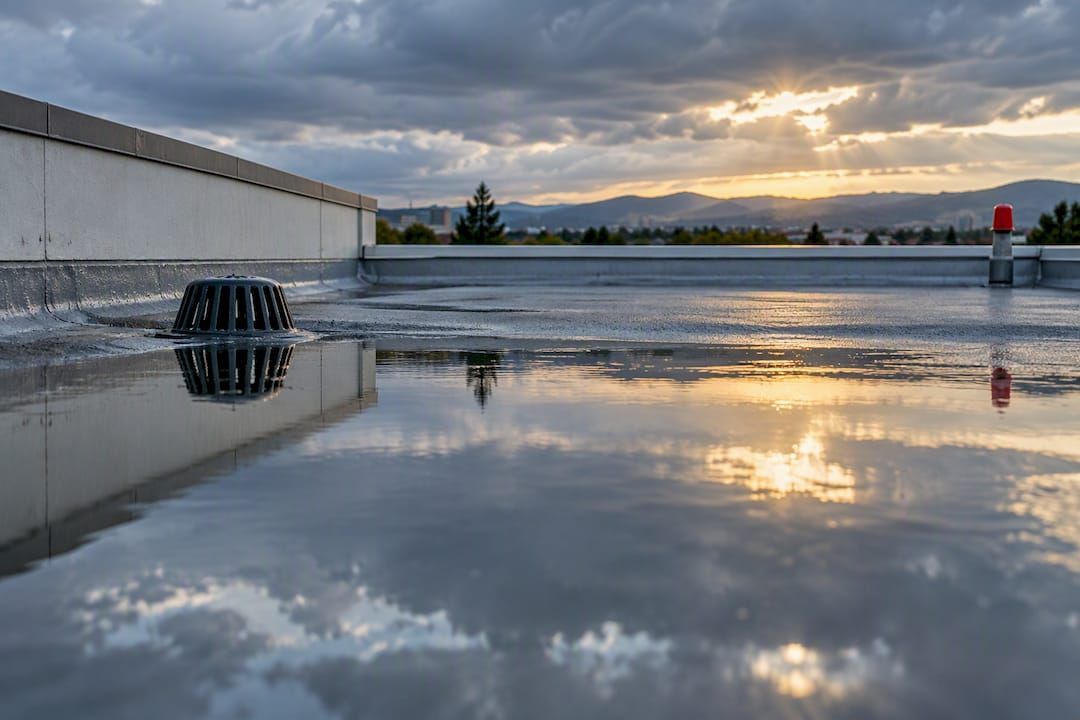
If water is still standing on your flat roof 48 hours after it stopped raining, clear the drains first. From there, you have three paths: temporary pumping to buy time, targeted drainage fixes like new drains or crickets, or a tapered-insulation retrofit that solves the problem permanently. Waiting past the 48-hour mark risks your warranty, your membrane, and potentially your roof deck.
TL;DR:
- Proper inspection involves photographing and measuring persistent puddles after rainfall to identify low spots and evaluate drain performance.
- Localized ponding can typically be fixed by adding or relocating drains, scuppers, or installing tapered insulation, while widespread issues may require full retrofit.
- Structural sagging or deck deflection often causes recurring ponding and requires professional assessment and potentially costly repairs to prevent roof failure.
- Regular maintenance such as quarterly drain clearing, debris removal, and tracking low spot conditions can prevent ponding from worsening and extend roof lifespan.
- Silicone roof coatings can temporarily extend roof life but do not address underlying slope or structural problems that cause water to pond.
Why Flat Roof Ponding Solutions Start With Understanding the Cause
Ponding water is any pool that sits on your roof for more than 48 hours after rainfall stops. That's not an arbitrary number. It's the NRCA threshold that manufacturers and inspectors use to decide whether standing water counts as normal drainage lag or a genuine problem. Cross that line and you're often looking at warranty exclusions, too.
Four causes show up over and over. Insufficient slope tops the list. Codes and industry guidance call for a minimum of 1/4 inch of fall per foot toward drains, and roofs built shy of that will always pond somewhere. Clogged or undersized drains are the second culprit. A single season of leaves and grit can choke a drain that was never oversized to begin with. Structural deflection is the third, and the sneakiest: the deck sags slightly between supports, water finds that low spot, and no amount of drain clearing fixes a sagging substrate Crushed insulation and rooftop obstructions like HVAC units or old equipment pads round out the list, each creating a dam that redirects water into a puddle.
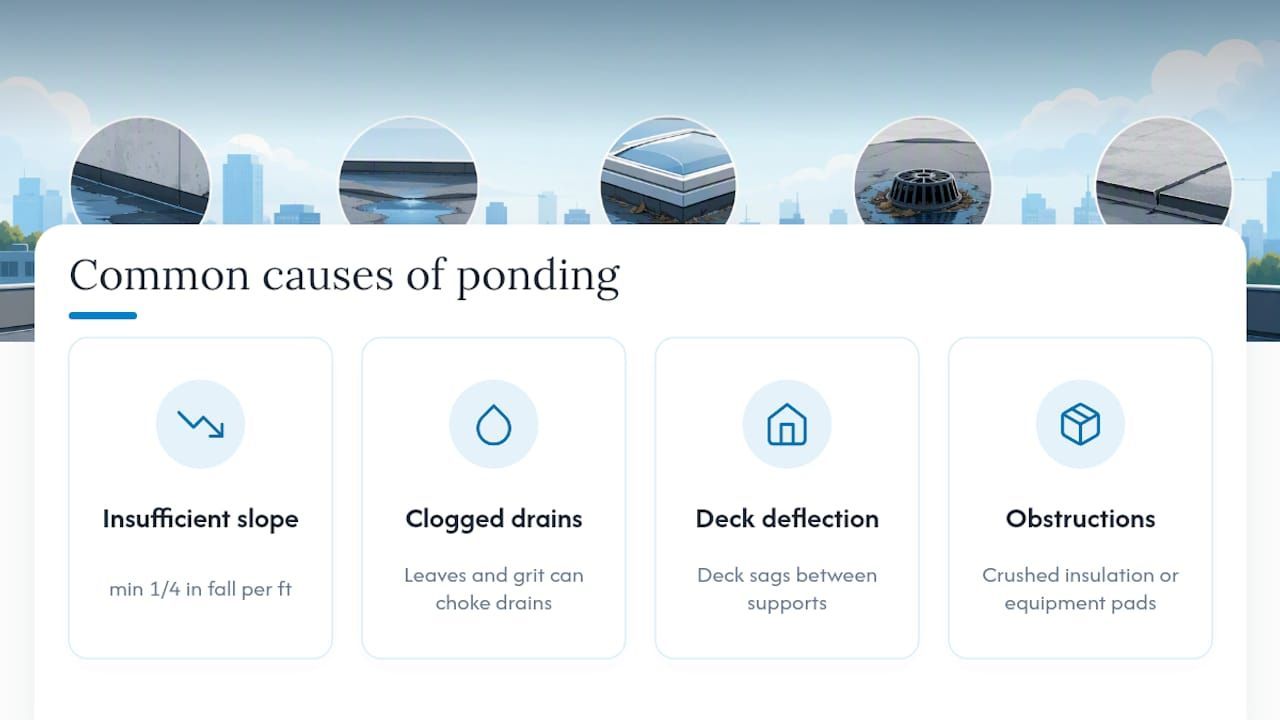
The stakes are real. A single inch of standing water weighs about 5.2 pounds per square foot, and that load adds up fast across a wide low spot. Prolonged ponding also degrades membrane seams, saturates insulation and kills its R-value, and can void a manufacturer's warranty outright.
How Do You Inspect a Flat Roof for Ponding?
A proper inspection takes less time than most people expect, and it tells you whether you're looking at a quick fix or a structural problem.
- Walk the roof within a day or two after rain and photograph every puddle you find, noting its location relative to drains, HVAC units, and roof edges.
- Measure depth with a tape measure or ruler at the deepest point of each pool. Anything holding water past 48 hours goes on your watch list.
- Run a drain flow test. Pour a bucket of water near each drain and time how fast it clears. This simple test takes under two minutes and tells you immediately whether a drain is functioning or partially blocked.
- Check strainers and scuppers for debris, rust, or physical damage that's restricting flow.
- Track repeat locations over two or three rain events. If the same spot ponds every time regardless of debris cleanup, you're likely dealing with structural deflection rather than a maintenance issue.
If puddles keep forming in the same low spot after drains are clear and debris is gone, or if you notice sagging, cracking, or ceiling stains inside the building below, call a contractor or structural engineer. That's no longer a maintenance question.
What Can You Do About Ponding Right Now?
Before scheduling any permanent work, reduce the water load sitting on your roof today. These moves buy time without committing to a full repair.
- Clear drains, strainers, and scuppers of leaves, grit, and debris. This is consistently ranked the single most important maintenance task for flat roofs, and it's free.
- Install leaf guards over drain openings if your roof sits near trees, so this problem doesn't recur every autumn.
- Use a portable sump pump for large, stubborn pools that won't drain on their own, especially before a forecasted storm.
- Build a temporary trough or channel with sandbags or roofing cement to guide water toward a working drain.
- Apply a temporary membrane patch only over active leaks, and treat it as a stopgap, not a repair.
Avoid walking on a roof with more than a few inches of standing water. You can't see soft spots or deck damage underneath, and a weakened deck under load is a genuine fall risk.
Pro Tip: Keep a five-gallon bucket and a cheap wet-dry vacuum near the roof hatch. For small ponds under an inch, you'll clear them faster than waiting on gravity or a rented pump.
Which Permanent Fix Actually Stops Ponding for Good?
Short-term fixes manage symptoms. Permanent fixes address why water collects there in the first place, and the right choice depends on how widespread the ponding is and what condition your membrane is in.
For localized ponding , adding or relocating a drain, cutting in a scupper, or building a tapered insulation cricket to redirect water toward existing drainage usually solves it. This works well when the rest of the roof drains properly and the issue is one stubborn low spot.
For widespread ponding across a large section of roof, or a membrane already nearing the end of its service life, a full tapered polyiso insulation retrofit is usually the better investment. Contractors lay factory-cut tapered panels across the deck to build in positive slope where none existed, solving the drainage problem for the life of the new roof system rather than patching around it.
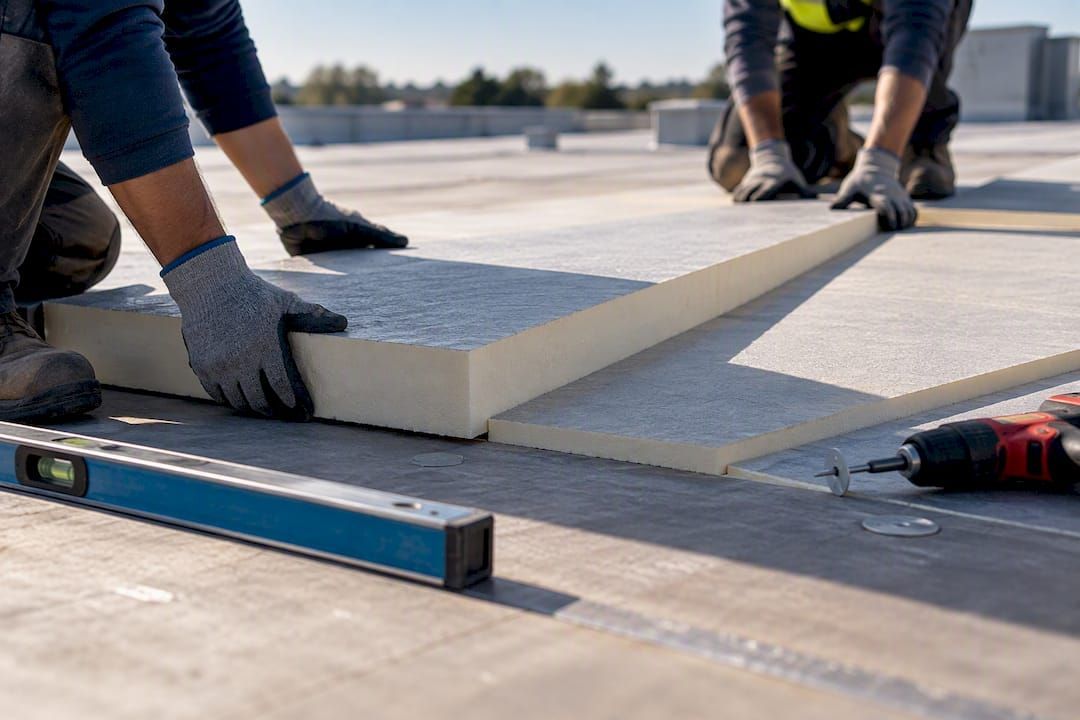
When ponding stems from structural deck deflection rather than a flat-but-level deck, drains alone often fail. Only a structural fix or a tapered overlay paired with a deck assessment stops the problem from returning, since a sagging midspan will keep pulling water to that spot no matter how many drains you add nearby.
Silicone coatings deserve a specific mention here, because they get marketed as a fix when they're really a bridge. Silicone coatings tolerate standing water better than most membrane types and can extend a roof's life by 10 to 15 years when applied correctly. But a coating adds zero slope. If your ponding comes from inadequate pitch or deflection, a coating just protects a problem that's still there underneath.
How Do You Choose the Right Roofing Contractor?
Not every contractor who bids on drainage work is equipped to fix it correctly. Ask for a current license, proof of liability insurance, and references from jobs involving tapered insulation or drainage modifications specifically, not just general roofing.
A written estimate should map every low spot with photos, propose a specific fix (not just "improve drainage"), list exact materials, and spell out how overflow will be handled during heavy rain. It should also state clearly whether the work preserves or affects your existing manufacturer warranty.
Watch for these red flags:
- A bid that recommends coating alone for a roof with an obvious slope or deflection problem.
- A vague scope of work with no measurements or photos attached.
- No mention of secondary overflow or scupper placement required by code.
- Reluctance to put warranty impact in writing.
Pro Tip: Ask every bidder for one photo of a tapered insulation job they completed in the last year. If they can't produce one, they're likely subcontracting that part of the work out.
What Maintenance Schedule Prevents Ponding From Coming Back?
A roof is a living, breathing system, not a set-it-and-forget-it surface. Skipping maintenance is how a $200 drain-clearing job turns into a $15,000 replacement.
- Clear drains and strainers quarterly , and again after any major storm, since a single storm can dump enough debris to choke a drain overnight.
- Inspect within 48 hours of heavy rain and photograph any standing water, noting depth and location.
- Trim overhanging branches that drop leaves or needles directly onto the roof surface.
- Inspect seams and flashings annually , ideally before the rainy season starts.
- Log every puddle location and depth over time so you can spot whether a low spot is stable or getting worse.
Small investments pay for themselves here: better strainer baskets, an accessible roof hatch so inspections actually happen, and a documented annual contractor inspection you can hand to your insurer or a future buyer.
What Happens If Ponding Water Goes Unaddressed?
The structural risk of prolonged ponding builds slowly, then suddenly. Each additional inch of standing water adds roughly 5.2 pounds per square foot of dead load your deck and framing weren't necessarily designed to carry indefinitely. A pool that's six inches deep across a modest low spot can quietly add thousands of pounds of extra weight to a roof section.
That load matters most on older buildings or roofs that have already seen membrane wear, because deflection and ponding feed each other in a loop. Standing water weighs down a slightly sagging deck, the deck sags a little more under that weight, and the low spot deepens, drawing in more water next time it rains. Left unchecked over multiple seasons, this cycle is exactly how a minor drainage complaint turns into a deck replacement.
Beyond the structural math, ponding accelerates membrane failure through UV-trapped moisture, freeze-thaw cycling in colder climates, and algae or moss growth that breaks down seams from the surface down. Interior consequences follow close behind: stained ceiling tiles, mold growth in insulation, and, in commercial buildings, potential business interruption if water finally finds its way through.
None of this happens overnight, which is exactly why it gets ignored until it's expensive. A roof that's ponded quietly for two or three seasons rarely fails all at once. It fails in the spot you've been meaning to get someone to look at.
How Do You Track Ponding Recurrence Over Time?
The property owners who never end up with a surprise structural bill are the ones tracking their roof over time, not just reacting to visible leaks.
Start with a simple ponding log: a rooftop diagram marked with every low spot, its measured depth after a storm, and the date. Update it after every significant rain event. Within two or three seasons, that log tells you whether a spot is stable, getting worse, or has actually improved after a repair.
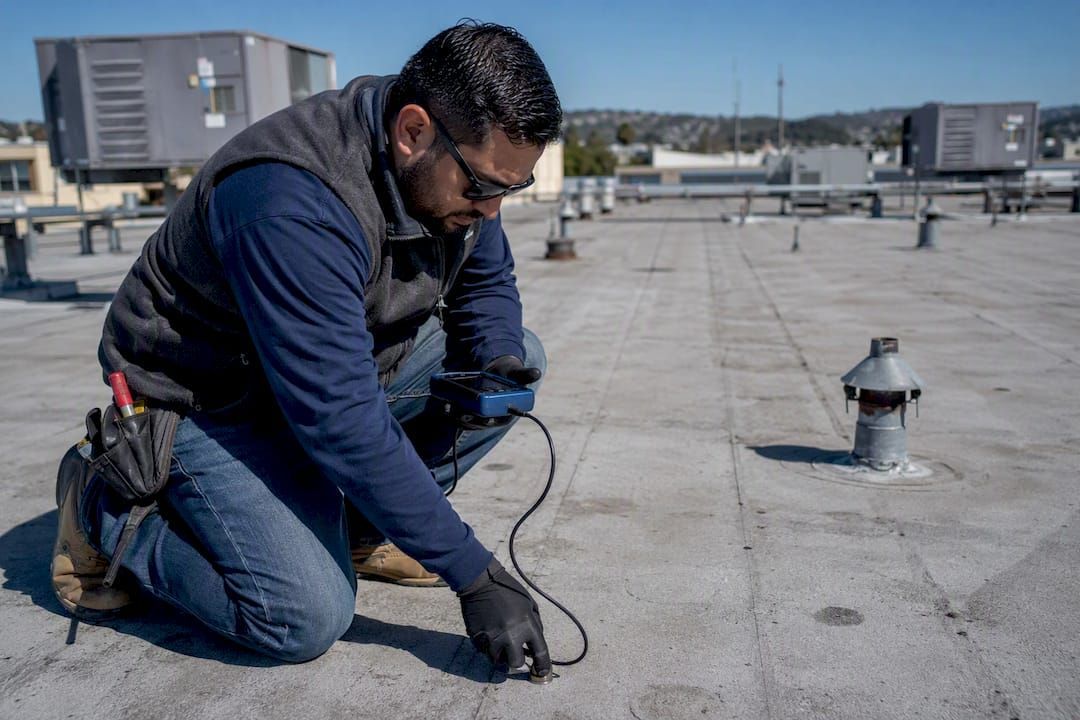
For larger commercial roofs, some facility teams add basic moisture-detection tools during scheduled inspections, checking insulation for trapped water that hasn't reached the surface yet. Time-lapse photos from a fixed rooftop vantage point, taken during and after storms, are a low-cost way to document how quickly (or slowly) specific areas drain.
The goal isn't to turn yourself into a roofing inspector. It's to have enough documentation that when you do call a contractor, you can show them exactly which spots to prioritize and how the problem has trended, rather than starting the diagnosis from zero every time.
How Should Ponding Fixes Fit Into a Waterproofing Plan?
Drainage and waterproofing aren't two separate projects. They're two halves of the same system, and treating them separately is how buildings end up with a great membrane sitting under water it was never designed to hold long term.
Any waterproofing plan should account for slope and drainage first, then membrane selection second. A tapered insulation retrofit is the natural moment to also upgrade the membrane, since the deck is already exposed and labor is already committed. Trying to waterproof over a known low spot without correcting slope just delays the same failure by a few years.
Coatings fit into this picture as maintenance for a membrane that's already properly sloped, or as an interim measure while you plan the bigger retrofit, not as a substitute for fixing drainage. Sequence matters: correct the slope and drainage path, then apply or renew the waterproofing layer on top of a system that's actually built to shed water.
How Do Weather and Debris Affect Ponding Risk?
Climate shapes how urgent this problem is. Roofs in regions with frequent, heavy rain events see ponding more often simply because drains rarely get a break between storms to prove they're clear. Freeze-thaw cycles in colder climates make existing ponding worse, since trapped water that freezes and expands can widen membrane cracks each winter.
Debris load is the variable property owners control most directly. Roofs near mature trees deal with leaf litter that chokes drains within weeks of a cleanout, especially in fall. Roofs near construction sites or industrial areas collect grit and sediment that behaves the same way, just less visibly.
Vegetation growing directly on a roof, whether it's moss colonizing a shaded low spot or a client experimenting with a vegetated roof section, changes how water moves across the surface entirely. If your property includes any planted or green roof area, irrigation practices there directly affect runoff patterns nearby. Facility teams managing rooftop plantings alongside drainage systems benefit from thinking through irrigation volume carefully, since overwatering a green section can send excess runoff straight toward an already-struggling drain.
Shield Guard Roofing's Perspective on Diagnosing Ponding
Most ponding calls we get start the same way: someone noticed a puddle that wouldn't go away and hoped a coating would make it disappear. Our approach starts with mapping the roof, not selling a product. We trace every low spot back to its cause, whether that's a clogged drain, insufficient slope, or a sagging deck, before recommending anything. Sometimes that means a $2,000 drain fix. Sometimes it means a tapered retrofit. The contractor checklist in this guide is the same standard we hold ourselves to when we scope a job.
— Cesar
Get a Professional Ponding Assessment From Shield Guard Roofing
We inspect, map your low spots, and give you a written scope before any work starts, whether that's a targeted drainage fix or a commercial roof coating as an interim measure while you plan bigger work.

If you've spotted standing water on your roof, or you just want a professional read on whether your drainage is code-compliant, schedule a roof inspection with our team. For commercial properties already dealing with active ponding, our commercial roof repairs page outlines how we scope drainage corrections and tapered retrofits across Northern California.
Sources
FAQ
What Is the 48-Hour Rule for Roof Ponding?
Industry guidance treats any water still standing on a flat roof 48 hours after rain stops as ponding, not normal drainage lag. Crossing that threshold can trigger warranty concerns and signals a drainage or slope problem worth investigating.
How Much Does It Cost to Fix Roof Ponding?
Costs depend heavily on scope. Adding a single drain typically runs $1,500 to $4,000 installed, while a full tapered insulation retrofit runs roughly $2.50 to $5.50 per square foot. Shield Guard Roofing provides a written estimate after mapping your specific low spots, since current pricing depends on your roof's size and condition.
Can a Roof Coating Fix Ponding Water Permanently?
No. Silicone coatings tolerate standing water and add years of protection to a sound membrane, but they don't add slope. If your ponding comes from insufficient pitch or a sagging deck, a coating protects the problem instead of solving it.
How Do I Know If Ponding Is a Structural Problem?
If the same spot ponds repeatedly after drains are clear and debris is removed, or you notice interior ceiling stains or visible deck sagging, the cause is likely structural deflection rather than simple drainage. That calls for a contractor or structural engineer, not another drain-clearing session.
How Often Should I Inspect My Flat Roof for Ponding?
Clear drains and strainers quarterly and after every major storm, and walk the roof within 48 hours of heavy rain to check for standing water. Annual inspection of seams and flashings, paired with a logged record of low spots, catches recurring issues before they become structural.
Recommended