$4–$9/Sq Ft: California Tile Underlayment Costs and Why Heat Matters
$4–$9/Sq Ft: California Tile Underlayment Costs and Why Heat Matters
Replacing tile roof underlayment in California typically runs $4 to $9 per square foot , or roughly $8,000 to $22,500 for an average 2,000-square-foot roof, depending on underlayment type, tile condition, and access. Your final number moves with roof pitch, how many tiles break during removal, and whether your decking needs repair. The smartest next step is simple: get a licensed contractor on your roof for an itemized, line-by-line estimate before you budget a dollar figure as fact.
TL;DR:
- Synthetic underlayment generally outlasts felt under California's heat cycling and is recommended for most tile roofs, especially in hotter or south-facing areas.
- Tile breakage allowances are typically between 2% and 8%, and you should have this percentage explicitly stated in your bid to avoid surprises.
- Lift-and-relay jobs usually cost between 60% and 80% of a full roof replacement, making them more affordable when decking is sound and tiles are salvageable.
- The total replacement cost for a 2,000-square-foot roof generally ranges from $8,000 to $18,000, with higher costs in coastal markets due to labor and permit fees.
- Always request a detailed, itemized estimate that includes material type, labor, tile breakage allowance, permit fees, and warranties before signing any roofing contract.
Tile Roof Underlayment Replacement Cost in California: What You'll Actually Pay
Your roof's underlayment is the waterproof membrane hiding under every tile, and it's doing the real work of keeping water out. The tiles themselves are mostly decoration and wind protection. That distinction matters here because California's heat cycles cook that hidden membrane far faster than the tiles above it ever show.
In Los Angeles, underlayment replacement typically costs between $1,931 and $4,771, with a median project landing near $3,749. Per-square-foot pricing runs about $0.70 to $3.05 for the underlayment work alone, though that figure climbs once you fold in tile removal, staging, and disposal, which most quotes bundle into the total.
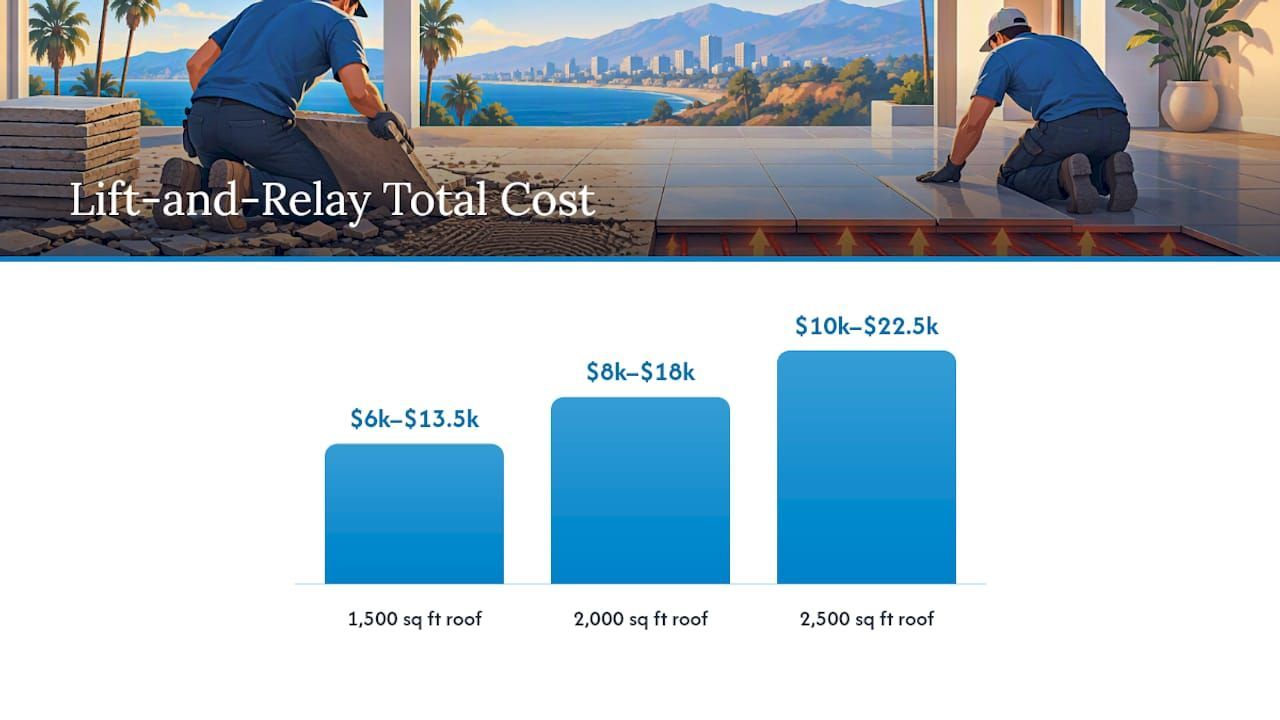
For a full picture, here's what homeowners across California's coastal and inland markets tend to see for a lift-and-relay underlayment job:
- 1,500 sq ft roof: roughly $6,000 to $13,500 total
- 2,000 sq ft roof: roughly $8,000 to $18,000 total
- 2,500 sq ft roof: roughly $10,000 to $22,500 total
Those ranges assume synthetic underlayment, moderate pitch, and no major decking surprises underneath. Add a steep roof, multiple valleys, or a second story with limited ground access, and you can expect the upper end of each range, sometimes beyond it.
Location shifts these numbers more than most homeowners expect. Coastal markets like Santa Barbara or the Bay Area often see higher labor rates driven by cost of living and permit fees, while inland metro areas like Sacramento or the Central Valley tend to land closer to the midpoint. HomeAdvisor's data on California roofing puts full roof replacement between $8,000 and $22,000 for many homes, with labor alone accounting for $1.50 to $3 per square foot. Underlayment-only work sits below full replacement, but not by as much as most people assume, because the labor-intensive part (lifting and resetting tile) is nearly identical either way.
If your neighborhood recently went through a heat wave stretch or you're above 1,500 feet elevation with big day-to-night temperature swings, budget toward the higher end. That thermal cycling is exactly what breaks down underlayment years before the tiles ever crack.
What Drives the Price: Material, Labor, Tile Breakage, and Hidden Line Items
Every tile underlayment estimate is really six separate cost categories stacked together, and understanding each one is how you catch a lowball bid before it becomes a change order.
Material costs vary by underlayment grade. Synthetic underlayment generally runs $0.35 to $0.85 per square foot in material cost alone, while traditional felt costs less upfront but degrades faster under sustained heat. Given California's climate, the material savings on felt rarely justify the shorter service life.
Labor and removal make up the bulk of your bill. Rescue Roofer's breakdown of Orange County lift-and-relay pricing notes that labor dominates the cost structure on these jobs, since crews have to hand-lift every tile, stack it safely, strip the old underlayment, install new material, then reset each tile individually. That's not a job you rush, and it's why labor often runs $2 to $4 per square foot on top of materials.
Here's where a statistic tends to catch homeowners off guard: contractors typically build in a 2% to 8% tile breakage allowance , depending on how old and fragile the existing tiles are. Even careful crews break tiles during removal, particularly on roofs older than 20 years. If your tile profile is discontinued, which is common on homes built before the early 2000s, your contractor will either source salvage tiles from architectural salvage yards or pull matching tiles from a less-visible slope like the back of the house to patch the front.
Other line items that show up on legitimate bids:
- Decking repair or replacement where rot or delamination is found
- Permit fees, which vary by city and county
- Disposal costs for old tile and underlayment debris
- Flashing replacement around chimneys, vents, and valleys
Pro Tip: Ask your contractor to state the tile breakage allowance as a specific percentage in writing, not a vague "we'll handle it." A number on paper protects you from a surprise mid-project invoice.
Which Underlayment Type Actually Holds Up in California Heat?
Synthetic underlayment is the right call for nearly every tile roof in California, and the reasoning comes down to physics, not preference. The Metal Roof Pros note that underlayment typically fails within 15 to 25 years under California's heat cycling, and synthetic products consistently outlast felt within that window because they resist UV exposure and tearing far better during the lift-and-relay process itself.
Felt underlayment (sometimes called "tar paper") costs less per square foot, but here's the catch: since labor is the dominant cost on a relay job anyway, saving a few cents per square foot on felt barely moves your total bill. You're paying nearly the same labor either way, so choosing the shorter-lived material to save a small percentage on materials is a poor trade.
Compare your options honestly:
- Standard synthetic underlayment: best balance of cost and longevity for most homes, typically rated for 20 to 30 years
- High-temperature synthetic: worth the upgrade on south-facing or dark-tile roofs that run hotter, especially in the Central Valley and inland Southern California
- Felt (30 lb or 40 lb): cheaper upfront, but shorter functional lifespan under sustained heat exposure
- Peel-and-stick ice and water shield: should be required at eaves, valleys, and any low-slope transition, regardless of which primary underlayment you choose
If your roof has valleys prone to debris buildup or low-slope sections near dormers, insist on a double layer or ice and water shield in those zones specifically. Water finds the weakest point, and valleys are almost always it. For more on how underlayment ages under California conditions, our lifespan guide breaks down what to expect by material and climate zone.
Lift-and-Relay vs. Full Roof Replacement: Which One Fits Your Situation?
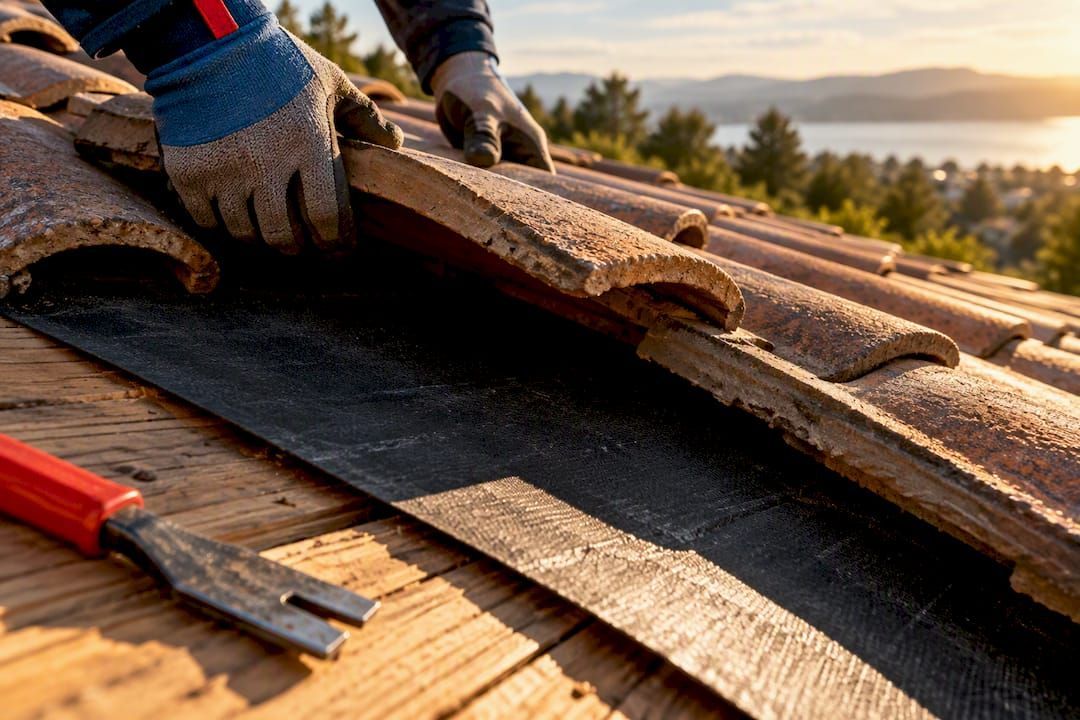
A lift-and-relay job keeps your existing tiles and swaps out only what's underneath. Contractors carefully remove tiles slope by slope, stack them safely, strip the failed underlayment down to the decking, install new material, then reset the original tiles. It's a way to fix the actual problem (failed waterproofing) without paying for brand-new tile.
Cost-wise, Rescue Roofer's guidance suggests lift-and-relay work runs roughly 60% to 80% of a full re-roof price on the same house. That's a meaningful discount, but it comes with tradeoffs worth weighing before you commit:
- Choose lift-and-relay when your tiles are in good condition, your decking is sound, and you just need the waterproof layer refreshed.
- Choose full replacement when decking rot is extensive, your tiles are old and brittle enough that breakage will run high anyway, or you want to switch materials entirely.
- Consider a per-slope relay if budget is tight and only certain sections show damage, but understand this comes with real limitations.
Here's the part most estimates skip: per-slope relays create tie-in points where old and new underlayment meet, and those seams are weaker than a continuous membrane. A future mobilization to fix another slope also costs more per square foot than doing the whole roof at once, since crews have to remobilize equipment and staging for a smaller job. A full-roof approach costs more upfront but usually less per square foot overall, and it comes with one warranty covering the entire surface instead of a patchwork of partial coverage.
Build Your Own Estimate: A Practical Worksheet
Before you call a single contractor, gather five numbers: total roof square footage, average pitch, tile type (clay, concrete, or slate-look composite), access difficulty (single story with easy driveway access versus multi-story with tight side yards), and the number of valleys or roof levels involved. These five inputs explain most of the price variation between two houses of the same size.
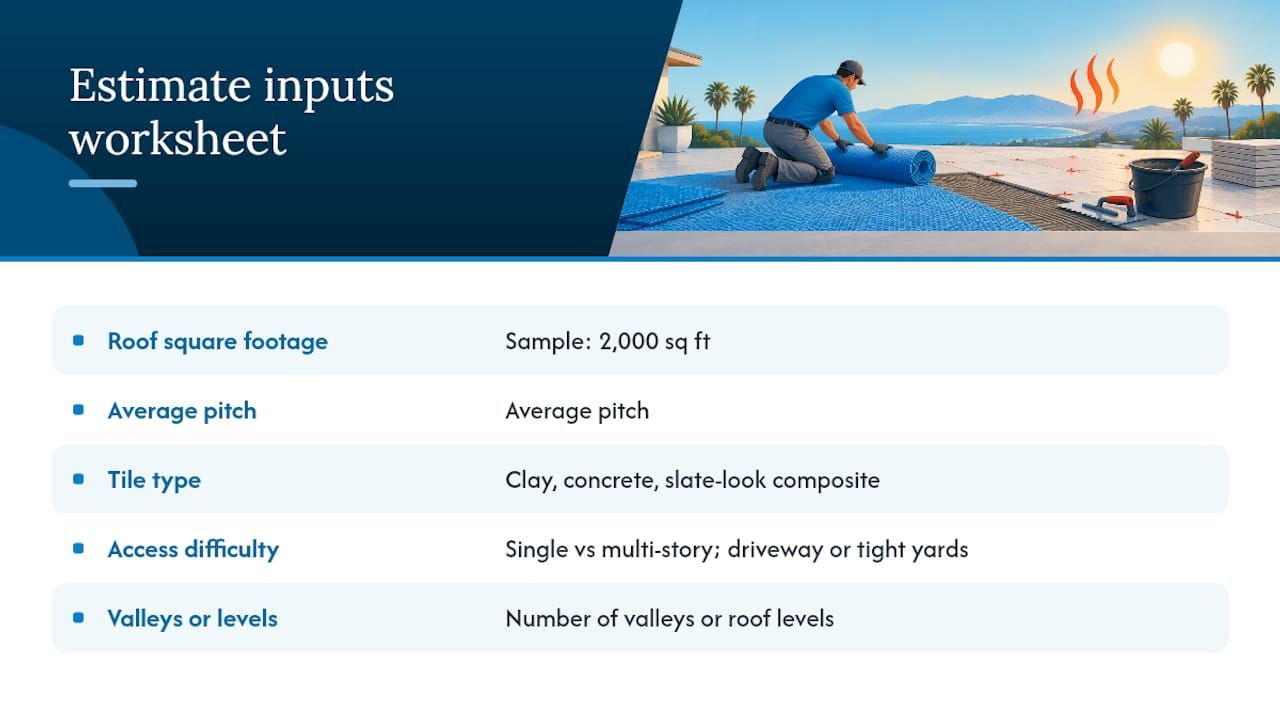
A sample line-item worksheet for a 2,000-square-foot roof might look like this:
LatestCost's per-square-foot benchmarks for common roof sizes back up ranges close to these figures, giving you a reasonable sanity check against any bid you receive.
When a contractor's bid comes in noticeably below your worksheet total, that's usually a sign a line item got left off entirely, not a sign you found a bargain.
Permits and Inspection Surprises to Plan For
Most California jurisdictions treat a lift-and-relay as a re-roof for permitting purposes, especially when the underlayment is being fully replaced across the roof rather than patched. That means you'll likely need a permit even though your tiles never leave the property permanently. Skipping this step isn't just a legal risk; it can complicate insurance claims and future home sales.
Permit fees vary by city and county, but plan for a few hundred dollars added to your project, plus the added timeline of scheduling inspections. Inspectors commonly flag issues that add cost mid-project:
- Deteriorated flashing around chimneys, skylights, or vents that needs replacement
- Decking sections found to be soft, delaminated, or improperly fastened
- Fastening patterns that don't meet current California building code for wind and seismic loads
Ask your contractor directly who pulls the permit, how long inspection scheduling typically takes in your county, and whether their bid already accounts for likely flashing replacement. A contractor who can't answer these questions confidently probably hasn't done many permitted jobs in your area.
What Happens on Site: Timeline, Crew Size, and Equipment
A straightforward 1,500 to 2,000-square-foot tile relay typically takes a crew 3 to 5 working days , factoring in tile removal, underlayment installation, and careful tile reset. Larger roofs, steep pitches, or multiple valleys can push that to a week or more.
The sequence usually runs: mobilization and tile staging, strip-down to decking, decking repairs if needed, underlayment installation, then tile reset slope by slope, followed by a final inspection. Steep or multi-story roofs sometimes require a crane or hoist system to move tile stacks safely, which adds cost but also protects your landscaping and speeds up the heaviest lifting.
- Get workmanship warranties in writing, not verbal promises
- Ask specifically whether the warranty covers tile reset separately from underlayment material
Pro Tip: Request a warranty document before signing, not after the deposit clears. A verbal "yeah, we guarantee our work" means nothing if a leak shows up eighteen months later.
Questions to Ask Before You Sign Any Roofing Contract
The best defense against a bad bid is a good checklist. Before you compare quotes side by side, ask every contractor these questions:
- Are you licensed and insured in California, and can you provide proof?
- Does your own crew perform the work, or do you subcontract it out?
- What's your tile breakage allowance, stated as a percentage?
- Who pulls the permit, and is that fee included in your bid?
- How do you price decking repairs if they're discovered mid-project?
- What warranty do you offer on materials and on workmanship separately?
Then run every bid against a required line-item checklist:
- Material type and brand named specifically, not just "synthetic underlayment"
- Labor cost separated from material cost
- Tile breakage allowance stated as a number
- Decking repair pricing structure (per square foot or flat rate)
- Permit handling and who's responsible for scheduling inspections
- Written warranty terms with duration
Watch for red flags: a bid with no breakdown at all, a price that seems too low against your own worksheet, or a contractor who wants to reuse old flashing without a written explanation of why. Trust signals worth weighing in your decision include in-house crews rather than rotating subcontractors, manufacturer factory certifications, and a track record of local references you can actually call.
Shield Guard Roofing's Approach to Tile Underlayment Projects in NorCal
Shield Guard Roofing brings extensive roofing experience to Northern California homes, and that history shows up in how estimates get built. As a family-owned company running 100% in-house crews, factory-certified installers handle every tile lift and reset personally, rather than passing the job to a rotating cast of subcontractors.
A typical Shield Guard lift-and-relay estimate includes a stated tile breakage allowance, a decking repair line item priced before work begins rather than discovered mid-project, permit handling built into the timeline, and warranty terms that cover both materials and workmanship separately. That's the same worksheet structure covered above, just applied by a licensed crew who does this work daily.
One recent NorCal project involved a tile roof where the underlayment had failed in patches despite intact-looking tiles. The inspection found decking rot near two valleys, requiring a repair allowance beyond the original estimate. Because that contingency had been built into the initial itemized bid, the final invoice landed within the worksheet's upper range rather than becoming a surprise. That's the outcome an itemized estimate is supposed to deliver: no shock, no gap between the number you planned for and the number you pay.
What I'd Tell a Neighbor Weighing This Decision
If you're staring at a cracked slope or a stain on the ceiling, here's my honest read: in California heat, synthetic underlayment is worth the modest premium over felt every time, because labor costs the same either way and you're only saving pennies per square foot on the cheaper material.
Choose a per-slope relay only if your budget is tight and the damage is genuinely isolated. If decking rot shows up in more than one area, or your tiles are already brittle from age, stop patching and price a full replacement instead. It costs more today but saves you from paying mobilization fees twice.
Get at least two itemized bids. Verify who's pulling the permit and how they're sourcing replacement tile before you sign anything.
— Cesar
Get an Itemized Tile Underlayment Estimate From Shield Guard Roofing
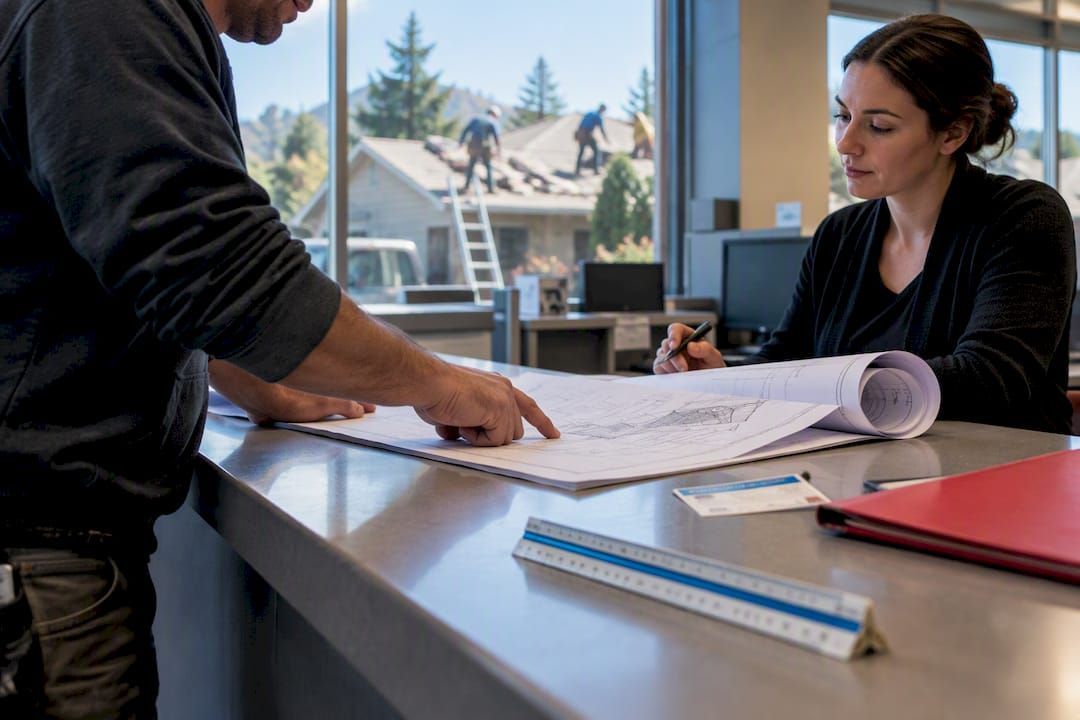
Shield Guard Roofing gives you something most homeowners never get from a roofing bid: an itemized, line-by-line estimate built by the same in-house crew that will actually be on your roof, with a stated tile breakage allowance and decking repair pricing decided before work starts, not discovered halfway through.
That matters more on tile roofs than almost any other project, since the gap between a vague verbal quote and a written breakdown is often the difference between a predictable bill and a mid-project change order you didn't budget for. As a family-owned NorCal company with installers and premium material partnerships, Shield Guard Roofing handles the permit process, the tile sourcing, and the warranty paperwork so you're not managing three separate vendors on your own roof.
If your tiles look fine but you're seeing stains, sagging, or you simply know your roof is past the 15 to 25 year underlayment window, don't wait for a leak to force the decision. Schedule a roof inspection or explore residential roofing services to get a written, itemized bid you can actually compare against your own worksheet.
Sources
- How Much Does Roof Underlayment Replacement Cost in Los Angeles, CA? | Angi
- Replace a roof in California cost guide | HomeAdvisor
- Tile roof underlayment failure | The Metal Roof Pros
- Tile Roof Underlayment Replacement Cost in Orange County | Rescue Roofer
- Cost to Replace Underlayment on Tile Roof | LatestCost
FAQ
How much does it cost to replace underlayment under a tile roof?
Expect roughly $4 to $9 per square foot for tile underlayment replacement in California, including tile removal, new material, and reset labor. On a typical 2,000-square-foot roof, that lands between about $8,000 and $18,000, depending on tile condition and access.
What type of underlayment is best for a tile roof in California?
Synthetic underlayment is the better choice for nearly all California tile roofs because it resists UV exposure and tearing far longer than felt under sustained heat cycling. High-temperature synthetic is worth the upgrade on dark tiles or south-facing slopes, and underlayment typically lasts 15 to 25 years before it needs replacement regardless of type.
How much does it cost to replace underlay on a specific roof size?
For a 2,000-square-foot tile roof, budget roughly $8,000 to $18,000 for a full lift-and-relay underlayment replacement, assuming synthetic underlayment and no major decking repairs. A 1,500-square-foot roof runs closer to $6,000 to $13,500, while a 2,500-square-foot roof can reach $10,000 to $22,500.
Is lift-and-relay cheaper than a full roof replacement?
Yes, lift-and-relay typically costs 60% to 80% of a full re-roof price on the same house, since you keep the existing tiles. Full replacement makes more sense when decking damage is extensive or tiles are too brittle to safely reuse.
What questions should I ask before hiring a roofing contractor for this job?
Ask about their tile breakage allowance percentage, whether their own crew performs the work or subcontractors do, and how they price decking repairs discovered mid-project. Shield Guard Roofing answers these upfront with an itemized estimate built by its own in-house, factory-certified crews before any work begins.
Recommended