What Is a Roofing Capital Improvement for Property Owners
What Is a Roofing Capital Improvement for Property Owners

A full roof replacement is a capital improvement. Patching a few shingles or re-sealing flashing is a repair. That single distinction controls whether you deduct the cost this year or spread it over decades, and getting it wrong can trigger an IRS audit or a surprise tax bill at closing.
Here is what that means in practice for each owner type:
- Primary homeowners: A roof replacement adds to your adjusted cost basis. You get no immediate deduction, but a higher basis reduces your taxable capital gain when you sell.
- Rental property owners: Capitalize the cost and depreciate it over 27.5 years under MACRS residential rental rules. No current-year deduction for the full amount.
- Commercial property owners: Capitalize and depreciate over 39 years under MACRS nonresidential rules. Same logic, longer recovery period.
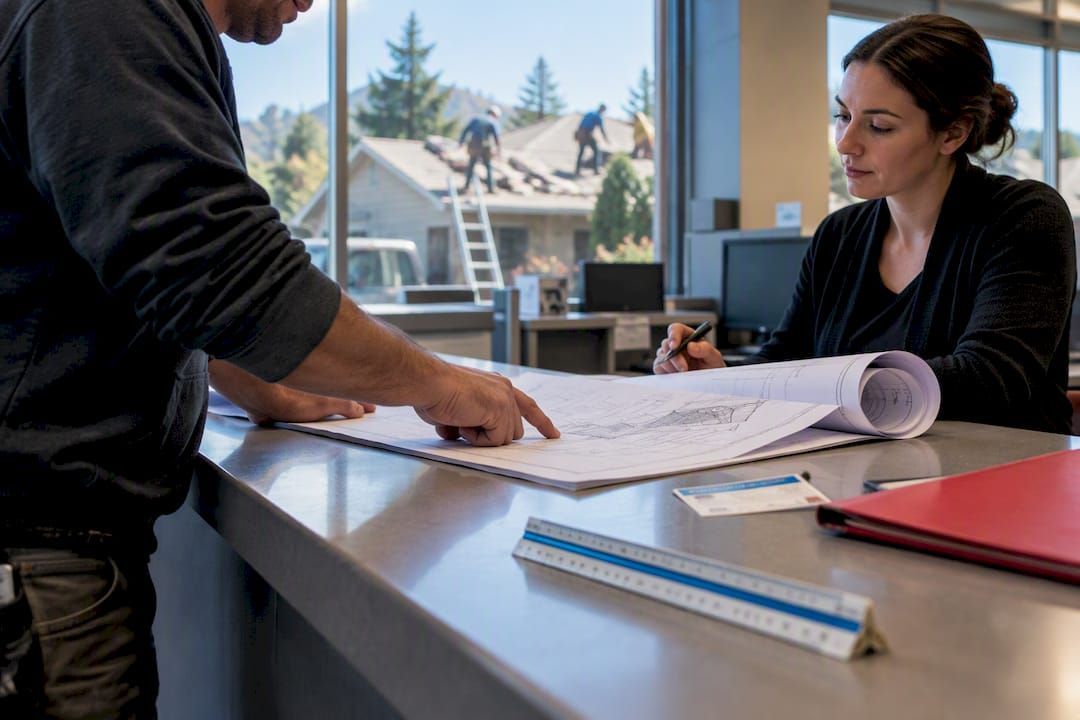
The practical starting point: treat every invoice separately. Note the scope, the square footage replaced, and whether a permit was pulled. Those three data points drive the classification.
What the IRS actually means by "capital improvement"
The IRS and Treasury Department define the line between a capital improvement and a repair through the tangible property final regulations under §263(a), finalized in 2013. Under §162, ordinary repairs that keep property in its normal operating condition are deductible in the year you pay them. Costs that improve, restore, or adapt the property must be capitalized.

The regulations use three tests, commonly called the BAR tests:
Betterment — Did the work fix a pre-existing defect, materially add to the property's value, or increase its capacity? Replacing worn-out shingles with a higher-grade material that performs measurably better than the original is a betterment.
Adaptation — Did the work change the property's use in a way it was not originally designed for? Adding a rooftop structure to support solar panels on a building that never had them is an adaptation.
Restoration — Did the work return a major component to its original working condition after it deteriorated, was damaged, or was fully consumed? A complete tear-off and re-deck qualifies here almost every time.
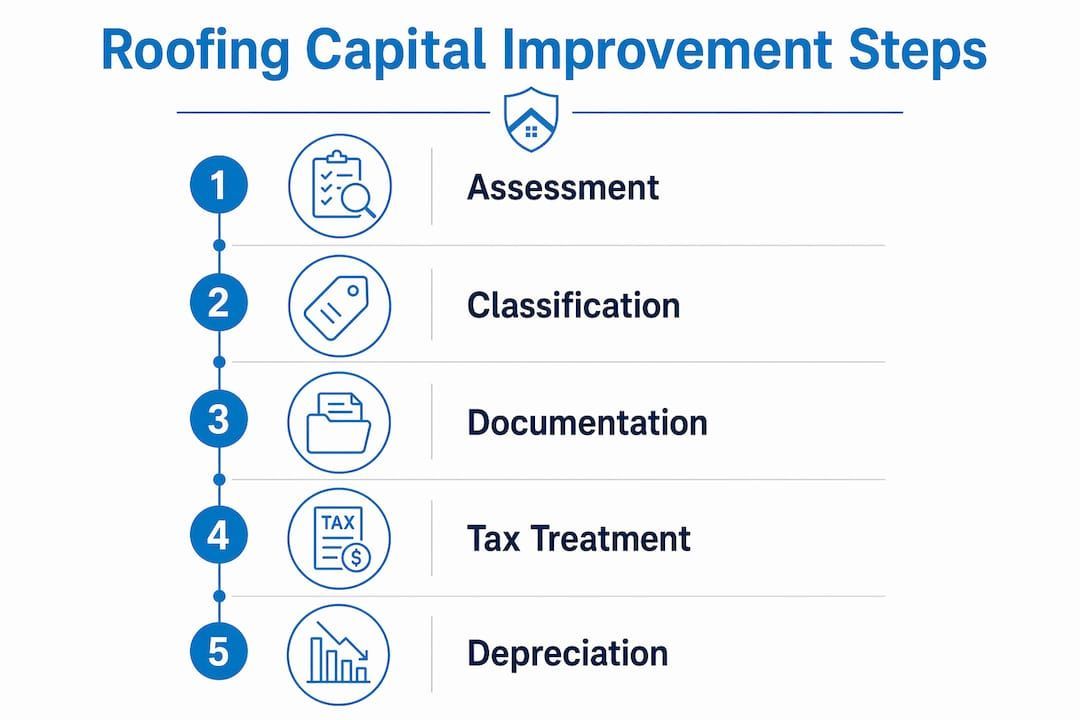
The unit-of-property concept matters here. Practitioners treat the entire roof system, including the membrane, insulation, decking, and structural supports, as a single unit of property (UOP). That framing is important: replacing one small component of that system is usually a repair, but replacing a major component of the UOP triggers the restoration test and requires capitalization.
Two safe harbors can keep small roofing costs off the balance sheet. The de minimis safe harbor lets you expense items below a per-invoice threshold ($2,500 for businesses without an applicable financial statement, $5,000 with one) without a capitalization analysis. The routine maintenance safe harbor covers recurring work you expect to perform more than once over the property's life to keep it in ordinary operating condition, such as annual gutter cleaning or periodic re-caulking of penetrations.
Roofing examples: what counts as a repair vs a capital improvement
The clearest way to understand the rules is to see them applied to real jobs.
Repairs you can expense
- Patching a leak: A contractor seals a small penetration and replaces three damaged shingles. The roof keeps doing what it always did. This is a repair.
- Re-sealing flashings: Flashing around a chimney or skylight is re-caulked and re-bedded. No structural change, no material upgrade. Expense it.
- Replacing a handful of shingles after a minor storm: The work restores the roof to its prior condition without replacing a major component. Repair.
- Clearing and re-securing gutters: Routine maintenance that preserves drainage function. Expense in the year incurred.
Capital improvements you must capitalize
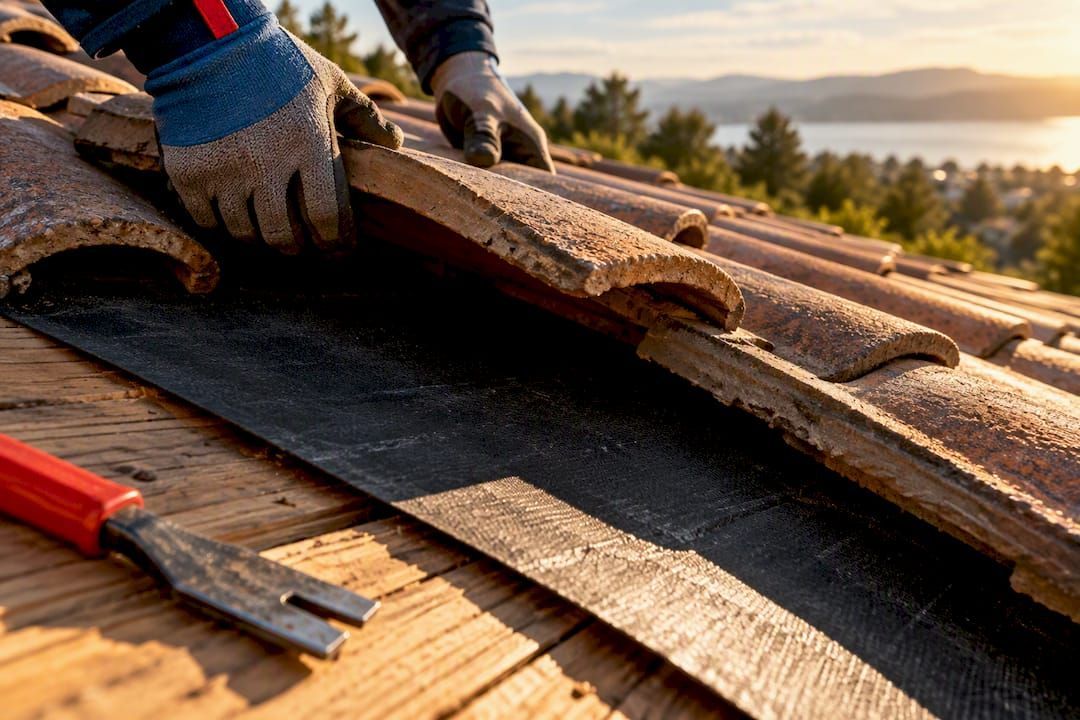
- Full tear-off and replacement: The entire roof system is removed and rebuilt. This meets the Restoration test under the tangible property regulations and must be capitalized regardless of property type.
- Replacing the decking: Structural decking is a major component of the UOP. Replacing it, even without replacing the surface material, is a capital improvement.
- Full membrane replacement on a flat commercial roof: A complete TPO or EPDM membrane replacement restores the primary weather barrier. Capitalize it.
- Upgrading to a materially better system: Swapping standard 3-tab shingles for architectural shingles with a significantly longer rated life is a betterment. The new system is not just maintaining the old condition; it is exceeding it.
- Adding insulation or a vapor barrier during replacement: If the work adds a component that was not there before, that portion is an adaptation or betterment and must be capitalized separately.
Partial replacements: where it gets complicated
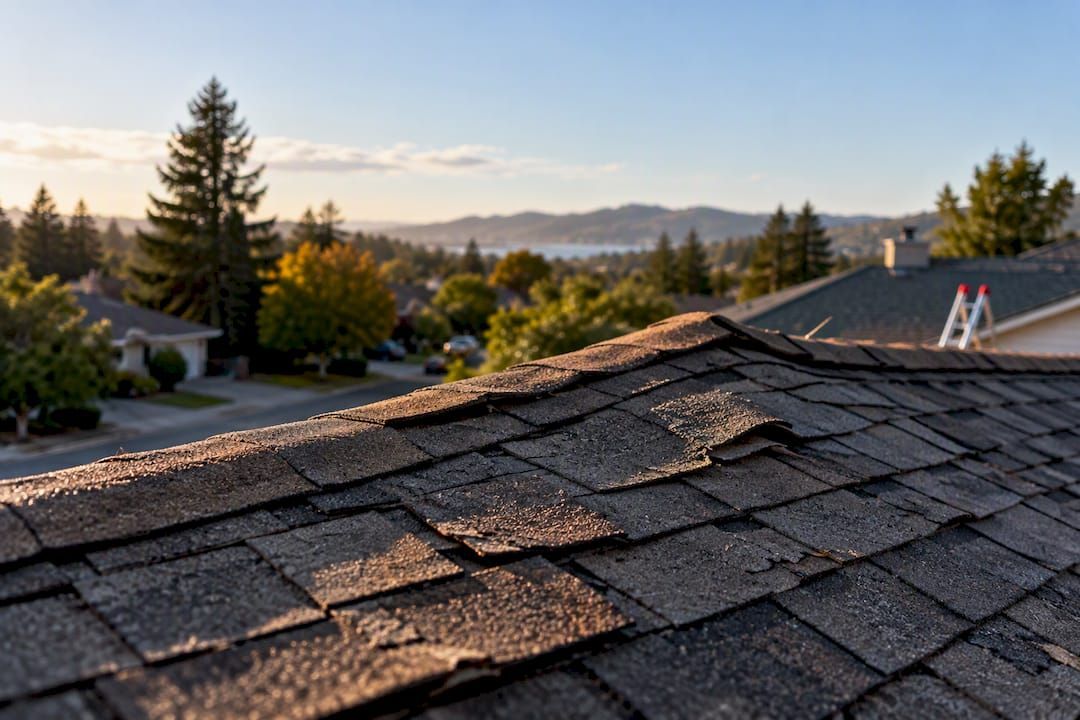
Partial replacements sit in a gray zone. Replacing 15% of a roof's surface after a localized storm is probably a repair if the work simply restores that section to its prior condition. Replacing 60% of the surface, or replacing the decking across a large section, starts to look like a restoration of a major component.
Consider two similar-sounding jobs with different outcomes. A property manager replaces damaged shingles on one slope of a four-slope roof after a branch falls. The scope is limited, no decking is touched, and the materials match the original. That is a repair. A second property manager replaces three of four slopes because the shingles are at end of life, installs new underlayment, and upgrades to a 50-year rated product. That job meets the Betterment and Restoration tests and gets capitalized. Same building type, very different tax treatment, because of scope and materials.
For a deeper look at how contractors assess repair vs. replacement scope, the operational indicators matter as much as the dollar amount.
How roofing costs affect your taxes: homeowners, landlords, and commercial owners
The classification decision has different financial consequences depending on how you hold the property.

| Owner Type | Classification | Tax Treatment | Recovery Period |
|---|---|---|---|
| Primary residence | Capital improvement | Increases adjusted basis; no current deduction | N/A (realized at sale) |
| Rental property | Capital improvement | Depreciated under MACRS | 27.5 years |
| Commercial property | Capital improvement | Depreciated under MACRS | 39 years |
| Any owner | Repair | Deducted in year incurred | N/A |
Primary homeowners often expect an immediate write-off for a new roof. That is not how it works. A roof replacement on a primary residence adds to your adjusted cost basis, which reduces your taxable gain when you eventually sell. If you paid $300,000 for your home, spent $20,000 on a new roof, and later sell for $500,000, your gain is $180,000, not $200,000. The tax benefit is real, but it is deferred.
Rental and commercial owners get a more immediate benefit through depreciation deductions each year. The tradeoff is that you cannot deduct the full cost upfront. A commercial roof replacement cost is depreciated over the standard 39-year period, producing annual depreciation consistent with straight-line methods. That is why cost segregation studies sometimes reclassify roofing components into shorter-life asset categories, accelerating the deduction.
Partial disposition elections
When you capitalize a new roof, you should consider electing a partial disposition of the old roof component. This lets you deduct the remaining adjusted basis of the removed asset in the year of replacement rather than continuing to depreciate a roof that no longer exists. It requires allocating the original cost between the old roof and the rest of the building, which usually means a cost-segregation approach or a reasonable estimate from your CPA.
Insurance proceeds and casualty events
Storm damage adds another layer. If an insurance payout covers a roof replacement, the proceeds are generally not taxable income to the extent they offset your loss. But the replacement cost must still be classified, and if the new roof is materially better than what was destroyed, the betterment portion is capitalized separately. Under §1033, involuntary conversions from casualty events have specific rules about reinvestment timelines and basis treatment. A CPA should review any insurance-funded replacement.
Under GAAP, the same logic applies: routine maintenance is expensed while costs that extend useful life or substantially improve function are capitalized as property, plant, and equipment and depreciated on the balance sheet.
Audit-ready documentation: what to collect and keep
Good records are what separate a clean audit from a painful one. The IRS does not require a specific form, but it does require that you be able to prove the nature, scope, and cost of the work.
Collect these documents for every roofing capital improvement:
- Itemized invoices showing labor and materials broken out separately, with the square footage or percentage of roof surface replaced clearly stated
- Contractor scope of work describing what was removed, what was installed, and the materials used (product names, specifications, rated life)
- Building permits pulled for the job, which establish the date, scope, and official approval of the work
- Before-and-after photos taken by the contractor or your property manager, timestamped and stored with the project file
- Material specifications and manufacturer data sheets for the installed product, especially if you are claiming a betterment based on improved performance
- Final inspection reports from the municipality or a third-party inspector
- Separate invoices for any ancillary work done at the same time, such as gutter replacement, solar reinforcement, or structural repairs. Mixing these on one invoice creates classification problems and can jeopardize separate tax credits.
For partial dispositions, you also need documentation of the original cost allocation for the old roof component. If you do not have that from the original purchase, a cost-segregation study or a reasonable CPA estimate based on Marshall & Swift or similar valuation tools can establish the figure.
Pro Tip: Ask your contractor to include the total square footage replaced and the percentage of the total roof surface on every invoice. That single line item is often the deciding factor in an audit and takes the contractor about 30 seconds to add.
The commercial roof inspection checklist Shieldguardroofing uses for property managers aligns directly with these documentation requirements and can serve as a starting template for your own records.
Gray areas and how practitioners handle borderline roofing projects
Most roofing jobs are not cleanly one thing or the other. Here is where experienced tax practitioners spend most of their time.
The percentage threshold question
You may have heard of a "25% rule" for roofing. The IRS regulations do not state a specific percentage trigger. What practitioners actually use is a rough guideline, commonly around 30%, based on how the restoration test has been applied in case practice and IRS guidance. Replacing less than approximately 30% of a roof's surface area in a single project is more likely to be treated as a repair; replacing a greater portion starts to look like a restoration of a major component.
That said, percentage alone is not definitive. A 20% replacement that includes the decking may still be capitalized because the decking is a major structural component of the UOP. A 35% replacement of surface shingles only, matching original materials, may be defensible as a repair if it restores the roof to its prior condition without betterment. The facts and circumstances always control.
Storm damage and casualty restoration
Storm damage shifts the analysis toward the Restoration test almost automatically. When a hail event or wind storm damages a significant portion of the roof, the replacement work is restoring a component that was damaged or partially destroyed. Practitioners typically capitalize storm-related replacements, especially when insurance is involved, because the restoration test is clearly met. For NorCal property owners dealing with storm events, storm damage documentation practices are worth reviewing before the contractor leaves the job site.
Energy upgrades and added components
Adding insulation, a cool-roof coating, or a new vapor barrier during a replacement is almost always a betterment or adaptation. These components did not exist before or were not part of the original system. They must be capitalized separately from the base replacement cost, and they may qualify for energy-related tax credits under current federal incentive programs. Keep those invoices separate.
State-level rules add another layer
The federal IRS framework governs federal income tax treatment. States have their own rules, and they do not always match. New York's Department of Taxation and Finance publishes specific guidance on what qualifies as a capital improvement for sales tax purposes, which is a separate question from income tax treatment. California has its own franchise tax board guidance. If you are managing property in multiple states, the classification question multiplies. A CPA or tax counsel familiar with your state's rules is not optional for contested positions.
Six questions to classify a roofing invoice right now
Use this checklist the moment an invoice lands on your desk. Work through the questions in order.
-
What was the scope of the work? If the contractor replaced the entire roof system or a major component (membrane, decking, full surface), go to step 2. If the work was limited to patching, sealing, or replacing a small number of shingles, it is likely a repair. Expense it and document the scope.
-
What percentage of the total roof surface was replaced? Estimate as accurately as you can from the invoice or scope of work. Replacing less than approximately 30% of the surface, with no major structural component involved, leans toward repair. Replacing more than that, or any amount that includes decking or full membrane, leans toward capitalization.
-
Was a major structural component replaced? Decking, primary membrane, or load-bearing supports are major components of the UOP. If yes, capitalize regardless of percentage.
-
Did the work materially extend the roof's useful life or improve its performance beyond the original condition? If the new materials carry a longer rated life or perform measurably better, the Betterment test is likely met. Capitalize.
-
Is this part of a recurring maintenance pattern? If you perform this type of work regularly and it keeps the roof in ordinary operating condition, the routine maintenance safe harbor may apply. Document the maintenance schedule and prior repair history to support the election.
-
Does the invoice amount fall under the de minimis threshold? If the per-invoice cost is below $2,500 (or $5,000 with an applicable financial statement) and you have a written accounting policy in place, you may expense it under the de minimis safe harbor without further analysis.
When you capitalize, attach all supporting documentation to the asset record and consider whether a partial disposition election is appropriate for the old component. When the answer is genuinely unclear after working through these questions, consult a CPA before filing. The invoice-by-invoice approach is the standard practitioners recommend, and detailed documentation is what wins audits.
Key Takeaways
Full roof replacements are capital improvements under IRS tangible property regulations; routine repairs are expensed in the year incurred, and the tax consequence depends entirely on how you hold the property.
| Point | Details |
|---|---|
| Full replacement = capital improvement | A complete tear-off and rebuild meets the Restoration test and must be capitalized, not expensed. |
| Owner type drives tax outcome | Primary residence owners gain a higher cost basis; rental owners depreciate over 27.5 years; commercial owners depreciate over 39 years. |
| Document every invoice separately | Scope, square footage replaced, permits, and before/after photos are the records that protect you in an audit. |
| Partial disposition saves money | When you capitalize a new roof, electing a partial disposition lets you deduct the remaining basis of the old component immediately. |
| Shieldguardroofing provides itemized documentation | Shieldguardroofing's scopes of work, permits, and before/after photos give property owners the records needed to support correct tax classification. |
The case for treating every roofing invoice as its own tax decision
Most property owners make one of two mistakes. They either capitalize everything roofing-related out of caution, missing legitimate current-year deductions on routine repairs, or they expense everything to simplify bookkeeping, setting themselves up for a reclassification and penalties if audited.
The IRS tangible property regulations were designed to end that guessing game. The BAR tests give you a real framework. The safe harbors give you practical off-ramps for small items. And the unit-of-property concept gives you a logical way to think about what "major" actually means in the context of your specific roof system.
What I find most practitioners underestimate is the value of the partial disposition election. Property owners who capitalize a new roof without disposing of the old one are essentially depreciating two roofs at once, the new one going forward and the ghost of the old one still sitting on the books. That is money left on the table, and it is entirely avoidable with a single election at tax time.
The other underestimated piece is contractor documentation. A well-written scope of work from your contractor, one that states the square footage replaced, the materials installed, and the condition of what was removed, is worth more than any after-the-fact reconstruction you might attempt during an audit. Ask for it upfront. Most contractors will provide it without hesitation if you explain why you need it.
For complex situations, including insurance-funded replacements, cost segregation questions, or multi-state properties, a CPA with real estate tax experience is the right call. The framework above handles the straightforward cases. The edge cases need a professional.
Shieldguardroofing makes documentation easy for property owners
When a roof replacement is a capital improvement, the paperwork matters as much as the work itself. Shieldguardroofing delivers itemized scopes of work, permit support, material specifications, and before/after photo documentation on every project, giving you exactly what your CPA and the IRS need to support correct classification.
Whether you are managing a residential roof replacement in Sacramento or planning a commercial capital project across a NorCal portfolio, Shieldguardroofing's team separates repair line items from capital work on every estimate. That means cleaner records, fewer questions at tax time, and a documented asset file you can hand directly to your accountant. Financing is available for large replacement projects, so a capital improvement does not have to strain your cash flow in a single year. Schedule an inspection or request an itemized estimate today at shieldguardroofing.com/services.
This article is general information, not tax or legal advice. Confirm the current rules with the IRS, your state tax authority, or a qualified tax professional for your specific situation.
Authoritative sources and recommended reading
The sources below are the primary references for the rules and guidance in this article. Start with the IRS regulations for federal income tax questions, then check your state's tax authority for sales tax and state income tax treatment.
- IRS Tangible Property Final Regulations — The primary federal authority on capitalization vs. expensing under §263(a). Covers the BAR tests, unit-of-property rules, and safe harbors. Start here for any contested classification.
- IRS Forms and Publications — IRS Publication 527 (Residential Rental Property) and Publication 946 (How to Depreciate Property) cover recovery periods, MACRS tables, and partial disposition rules in plain language.
- New York Department of Taxation and Finance — Capital Improvements Bulletin — State-level guidance on what qualifies as a capital improvement for sales tax purposes. Useful model for understanding how states layer their own rules on top of federal treatment.
- VIP Wealth Advisors — Rental Property Repairs vs Capital Improvements — Practitioner summary of depreciation recovery periods and the repair vs. capital improvement distinction for rental property owners.
- Jackson Hewitt — Tax Deductible Home Improvements — Homeowner-facing explanation of how capital improvements affect cost basis and capital gains treatment for primary residences.
- Reedcorp Tax — Capital Improvements vs Repairs — Practitioner guide covering safe harbors, the invoice-by-invoice workflow, partial disposition elections, and the percentage thresholds practitioners commonly use.
- Exterior Genie — How Roofers Determine Replacement vs Repair — Contractor-facing explanation of the operational and physical indicators used to distinguish repair scope from replacement scope; useful context for property managers working with contractors.
| Source | Best For |
|---|---|
| IRS Tangible Property Regulations | Federal BAR tests, UOP rules, safe harbors |
| IRS Publications 527 and 946 | Depreciation tables, recovery periods, partial disposition |
| NY Dept. of Taxation and Finance | State sales tax treatment of capital improvements |
| Reedcorp Tax Guide | Practitioner workflow, safe harbors, audit defense |
| Jackson Hewitt Guide | Primary residence basis and capital gains treatment |
| VIP Wealth Advisors | Rental property depreciation and recovery periods |
| Exterior Genie Blog | Contractor scope assessment and replacement indicators |
Recommended