Flat Roof vs Pitched Roof: Which Is Best for Your Home?
Flat Roof vs Pitched Roof: Which Is Best for Your Home?
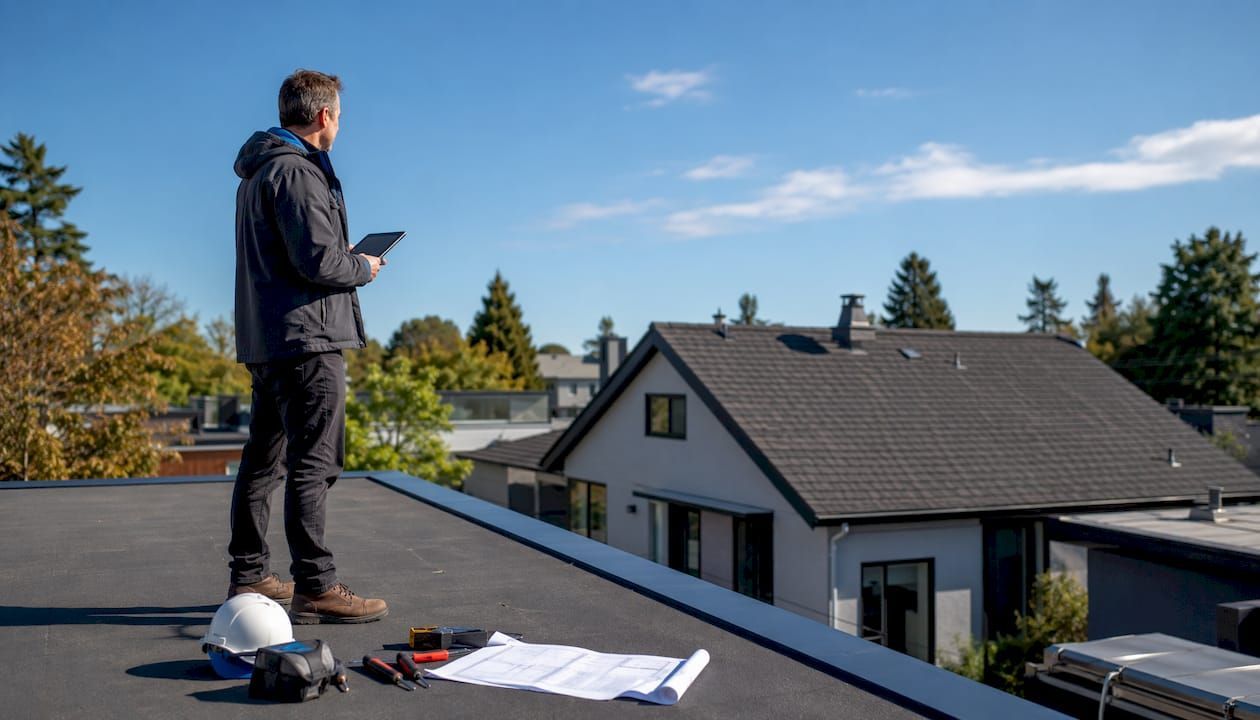
For most U.S. homeowners who want a long lifespan, low maintenance, and strong resale value, a pitched roof is the safer long-term investment. Choose a flat roof when you prioritize usable rooftop space, a contemporary look, or simpler solar and HVAC installation.
Here is the quick map:
- Want durability and resale value? Pitched roofs using architectural shingles, metal, or tile last multiple decades and appeal broadly to buyers.
- Want a rooftop deck, solar array, or modern aesthetic? A flat (low-slope) system gives you a walkable platform and lower upfront cost, typically $4–$10 per square foot installed.
- Watching lifecycle cost? Flat roofs often need resealing periodically and full replacement within a couple of decades. Pitched systems can go multiple decades before replacement, depending on material.
The right call depends on your climate, budget, and what you plan to do with the space above your head. Both roof types work well when designed and installed correctly. The difference is in the tradeoffs, and those tradeoffs are worth understanding before you sign a contract.
How do flat and pitched roofs compare at a glance?
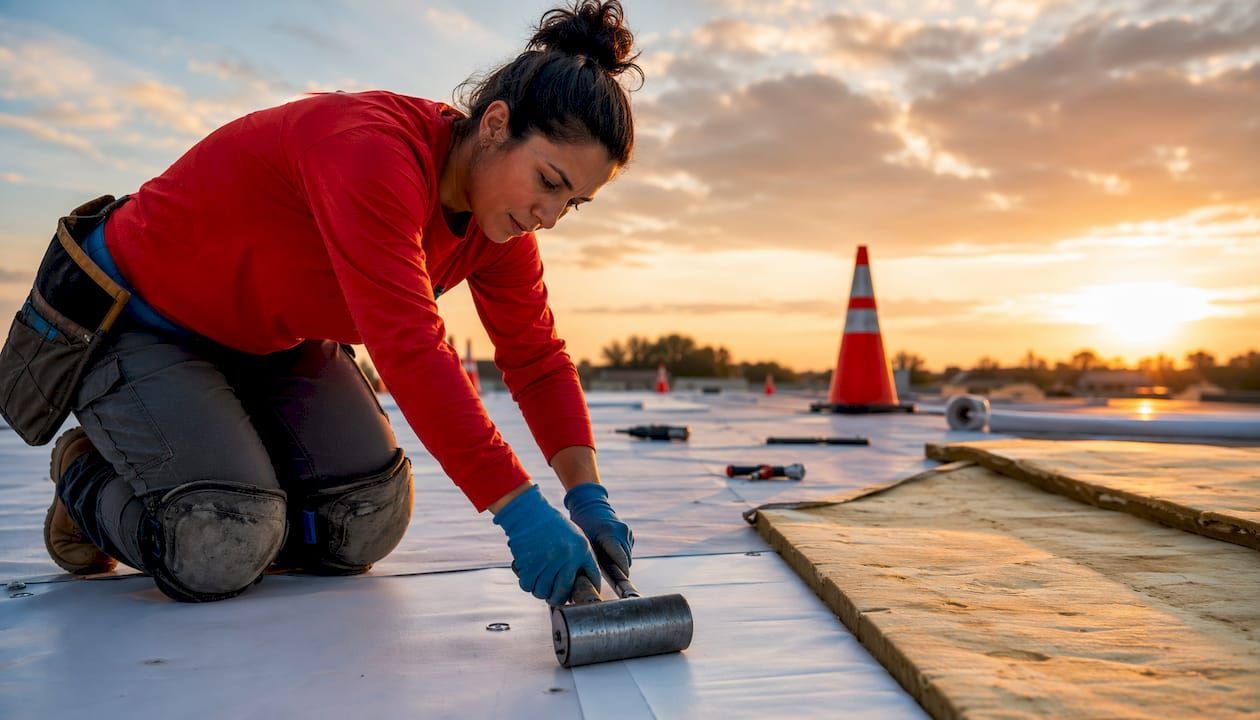
The table below covers the dimensions that matter most when you are deciding between the two systems.
| Dimension | Flat / Low-Slope Roof | Pitched / Steep-Slope Roof |
|---|---|---|
| Initial cost | typically $4–$10 per sq ft for flat roofs | typically $7–$15 per sq ft for pitched roofs |
| Expected lifespan | 15–25 years for most flat membrane systems | 20–100+ years for pitched roofs depending on material |
| Maintenance frequency | Inspect twice yearly; reseal/recoat every 5–10 years | Inspect once or twice yearly; replace damaged shingles as needed |
| Water drainage | Engineered drains required; ponding risk if neglected | Gravity-fed; sheds rain and snow naturally |
| Snow performance | Accumulates load; requires monitoring | Sheds snow on steeper pitches |
| Wind resistance | Low profile reduces wind uplift on some systems | Hip roofs perform well; gable ends need proper bracing |
| Usable rooftop space | Yes — walkable, solar-ready, HVAC-friendly | No usable deck; attic space possible |
| Curb appeal | Modern, clean-lined; niche appeal | Broadly appealing; suits most neighborhoods |
| Energy / insulation | Reflective coatings help; condensation risk without proper design | Attic acts as natural thermal buffer |
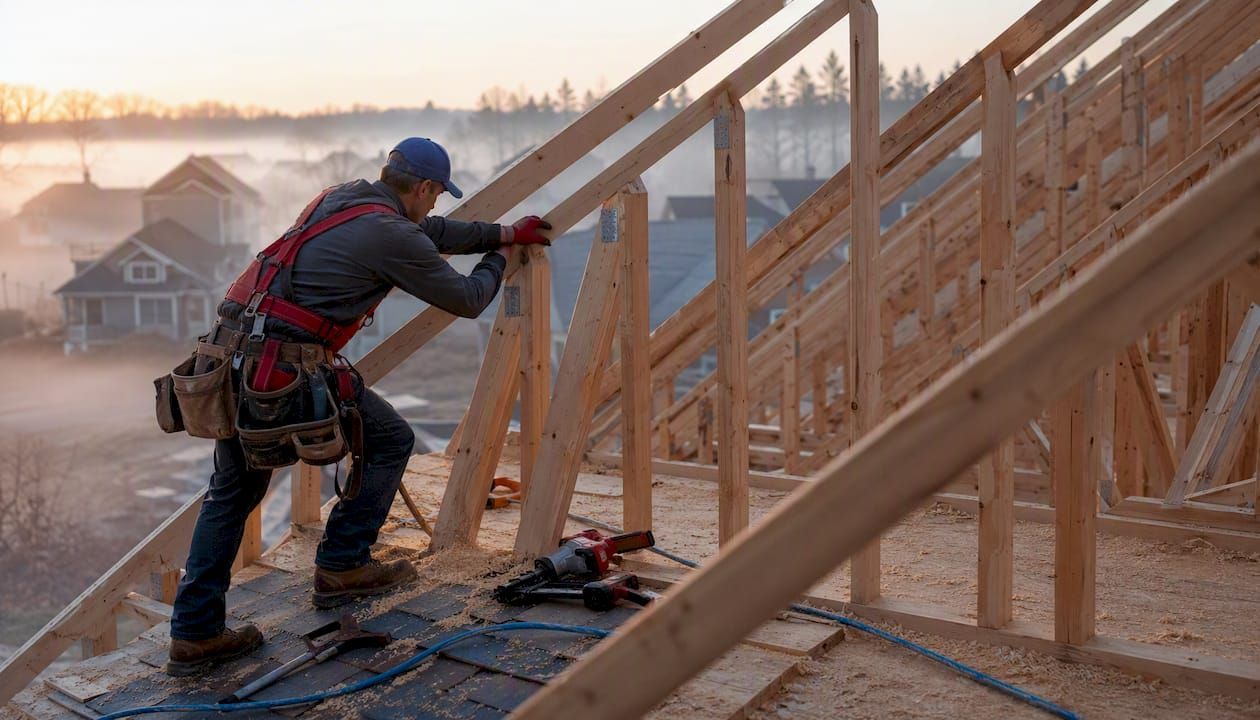
Flat roofs cost less up front but require more frequent maintenance. Pitched roofs cost more initially and tend to deliver lower long-term costs and a lighter maintenance burden over decades.
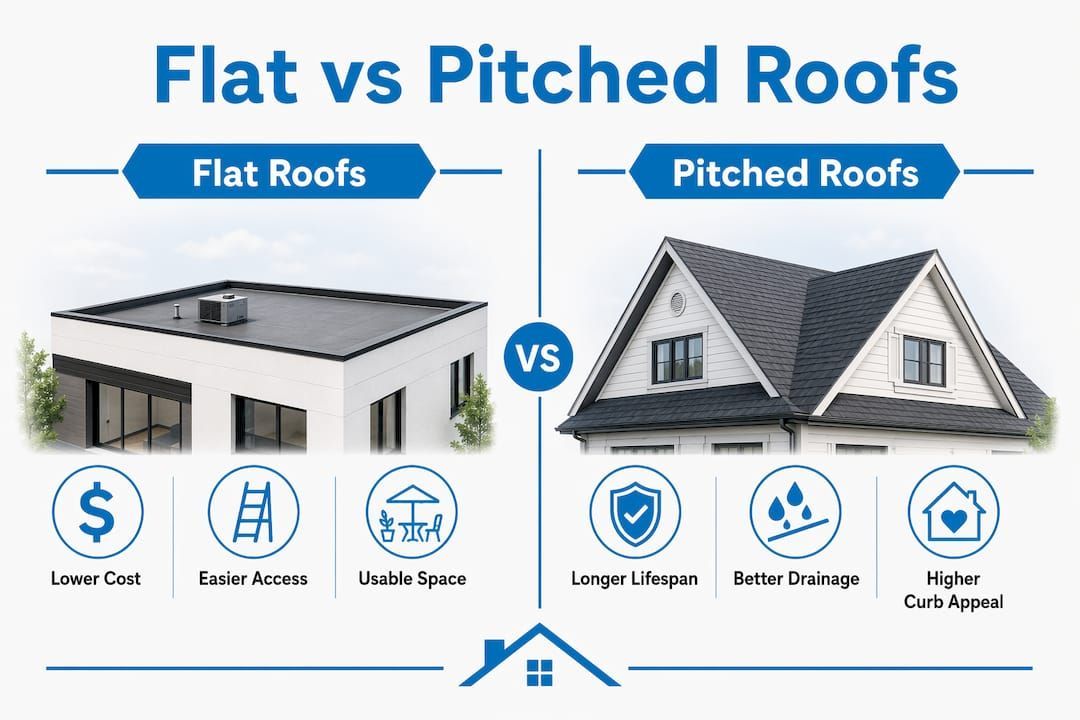
Who should seriously consider each option? If you own a modern single-story home, a commercial property, or a building where rooftop equipment access matters, a flat system is worth a close look. If you are building or replacing a traditional family home in a climate with rain or snow, a pitched roof is almost always the more forgiving choice.
What is a flat (low-slope) roof, and how is slope defined?
The term "flat roof" is a bit misleading. A truly level roof would trap water and fail quickly. What builders and contractors actually mean is a low-slope system, defined by a pitch between ¼:12 and roughly 3:12. That slight angle channels water toward drains, scuppers, or gutters rather than letting it sit.
In everyday language, homeowners use "flat roof" to describe any roof that looks nearly level from the street. The roofing industry draws a sharper line: pitches below 2:12 are classified as low-slope and require membrane-based systems; pitches from 2:12 to 4:12 are sometimes called low-slope roofs and can use a broader range of materials. Asphalt shingles, for example, are not rated for slopes under 2:12 because they depend on gravity to shed water.
Common flat-roof systems used in U.S. residential and commercial work
- EPDM (ethylene propylene diene monomer): A rubber membrane that suits simple rectangular roofs. Cost-effective and durable; patches are straightforward.
- TPO (thermoplastic polyolefin): A heat-welded single-ply membrane popular for its reflectivity and energy performance.
- PVC: Similar to TPO but with stronger chemical resistance; common on commercial roofs near grease exhaust.
- Modified bitumen: An asphalt-based system applied in layers; good redundancy and familiar to many contractors.
- Built-up roofing (BUR): Multiple alternating layers of bitumen and reinforcing fabric; one of the oldest and most proven flat-roof methods.
- Green roofs and roof decks: Membrane systems topped with growing medium or pavers; require additional structural load analysis.
For a deeper look at how these systems compare, the flat roof systems guide on the Shieldguardroofing blog walks through each option with regional context.
Flat roof pros and cons
Advantages:
- Lower upfront installation cost
- Walkable surface for solar panels, HVAC units, and rooftop decks
- Easier and safer access for routine inspections
- Clean, contemporary aesthetic that suits modern architecture
Disadvantages:
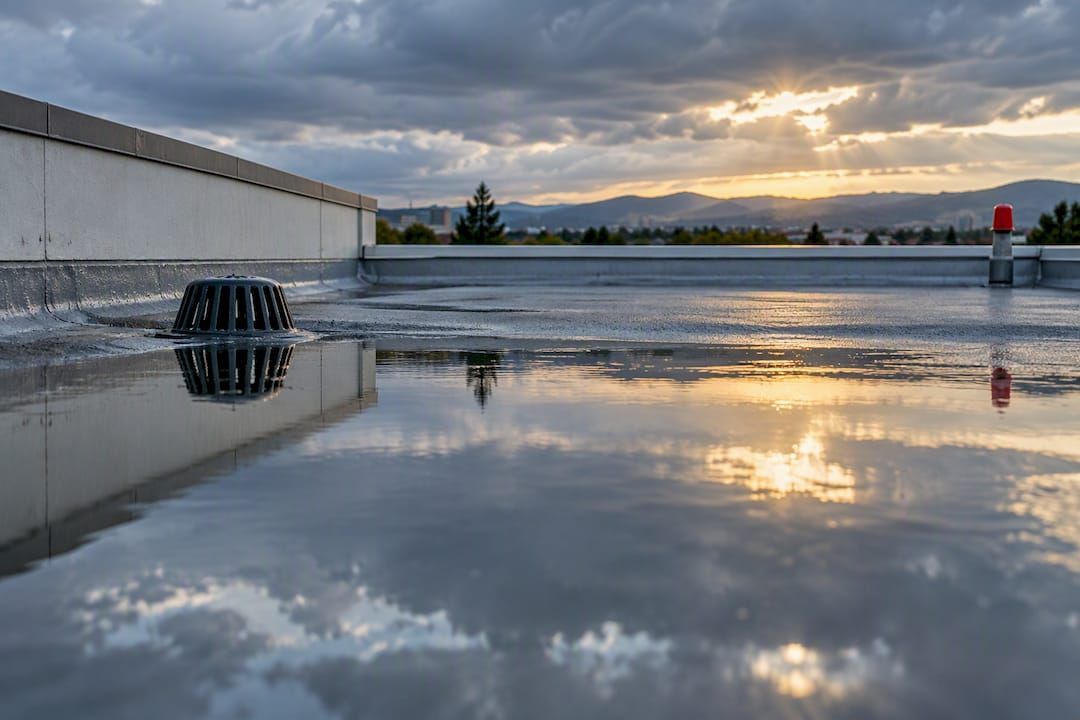
- Ponding water is the primary long-term risk; standing water accelerates membrane wear and leak risk
- Shorter replacement windows (15–25 years for most membrane systems)
- Fewer material options compared with pitched roofs
- Insulation placement requires careful design to avoid condensation
Pro Tip: When designing or replacing a flat roof, prioritize internal drains and scuppers over edge-only gutters. A tapered insulation system that creates positive drainage toward the drains is one of the most cost-effective ways to prevent ponding and extend membrane life.
What is a pitched roof, and what forms does it take?
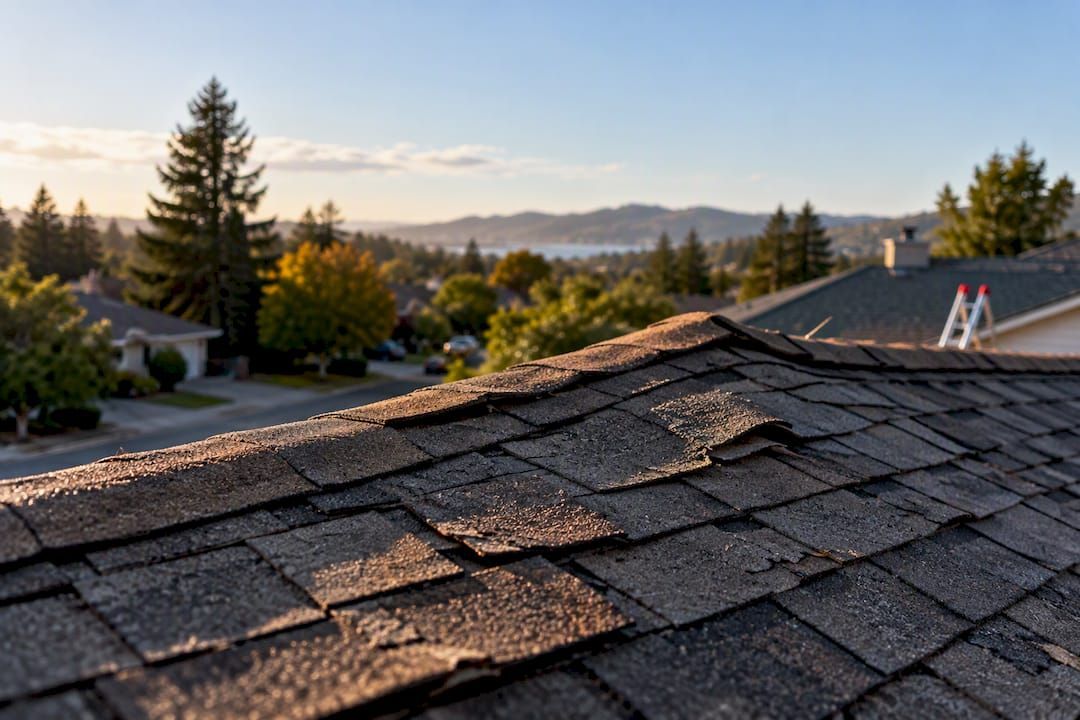
A pitched roof has a slope steep enough that water and snow shed by gravity alone. The industry generally classifies a roof as steep-slope at 4:12 and above, meaning it rises 4 inches for every 12 inches of horizontal run. Common residential pitches run from 4:12 to 12:12, with steeper pitches shedding precipitation faster and creating more usable attic space below.
Roof forms homeowners encounter
- Gable: Two sloping sides meeting at a ridge; the most common form in U.S. residential construction.
- Hip: All four sides slope down to the walls; stronger wind resistance than a gable.
- Shed (mono-pitch): A single sloping plane; popular on additions and modern homes.
- Gambrel: Two slopes on each side, with the lower slope steeper; maximizes attic space (classic barn shape).
- Mansard: Four sides, each with a double slope; allows a full upper story beneath the roof.
The pitch and form you choose directly affect interior space. A 12:12 gable roof can yield a full attic or vaulted ceiling. A 4:12 hip roof gives you crawl space but not a livable attic. That interior volume is one of the pitched roof's most underappreciated advantages.
Typical materials and lifespan ranges
Pitched roofs support a wide range of materials. Architectural asphalt shingles last roughly 20–30 years; metal roofing runs 40–70+ years; tile and slate can reach 50–100+ years with proper maintenance. For NorCal-specific material guidance, the residential roofing materials guide covers regional performance expectations in detail.
Advantages:
- Gravity drainage — no engineered drain system required
- Longer material lifespans across most product categories
- Broader material and style choices
- Attic space for insulation, storage, or conversion
- Strong resale appeal in most U.S. markets
Disadvantages:
- Higher upfront installation cost
- Steeper pitches are harder and riskier to access for maintenance
- More complex framing adds labor hours
- Attic ventilation must be designed correctly or moisture problems develop
Pro Tip: Attic ventilation and roof insulation work as a system on a pitched roof. Inadequate soffit-to-ridge airflow traps heat and moisture, shortening shingle life and risking deck rot. Before any pitched-roof installation or replacement, confirm the ventilation plan meets local code and the manufacturer's requirements for the shingle warranty.
Head-to-head: how do the two roof types compare on what matters most?
Initial cost
Flat roofs run roughly $4–$10 per square foot installed for basic membrane systems. Pitched roofs start around $7–$15 per square foot, with premium materials like metal or tile pushing higher. The gap narrows on smaller projects and widens on complex roof geometries.
Winner for upfront cost: Flat roof.
Lifespan and lifecycle cost
This is where the picture shifts. Flat membrane systems typically last 15–25 years. Pitched roofs, depending on material, last 20–100+ years. Over a 30-year window, a homeowner with a flat roof may face one full replacement cycle plus multiple resealing rounds. A metal or tile pitched roof installed in the same period may need nothing more than periodic inspections and minor repairs.
Contractors consistently note that lower initial cost for flat roofs can be offset by higher maintenance frequency and shorter replacement windows, shifting total ownership cost toward pitched systems over multiple decades.
Winner for lifecycle cost: Pitched roof (especially metal, tile, or slate).
Maintenance frequency and typical repairs
Flat roofs need inspection twice a year and after major storms. Resealing or recoating every 5–10 years is standard practice. Seams, drain openings, and any rooftop penetrations are the most common failure points.
Pitched roofs typically need one or two inspections per year, gutter cleaning, and occasional shingle replacement. The work is less frequent but harder to access safely on steeper pitches.
Winner for ease of maintenance: Flat roof (easier access); pitched roof (less frequent work needed).
Water drainage and snow performance
Gravity does the work on a pitched roof. Rain runs off immediately; snow slides or melts and drains. A flat roof depends entirely on its engineered drainage system. If drains clog or the slope is inadequate, ponding water accelerates membrane deterioration through freeze-thaw cycles and sustained weight.
In climates with heavy snow or frequent rain, a pitched roof is the more forgiving design. Climate should guide the choice: flat roofs perform well with reflective coatings in warm, dry regions; pitched roofs handle wet and snowy climates with far less maintenance risk.
Winner for drainage and snow: Pitched roof.
Wind resistance
Low-profile flat roofs present less wind surface area, which can reduce uplift on some systems. Hip-style pitched roofs are well-tested for wind resistance. Gable ends on steep roofs need proper bracing and well-secured sheathing to perform in high-wind events.
Winner: Situation-dependent; hip roofs and low-slope systems both perform well when properly installed.
Usable rooftop space and solar readiness
A flat roof is a genuine platform. Solar panels, HVAC condensers, and satellite dishes are all far simpler to mount on a level surface than on a sloped one, which requires custom mounts and additional penetrations. Homeowners who want a rooftop deck or garden have only one real option: a flat or very low-slope system.
Winner for usable space and equipment access: Flat roof, clearly.
Aesthetics and curb appeal
Pitched roofs suit the widest range of U.S. neighborhoods and HOA standards. They read as residential and familiar. Flat roofs look striking on modern homes but can feel out of place in traditional subdivisions and may face HOA restrictions.
Winner for broad curb appeal: Pitched roof.
Energy performance and insulation
A pitched roof with a properly ventilated attic creates a natural thermal buffer between the living space and the elements. Flat roofs can achieve strong energy performance with high-quality insulation and reflective membranes like TPO or coated EPDM, but the design has to be right. Placing insulation below the roof deck on a flat system without a proper vapor barrier can trap moisture and cause condensation problems.
Winner for energy performance: Pitched roof by default; flat roofs can close the gap with premium insulation and reflective membranes.
Which materials work best for flat and pitched roofs?
Flat-roof material options
The common flat-roof materials used in U.S. residential and commercial work each have distinct tradeoffs:
- EPDM: Long-proven rubber membrane; cost-effective, easy to patch, suits simple roof shapes. Typical lifespan: 15–25 years.
- TPO: Reflective white membrane; heat-welded seams reduce leak risk; popular for energy-conscious projects.
- PVC: Strong chemical resistance; higher cost than TPO but excellent for roofs near grease or chemical exposure.
- Modified bitumen: Layered asphalt system; good redundancy; familiar to a wide contractor base.
- Roof coatings: Applied over existing membranes to extend life and improve reflectivity; not a replacement for a failing system.
For a technical breakdown of how these systems perform side by side, the commercial roofing materials comparison covers single-ply and built-up options in detail.
Pitched-roof material options
- Architectural asphalt shingles: The most common U.S. choice; 20–30 year lifespan; wide color and style range.
- Metal panels (standing seam or exposed fastener): 40–70+ year lifespan; excellent in fire-prone areas like NorCal; metal roofing is increasingly popular for residential use.
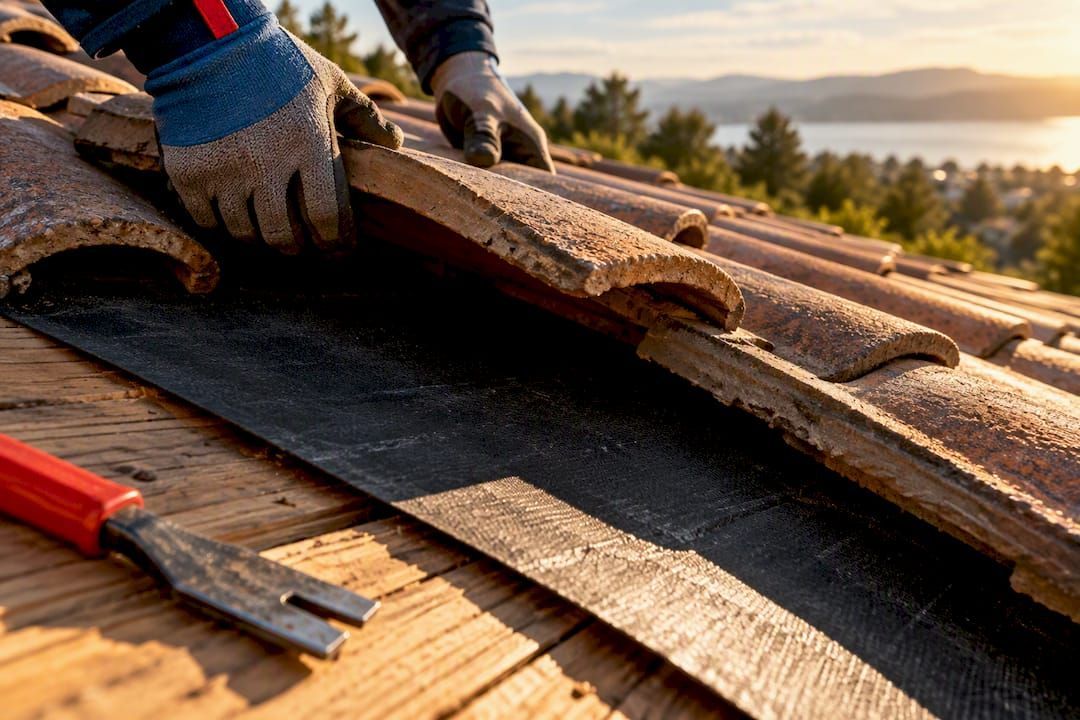
- Concrete or clay tile: 40–60+ years; heavy but extremely durable; common in California and the Southwest.
- Slate: 60–100+ years; premium cost but exceptional longevity.
Brand-level options Shieldguardroofing installs
Shieldguardroofing works with three product lines that cover both roof types:
- GAF shingle systems: Industry-leading architectural shingles with strong warranty coverage for pitched roofs.
- GAF Energy (Timberline Solar): Solar-integrated shingles that generate power without separate panel mounts, available for pitched roofs.
- Brava Roofing: Composite tile and shake products that replicate the look of cedar, slate, or clay tile with lighter weight and longer warranty terms.
Pro Tip: Always confirm that your chosen material and installation method are covered under the manufacturer's system warranty, not just a product warranty. GAF's system warranties, for example, require installation by a certified contractor and cover both materials and workmanship. That distinction matters when a leak shows up five years in.
Flashing details and penetration transitions are where most roof failures begin, regardless of roof type. Every pipe, vent, skylight, and HVAC curb needs properly integrated flashing that is sealed and counterflashed to the membrane or shingle system. A contractor who glosses over flashing in their proposal is a contractor worth questioning.
What does a flat or pitched roof cost in the United States?
Typical installation cost ranges
Based on industry estimates, flat membrane systems run roughly $4–$10 per square foot installed. Pitched roofs start around $7–$15 per square foot, with premium materials like metal or tile pushing the upper end higher. A 2,000-square-foot roof could cost $8,000–$20,000 for a flat system or $14,000–$30,000+ for a pitched replacement, depending on material and complexity.
For a detailed look at what drives replacement costs, the residential roof replacement guide breaks down scope, timelines, and what to expect at each stage.
Two homeowner scenarios
Scenario A — Modern single-story with rooftop solar: A homeowner installs a 1,500-square-foot TPO flat roof at roughly $9 per square foot ($13,500). They add a solar array on the walkable deck. Over 25 years, they reseal once ($2,000–$4,000) and plan for a full replacement at year 20–25. Total 25-year spend: approximately $17,000–$20,000, offset partially by solar savings.
Scenario B — Traditional two-story with architectural shingles: A homeowner replaces a 2,500-square-foot pitched roof with GAF architectural shingles at roughly $10 per square foot ($25,000). With annual inspections and minor repairs, the roof reaches 25–30 years before any major work is needed. Total 25-year spend: approximately $27,000–$32,000, but with no full replacement cycle in that window and strong resale value maintained.
The flat roof costs less upfront. The pitched roof costs more initially but avoids a full replacement cycle within the same period. Over 30+ years, the pitched system often comes out ahead on total cost of ownership.
| Cost Factor | Flat Roof (TPO/EPDM) | Pitched Roof (Arch. Shingles) |
|---|---|---|
| Typical install (per sq ft) | $4–$10 per sq ft | $7–$15 per sq ft |
| Reseal/recoat cycle | Every 5–10 years | Not applicable |
| Expected replacement window | 15–25 years for flat roofs | 20–30 years for pitched roofs with architectural shingles (longer for metal/tile) |
| Inspection frequency | Twice yearly | Once or twice yearly |
| Rooftop solar installation | Simpler; no custom mounts | Requires penetrations and custom mounts |
Pro Tip: When comparing contractor quotes, ask each one to itemize materials, labor, and expected maintenance costs over 10 years. A quote that bundles everything into one number makes it impossible to compare lifecycle value. Also ask about financing options — spreading a higher-quality pitched-roof installation over 24–60 months often makes the better long-term choice affordable today.
How do you choose between flat and pitched for your home?
Decision checklist
Work through these factors before you commit to either system:
- Climate: Heavy rain or snow strongly favors a pitched roof. Warm, dry climates (like much of NorCal) are more forgiving for flat systems.
- Local code and zoning: Some municipalities and HOAs restrict flat roofs in residential zones. Confirm before you design.
- Desired interior space: Want an attic, vaulted ceilings, or loft conversion potential? You need a pitched roof.
- Rooftop plans: Planning solar, a deck, or rooftop HVAC? A flat system is the practical choice.
- Budget and lifecycle goals: Lower upfront cost favors flat; lower 30-year total cost often favors pitched.
- Resale expectations: Most U.S. buyers expect a pitched roof. A flat roof on a traditional home can narrow your buyer pool.
- HOA requirements: Check CC&Rs before selecting a roof style.
Questions to ask your contractor
Before you sign anything, get clear answers to these:
- What drainage system are you designing, and how does it handle a clogged drain?
- What is the expected maintenance schedule and cost over the first 10 years?
- What warranty covers both materials and workmanship, and who backs it?
- Have you installed this system in our local climate? Can you provide references?
- What flashing details are included for all penetrations and transitions?
- Is the proposal itemized by materials, labor, and disposal?
For guidance on choosing a roofing contractor, including the right interview questions and what to look for in a proposal, that resource covers the contractor selection process in practical detail.
Red flags to watch for in proposals
- Vague scope with no itemized materials or labor breakdown
- No drainage plan included for a flat-roof proposal
- Missing flashing details for penetrations, edges, and transitions
- Extremely low bids with no explanation of how costs were reduced
- No mention of manufacturer warranty or certification requirements
Pro Tip: Get at least two detailed, itemized quotes. A contractor who cannot or will not itemize their proposal is giving you a number you cannot evaluate. The lowest bid without a clear scope is almost never the best value.
Your action sequence
- Assess your climate, HOA rules, and local code.
- Decide your priorities: longevity and resale vs. usable space and modern design.
- Get at least two itemized contractor quotes with drainage plans and warranty details.
- Compare lifecycle cost, not just installation price.
- Confirm material and workmanship warranty terms before signing.
- Schedule your first inspection within the first year after installation.
For a step-by-step walkthrough of the residential roof inspection process, Shieldguardroofing's guide covers what inspectors look for and how to prepare.
What Shieldguardroofing sees in the field: maintenance and lifecycle reality
Shieldguardroofing has accumulated over 75 years of combined roofing experience across Northern California, working on everything from flat commercial membranes to steep-slope tile and metal systems. That field experience shapes how the team approaches both installation and long-term maintenance planning.
Realistic maintenance timelines
For flat roofs, the practical schedule looks like this:
- Every 6 months: Visual inspection of membrane surface, seams, drains, and flashings. Clear any debris from drains and scuppers.
- After every major storm: Check for standing water within 48 hours. Ponding that persists beyond 48 hours signals a drainage problem that needs attention before the next rain event.
- Every 5–10 years: Reseal seams, inspect and recoat if the membrane shows UV degradation or surface cracking.
- Year 15–20: Begin planning for full replacement. Do not wait for an active leak to start the conversation.
For pitched roofs, the schedule is simpler but still requires consistency:
- Once or twice a year: Inspect shingles, flashing, ridge caps, and gutters. Replace any cracked, curled, or missing shingles promptly.
- Every 3–5 years: Have a professional inspect flashing at chimneys, skylights, and valleys — these are the highest-risk areas for slow leaks.
- Year 20–25 (shingles) or 40+ (metal/tile): Evaluate replacement based on material condition, not calendar alone.
What the team sees most often
The most common failure mode on flat roofs in NorCal is neglected internal drains. Leaves and debris accumulate, water backs up, and the membrane at the drain collar deteriorates from sustained contact with standing water. A $150 drain cleaning twice a year prevents thousands in repair costs.
On pitched roofs, the most common issue is flashing failure at chimneys and skylights. The shingles themselves are often fine; the lead or step flashing alongside a chimney has separated or corroded. Catching this in an annual inspection costs a few hundred dollars. Missing it costs a full interior repair.
Pro Tip: For flat roofs with rooftop equipment, every HVAC curb, pipe penetration, and conduit entry point is a potential leak source. Ask your contractor to walk you through each penetration detail and confirm that all curb flashings are counterflashed and sealed to the membrane system, not just caulked.
The proactive commercial roof maintenance approach Shieldguardroofing uses on commercial flat roofs applies equally to residential systems: document the roof's condition at installation, track changes at each inspection, and act on small issues before they become structural ones.
Key Takeaways
Pitched roofs deliver better long-term value for most U.S. homeowners; flat roofs win on upfront cost, rooftop usability, and modern design when drainage is engineered correctly.
| Point | Details |
|---|---|
| Upfront cost favors flat | Flat systems run roughly $4–$10/sq ft; pitched roofs start around $7–$15/sq ft. |
| Lifecycle cost favors pitched | Flat roofs need resealing every 5–10 years and replacement within 15–25 years; pitched systems can last 20–100+ years depending on material. |
| Drainage is the critical variable | Ponding water is the top failure risk on flat roofs; inspect drains every 6 months and after storms. |
| Usable space is flat roof's edge | Solar arrays, HVAC units, and rooftop decks are all simpler and less expensive to install on a flat surface. |
| Shieldguardroofing for NorCal installs | Shieldguardroofing installs GAF, GAF Energy, and Brava systems for both flat and pitched roofs across Northern California. |
The case for knowing your roof before you commit
Most homeowners approach the flat-versus-pitched decision the wrong way. They pick a style first and then look for reasons to justify it. The smarter sequence is the opposite: start with your climate, your 20-year plans for the property, and your honest maintenance appetite, and let those factors point you to the right system.
Flat roofs get a worse reputation than they deserve when they are designed and maintained properly. The problem is not the membrane. The problem is that flat roofs are less forgiving of neglect than pitched ones. A pitched roof with a clogged gutter usually just overflows. A flat roof with a clogged drain can pond water for days, and that sustained contact is what shortens membrane life and creates leaks. If you are the kind of homeowner who schedules maintenance proactively, a flat roof is a legitimate long-term choice. If you want a roof you can largely ignore for 25 years, a pitched system with quality shingles or metal is the more honest recommendation.
The other thing most articles understate is how much the contractor matters. A well-designed flat roof from an experienced installer will outlast a poorly installed pitched roof every time. The material is only as good as the drainage plan, the flashing details, and the workmanship behind it. Ask hard questions before you hire, get itemized proposals, and do not let a low bid substitute for a clear scope of work.
Shieldguardroofing can evaluate, install, or repair your roof in NorCal
Choosing the right roof system is one decision. Getting it installed correctly is another. Shieldguardroofing is a family-owned roofing company with over 75 years of combined experience serving homeowners and property owners across Northern California. The team installs both flat and pitched systems using GAF, GAF Energy, and Brava products, and backs every project with premium warranties and honest workmanship.
A Shieldguardroofing inspection covers drainage design, flashing condition, membrane or shingle integrity, and a clear material recommendation matched to your climate and budget. Whether you are replacing an aging flat roof, upgrading to a metal or tile pitched system, or exploring solar-integrated roofing through GAF Energy, the team will walk you through the options without pressure.
Ready to get a clear picture of your roof's condition and the right path forward? Schedule your residential roofing consultation with Shieldguardroofing today. For commercial properties with flat roofs, the commercial roofing team handles everything from membrane replacement to proactive maintenance programs.
Sources and further reading
These resources support the claims in this article and offer deeper technical or regional detail for homeowners who want to go further.
-
Flat and Low-Slope Roofing Materials 101 — Frank Lloyd Wright Building Conservancy: Covers ponding water risks, membrane deterioration, and material selection for low-slope systems. Useful for understanding why drainage design is non-negotiable.
-
Low-Slope Roofing Guide — Rooflio: Detailed breakdown of single-ply systems (EPDM, TPO, PVC), built-up roofing, and modified bitumen. Good reference for material tradeoffs and cost ranges.
-
Flat Roof vs. Pitched Roof for New Construction — Brandon J Roofing: Covers upfront cost ranges, lifespan estimates, and lifecycle cost framing for both roof types. The source for the $4–$10 and $7–$15 per-square-foot figures cited in this article.
-
Flat Roof Guide: Materials, Costs, Pros & Cons — Renovate.com: Contractor-sourced perspective on maintenance cadence, resealing timelines, and total cost of ownership comparisons between flat and pitched systems.
-
Flat Roof vs. Low-Sloped Roof — Parsons Roofing Company: Clarifies the technical distinction between flat and low-slope classifications, drainage system requirements, and material compatibility by pitch range.
-
Flat Roof Advantages and Disadvantages — 4Feldco: Balanced consumer-facing overview of flat roof pros and cons, including drainage risks, insulation challenges, and curb appeal considerations.
-
What Are the Advantages and Disadvantages of a Flat Roof? — FAKRO: Climate-focused perspective on when flat roofs perform well and when pitched systems are the safer choice. Note: UK-based source; climate guidance applies broadly.
-
Flat Roof Systems Explained — Coastal Roofing: Practical homeowner-facing walkthrough of flat roof system types, replacement options, and what to expect from a professional installation.
-
Types of Flat Roof Systems — Shieldguardroofing: Shieldguardroofing's own guide to flat-roof system options, with NorCal-specific context on material performance and installation considerations.
-
Types of Residential Roofing Materials for NorCal Homes — Shieldguardroofing: Regional material guide covering lifespan expectations, fire ratings, and climate suitability for Northern California homeowners.
-
Residential Roof Maintenance — Shieldguardroofing: Shieldguardroofing's maintenance program details, including inspection packages and recommended service intervals for both flat and pitched systems.
Recommended