TPO Roofing Explained: What Property Owners Must Know
TPO Roofing Explained: What Property Owners Must Know
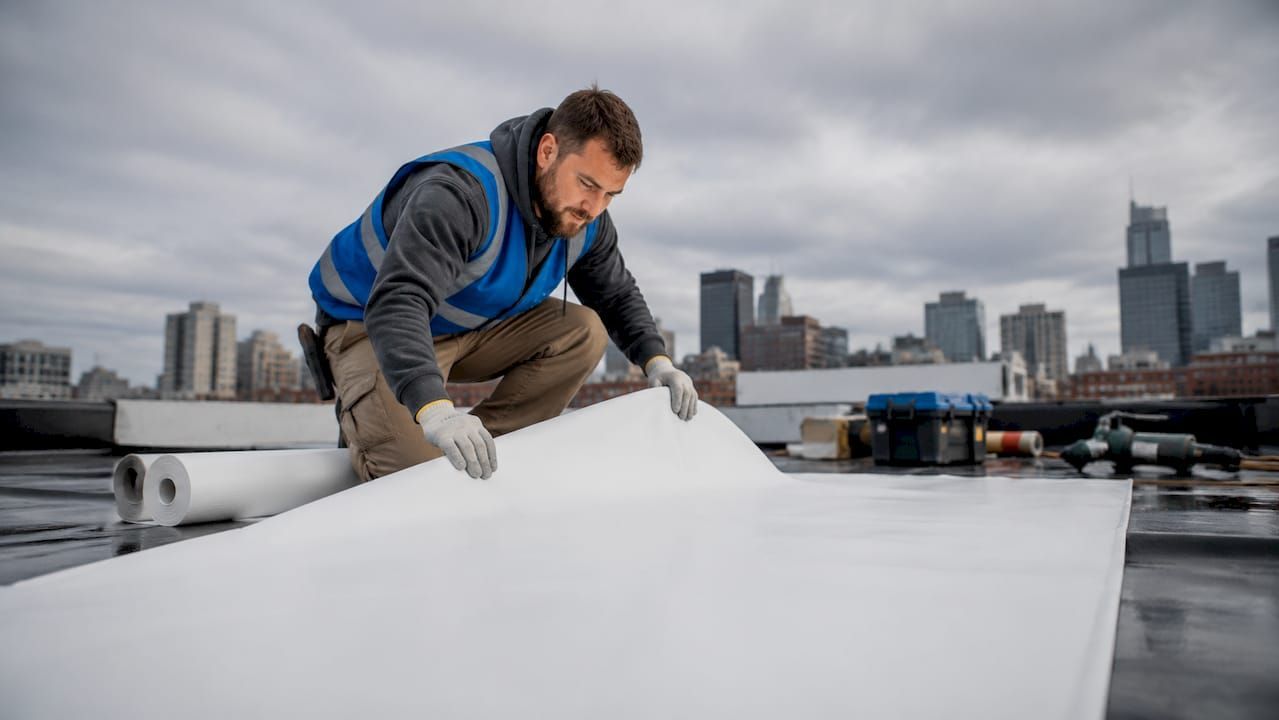
TPO roofing is defined as a thermoplastic polyolefin single-ply membrane system used primarily on flat and low-slope roofs to create a continuous, waterproof surface through heat-welded seams. Property owners evaluating flat roof options in 2026 will find TPO among the most widely installed commercial membranes in the United States. It combines energy-efficient reflectance, puncture resistance, and cost-effective installation into one system. Understanding how TPO works, how it gets installed, and what it needs to stay watertight will protect your investment for decades.
What is TPO roofing and how does it work?
TPO roofing is a factory-made single-ply membrane installed in large sheets across a roof deck, with overlapping edges fused together using hot-air welding equipment. The result is a monolithic waterproof surface with no exposed fasteners or adhesive seams at the joints. Common membrane thicknesses are 45 mil, 60 mil, and 80 mil. Thicker membranes resist puncture and foot traffic better, which matters on roofs with mechanical equipment or regular maintenance access.
The thermoplastic chemistry of TPO is what separates it from rubber-based membranes like EPDM. TPO can be re-welded if a seam needs repair, while EPDM relies on adhesive tape that degrades over time. TPO is also white or light-colored by default, which directly supports solar reflectance performance. That reflectance is not just a selling point. It is a measurable, code-relevant specification.
ENERGY STAR requires an initial solar reflectance of 0.65 or higher for low-slope roofs. White TPO retains 85–90% of that initial reflectance after three years per CRRC aged data. That retention rate means your energy savings do not disappear after the first few summers. For California properties, Title 24 sets even stricter aged reflectance requirements, so confirming your membrane meets those standards before purchase is non-negotiable.
How TPO compares to EPDM, PVC, and metal roofing
| Roofing Type | Solar Reflectance | Seam Method | Typical Lifespan | Relative Cost |
|---|---|---|---|---|
| TPO | High (white: 0.65–0.85) | Heat-welded | 20–30 years | Moderate |
| EPDM | Low (black standard) | Adhesive tape | 20–25 years | Low to moderate |
| PVC | High (similar to TPO) | Heat-welded | 20–30 years | Higher than TPO |
| Metal | Varies by coating | Mechanical | 40+ years | High |
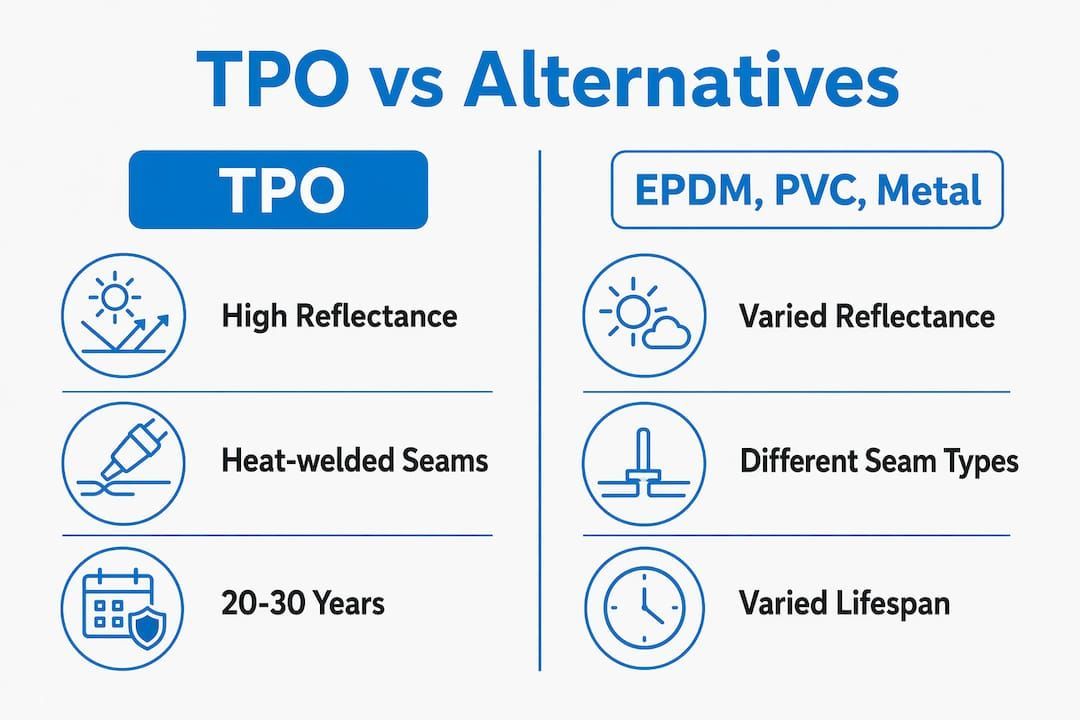
TPO sits in a practical middle ground. It delivers the heat-welded seam strength of PVC at a lower material cost, and it outperforms standard black EPDM on energy efficiency. For a deeper look at how these membranes stack up on reflectance and compliance metrics, the commercial roofing materials comparison from Shieldguardroofing covers current 2026 standards in detail.
How is TPO roofing installed?
TPO installation follows one of three primary methods, and the method you choose affects both upfront cost and long-term performance.
- Fully adhered: The membrane is bonded directly to the insulation or substrate using a bonding adhesive. This method eliminates membrane flutter in high-wind areas and provides the most uniform appearance. It is the preferred method for most commercial applications.
- Mechanically attached: Fasteners and plates secure the membrane to the roof deck at the seam overlaps. This is faster and less expensive to install, but the membrane can ripple slightly over time due to thermal expansion.
- Ballasted: Loose-laid membrane held down by river rock or pavers. This method is rarely used on new construction today because the added weight requires structural verification and the membrane is harder to inspect.
The heat-welding process and why it matters
TPO seams are heat-welded at temperatures between 1,000°F and 1,100°F using automated hot-air welding machines. The overlapping sheets fuse into a single piece of material. After welding, the installer immediately rolls the seam with a silicone roller to press the bond, then allows it to cool before testing.
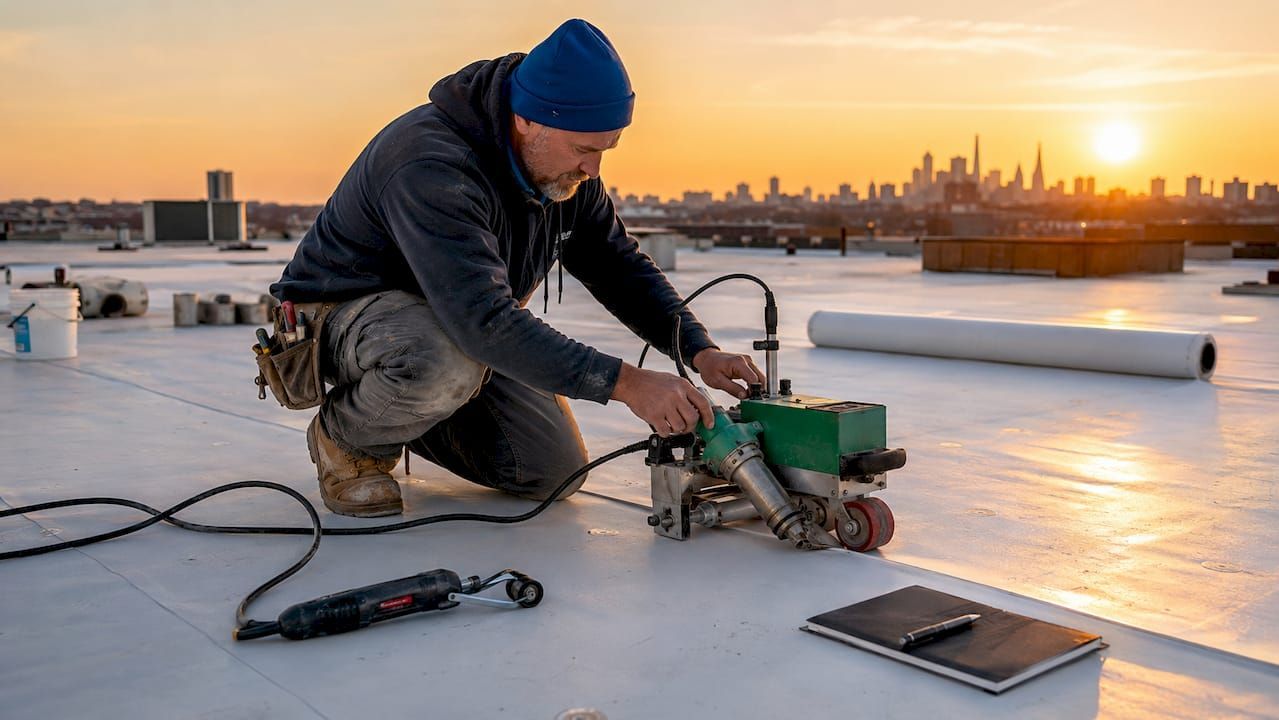
Seam verification requires systematic probe and peel testing after cooling, examining every seam start, stop, and T-joint. A probe tool is inserted along the seam edge. If it penetrates, the weld is cold and must be re-welded. Visual inspection alone is not sufficient. Many seams look correct on the surface but are not fully fused underneath.
Seam welding workmanship is the single biggest determinant of long-term TPO performance. Seam failures account for the majority of performance issues across all TPO installations. That fact should drive how you select a contractor.
Pro Tip: Ask any TPO contractor to show you their seam probe testing protocol before signing a contract. A qualified crew will have a documented QA process, not just a verbal assurance that the welds are good.
Environmental conditions also affect weld quality. Cold temperatures, high humidity, and direct UV exposure during installation all create challenges. Reputable contractors schedule heat-welding work within appropriate temperature windows and avoid welding in rain or freezing conditions.
What maintenance keeps a TPO roof performing?
A TPO roof is not a set-and-forget system. Think of it like a car. Regular oil changes prevent engine failure. Regular inspections prevent small seam issues from becoming full-scale leaks. The good news is that TPO maintenance is straightforward when you follow a consistent schedule.
Bi-annual inspections are recommended for TPO roofs, with additional inspections after severe weather events like hail, heavy wind, or debris impact. Each inspection should cover seams, flashing details, sealant lines around penetrations, and drainage points.
Here is what a thorough TPO maintenance checklist covers:
- Seam integrity: Check for lifting edges, bubbling, or visible gaps at all field seams and T-joints.
- Flashing condition: Inspect metal and membrane flashing at walls, curbs, and roof edges for separation or corrosion.
- Sealant lines: Examine caulk and sealant at cut edges, penetrations, and transitions. Sealant degradation can occur every 1–2 years independently of seam condition, especially in high-UV or thermal cycling climates like Northern California.
- Drainage: Confirm drains and scuppers are clear of debris to prevent ponding water.
- Punctures and surface damage: Look for cuts, tears, or punctures from foot traffic or fallen equipment.
Pro Tip: In Sacramento and the broader NorCal region, UV intensity and summer heat cycles accelerate sealant breakdown faster than in cooler climates. Schedule your sealant inspection every year, not every two years, to stay ahead of early leak initiation.
Shieldguardroofing offers commercial roof maintenance programs designed specifically for flat membrane systems. Proactive maintenance costs a fraction of emergency repair or premature replacement.
What are the best repair methods for TPO damage?
TPO membranes can develop cracks, punctures, or seam separations over time. The repair method you choose determines how long that fix actually holds.
For cracks or punctures over about 2 inches, heat-welded membrane patches are the correct solution. A patch of matching TPO membrane is cut, positioned over the damaged area with adequate overlap, and welded in place using the same hot-air process used during original installation. The bond strength of a properly welded patch reaches 4–6 lbs per linear inch, and the repair can last 10–15 years.
Tape-based repairs are a different story. Tape products have bond strengths of only 1–2 lbs per linear inch and a realistic lifespan of 2–5 years. Tape is acceptable for very small punctures as a temporary measure, but it is not a long-term solution for any damage larger than a nail hole.
| Repair Method | Bond Strength | Expected Lifespan | Best Application |
|---|---|---|---|
| Heat-welded patch | 4–6 lbs per linear inch | 10–15 years | Cracks, punctures over 2 inches, seam repairs |
| Tape-based repair | 1–2 lbs per linear inch | 2–5 years | Small punctures, temporary fixes only |
| Full seam re-weld | Equivalent to original | 15+ years | Seam separations, cold welds |
Temperature matters for repair timing. Repairs below 40°F are not advised because the membrane becomes less pliable and adhesion quality drops. Plan repairs for spring or fall when temperatures are moderate. If you are managing a repair budget, prioritize heat-welded fixes in the warmer months and avoid deferring seam repairs into winter.
For professional commercial roof repairs in the Sacramento area, Shieldguardroofing uses heat-welded patching as the standard for any TPO repair that needs to last.
Key takeaways
TPO roofing delivers durable, energy-efficient waterproofing for flat and low-slope roofs, but its long-term performance depends entirely on seam welding quality and consistent maintenance.
| Point | Details |
|---|---|
| TPO is a heat-welded membrane | Seams fused at 1,000°F–1,100°F create a waterproof bond stronger than any adhesive alternative. |
| Reflectance meets energy codes | White TPO retains 85–90% of initial reflectance, satisfying ENERGY STAR and ASHRAE 90.1 requirements. |
| Contractor quality drives longevity | Seam failures cause most TPO performance issues; always verify probe testing protocols before hiring. |
| Sealant needs annual attention | In high-UV climates like NorCal, sealant at penetrations and transitions can degrade within 1–2 years. |
| Heat-welded patches outlast tape | Welded repairs last 10–15 years versus 2–5 years for tape fixes, making them the cost-effective choice. |
What i've learned after years of TPO roof evaluations
After working with property owners across Northern California on dozens of TPO projects, one pattern stands out clearly. Most owners focus on membrane thickness when evaluating bids. They ask about 45 mil versus 60 mil. That is a reasonable question, but it is not the right first question.
The right first question is: how does this contractor verify seam quality on the job? A 60 mil membrane with cold welds will fail faster than a 45 mil membrane with properly tested seams. The membrane is only as good as the fusion holding it together.
The second thing I see owners consistently underestimate is sealant. People assume that because TPO uses heat-welded seams, sealant is a minor detail. It is not. Sealant at T-joints, cut edges, and penetrations is where early leaks start. In Sacramento's climate, with intense summer UV and significant temperature swings between seasons, sealant at transitions needs attention every year. Skipping that inspection to save money almost always costs more in the long run.
One more thing worth saying directly: TPO's reflectance value should be verified against your specific climate zone code, not just accepted as a given because the membrane is white. California Title 24 has stricter aged reflectance requirements than ENERGY STAR alone. Confirm your membrane's CRRC rating before installation, not after.
The owners who get the most out of their TPO roofs treat maintenance like a scheduled obligation, not an optional expense. That mindset is the difference between a 20-year roof and a 12-year roof on the same building.
— Cesar
How Shieldguardroofing helps with your TPO roofing needs
If you manage a commercial property in the Sacramento area and are evaluating TPO roofing, Shieldguardroofing brings over 75 years of combined roofing experience to every project. The team handles everything from initial roof inspections to full TPO installations and ongoing maintenance programs.

Shieldguardroofing is a family-owned company with a straightforward commitment: honest assessments, quality workmanship, and no surprises on the final invoice. Whether you need a new TPO system installed on a flat commercial roof or a professional evaluation of an existing membrane, the team is ready to help. Visit the commercial roofing Sacramento page to learn more about services, or schedule a site visit to get a clear picture of what your roof actually needs.
FAQ
What does TPO stand for in roofing?
TPO stands for thermoplastic polyolefin. It is a single-ply roofing membrane made from a blend of polypropylene and ethylene-propylene rubber, installed in large sheets on flat or low-slope roofs.
How long does a TPO roof last?
A properly installed and maintained TPO roof typically lasts 20–30 years. Longevity depends heavily on seam welding quality, membrane thickness, and how consistently the owner schedules inspections and sealant maintenance.
Is TPO roofing better than EPDM?
TPO outperforms standard EPDM on solar reflectance and seam strength because heat-welded TPO seams are stronger than EPDM's adhesive bonds. EPDM can be a lower-cost option, but TPO's energy efficiency advantage makes it the preferred choice for most commercial flat roofs in warm climates.
What is the cost difference between TPO and PVC roofing?
TPO generally costs less per square foot than PVC while offering similar heat-welded seam performance. PVC has stronger chemical resistance, which matters in environments with grease or chemical exposure, but for standard commercial applications TPO delivers comparable durability at a lower price point.
How often should a TPO roof be inspected?
TPO roofs should be inspected twice per year, plus after any severe weather event. In high-UV or high-thermal-cycling climates like Northern California, sealant at penetrations and transitions should be evaluated annually to catch early deterioration before it triggers a leak.
Recommended