Roof Cleaning: The Homeowner's Safety-First Guide
Roof Cleaning: The Homeowner's Safety-First Guide
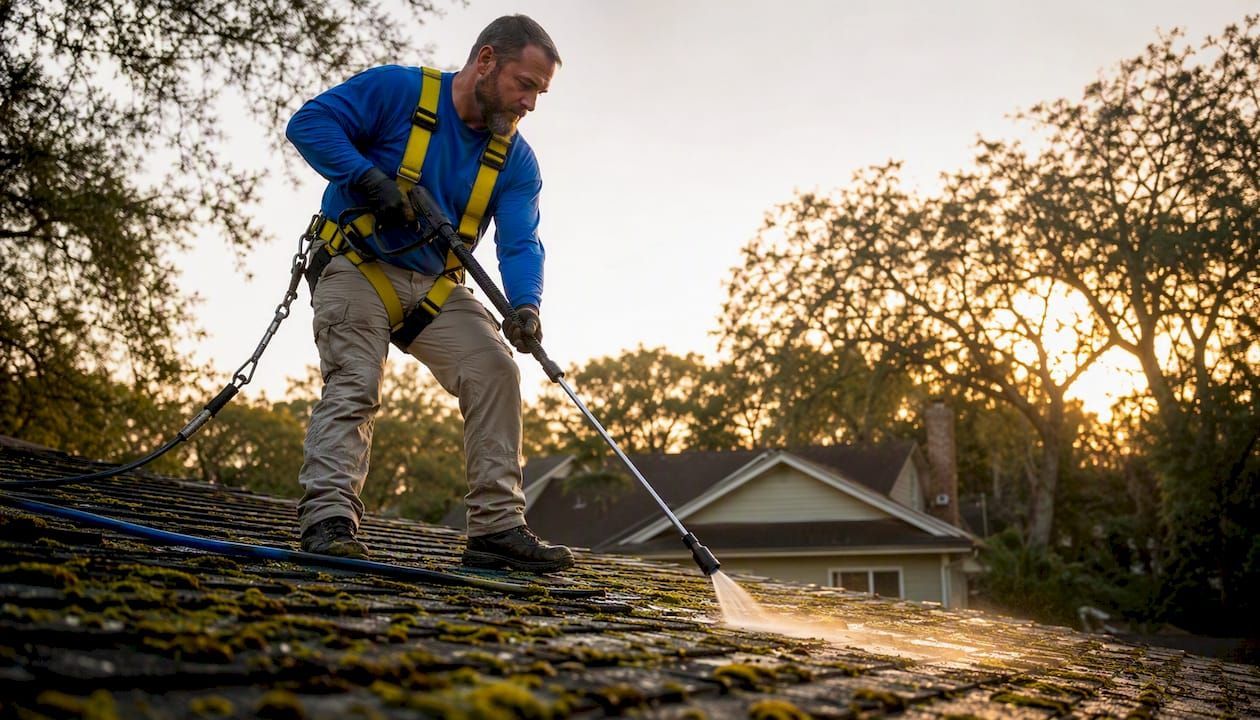
For most homeowners, soft washing is the right way to clean an asphalt shingle roof. It's safe, effective, and far less expensive than early replacement or the damage that pressure washing quietly causes. If you're seeing dark streaks, green patches, or fuzzy moss on your roof, the good news is that this is a manageable maintenance issue, not a crisis.
Here's what you need to know right now:
- Soft washing is the recommended method for asphalt shingles. Chemistry does the work, not water pressure.
- Typical cost for a standard single-family home runs $300–$750 , depending on roof size, pitch, and how heavy the growth is.
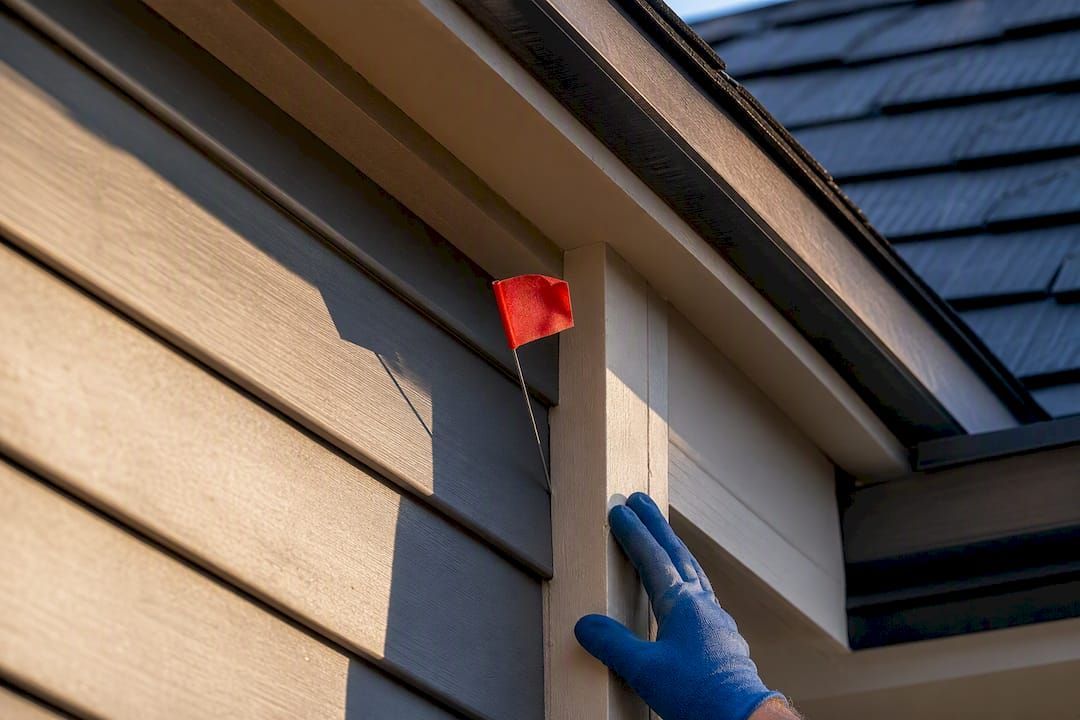
- Inspect from the ground first. Look for streaks, moss patches, and any visible shingle damage before deciding on DIY or professional help.
- If your roof is steep (pitch greater than 6/12), multi-story, or hard to access safely, call a qualified contractor. This is not the job to improvise.
- Check your shingle manufacturer's warranty before any cleaning begins. Pressure washing can void coverage.
Pro Tip: Before you call anyone, walk your gutters and look for granule accumulation. Heavy granule loss in the gutters means your shingles may be past the cleaning stage and closer to replacement.
Why roof cleaning matters more than most homeowners realize
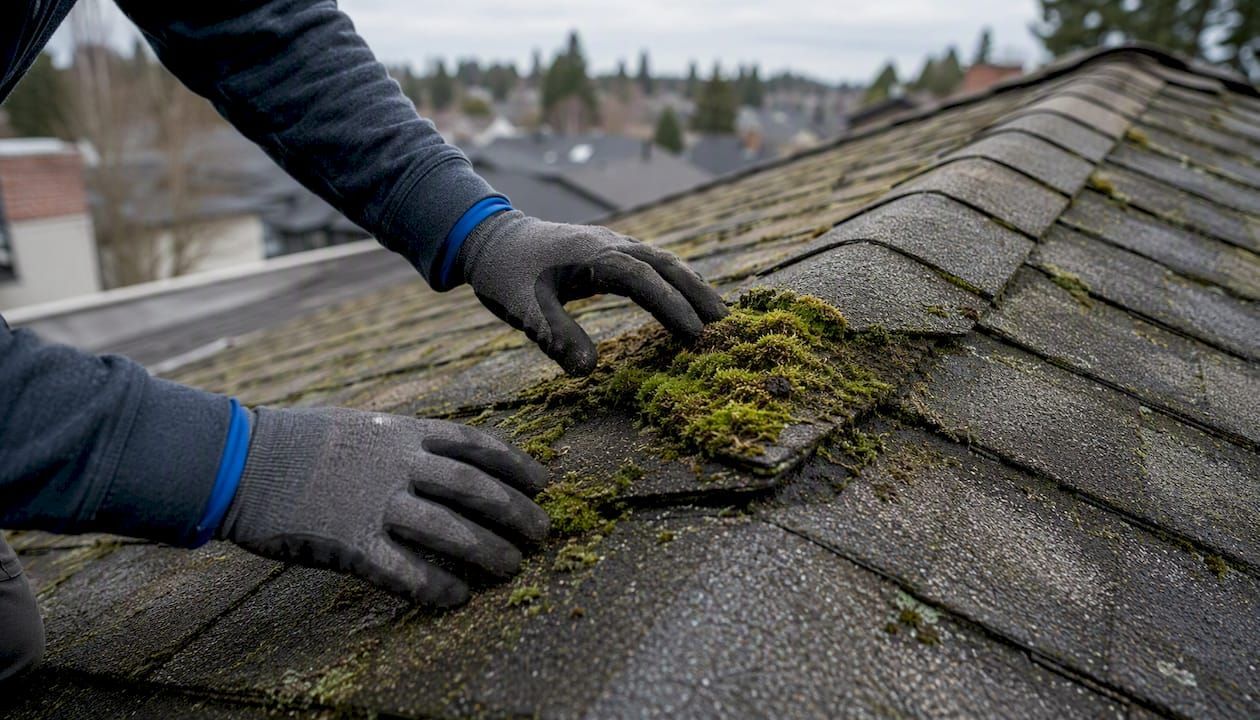
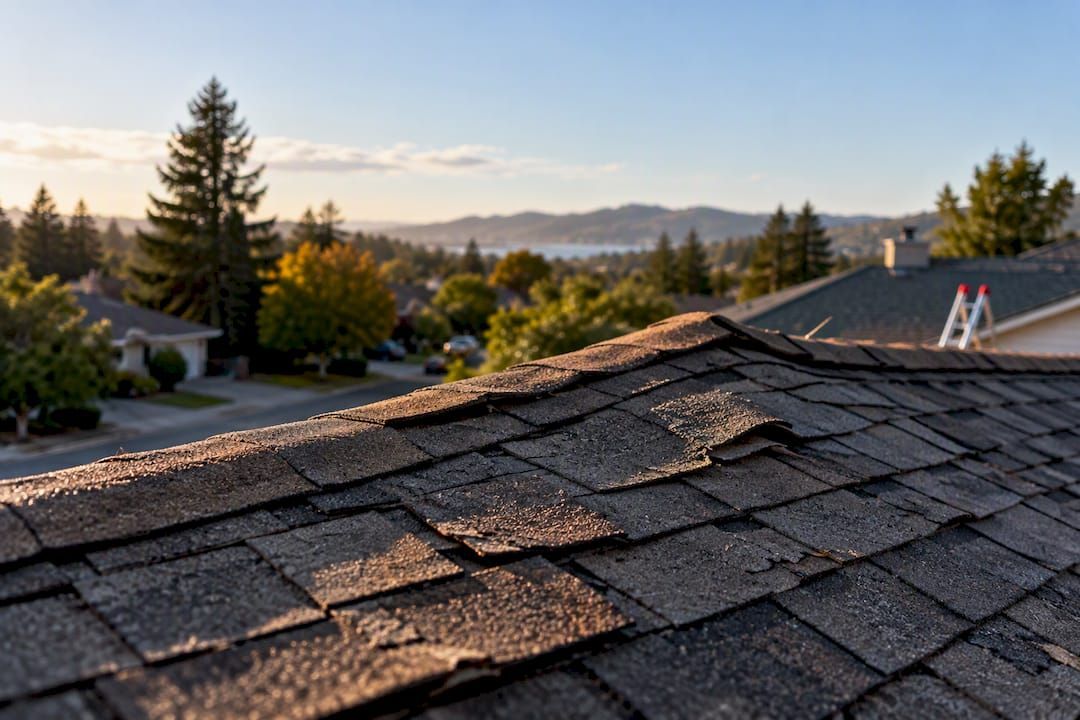
Those dark streaks running down your shingles aren't just ugly. They're colonies of Gloeocapsa magma , a cyanobacterium that feeds on the limestone filler in asphalt shingles and spreads downward with every rain. Left alone, the streaks are mostly cosmetic at first, but the organism gradually degrades the shingle surface over time.
Moss is a different problem. Where algae streaks are surface-level, moss physically lifts shingle edges and traps moisture underneath. That trapped moisture accelerates rot in the decking below and creates ideal conditions for leaks. Lichen, the crusty gray-green growth you sometimes see on older roofs, bonds directly to the shingle granules and is the hardest of the three to remove cleanly.
The Asphalt Roofing Manufacturers Association (ARMA) recognizes all three as legitimate maintenance concerns and provides specific guidance on how to address them safely.
Beyond the structural argument, there's a real financial one. A clean roof photographs better, appraises better, and signals to buyers that the home has been maintained. If you're planning to list your home in the next year or two, a professional cleaning is one of the highest-return maintenance investments you can make. And if your roof still has years of serviceable life left, cleaning extends that life rather than forcing a premature replacement conversation.
Pro Tip: Algae and moss grow fastest on north- and west-facing roof sections that stay shaded longer. Check those areas first during your ground inspection.
- Algae ( Gloeocapsa magma ): dark vertical streaks, mostly cosmetic but feeds on shingle limestone filler
- Moss: green, fuzzy growth that lifts shingles and traps moisture
- Lichen: crusty, bonded growth that's the most difficult to remove and can cause granule loss during removal
- All three grow faster in shaded, damp areas with organic debris nearby
Soft wash vs. pressure wash: which method actually works?
The short answer: soft washing works. Pressure washing damages asphalt shingles and should be avoided.
Soft washing uses a low-pressure pump to apply a chemical solution directly to the roof surface. The chemistry kills the algae, moss, or lichen colonies at the root. Water pressure is minimal, typically under 100 psi at the nozzle, which means no granule loss and no lifted shingle edges.
"Pressure washing asphalt shingles is explicitly discouraged by ARMA because the force strips protective granules, shortening the roof's serviceable life. Standard pressure washers operate at 1,500–4,000 psi — far beyond what shingles can safely handle. Soft washing, by contrast, lets chemistry do the work while preserving the shingle surface." — ARMA Algae & Moss Guidance
For heavy moss, some professionals use light mechanical removal first: a soft-bristle brush or a leaf blower to clear the bulk of the growth before applying chemistry. Never use a stiff wire brush or aggressive scraping. That removes granules just as effectively as a pressure washer.
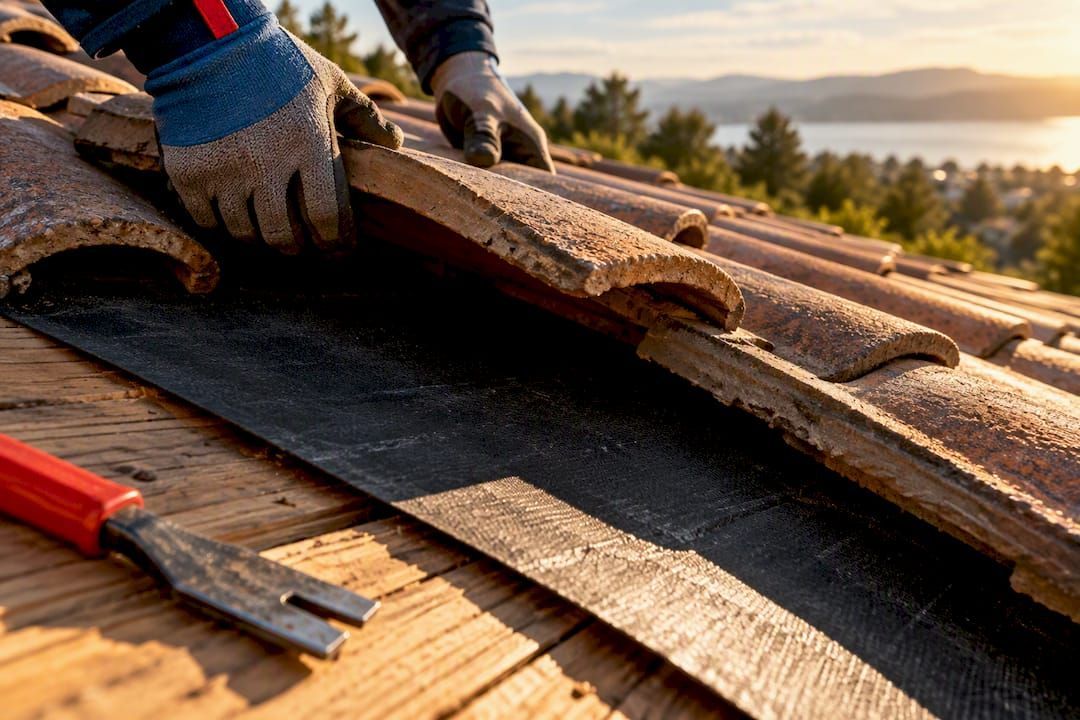
Metal roofs and tile roofs follow different rules. Metal roofs can tolerate a controlled pressure rinse for oxidation removal, but the chemistry and technique still differ from asphalt. Tile roofs require careful pressure management to avoid cracking. If you have either, consult a professional before attempting any cleaning.
What chemicals pros use and how the process works step by step
The chemistry behind professional roof cleaning is straightforward, but the details matter. Getting the concentration wrong or skipping the plant-protection steps can cause real damage.
The two main chemistries:
Sodium hypochlorite (pool-grade bleach) is the industry standard for algae and moss. ARMA recommends a 50:50 mix of laundry-strength liquid chlorine bleach and water, with a dwell time of 15–20 minutes before rinsing. Professionals using proportioner pump systems typically work at a 3–6% working concentration at the nozzle for heavier infestations.
Sodium percarbonate (oxygen bleach) is a gentler alternative. It works more slowly and is less effective on heavy growth, but it's safer around sensitive landscaping and storm drains.
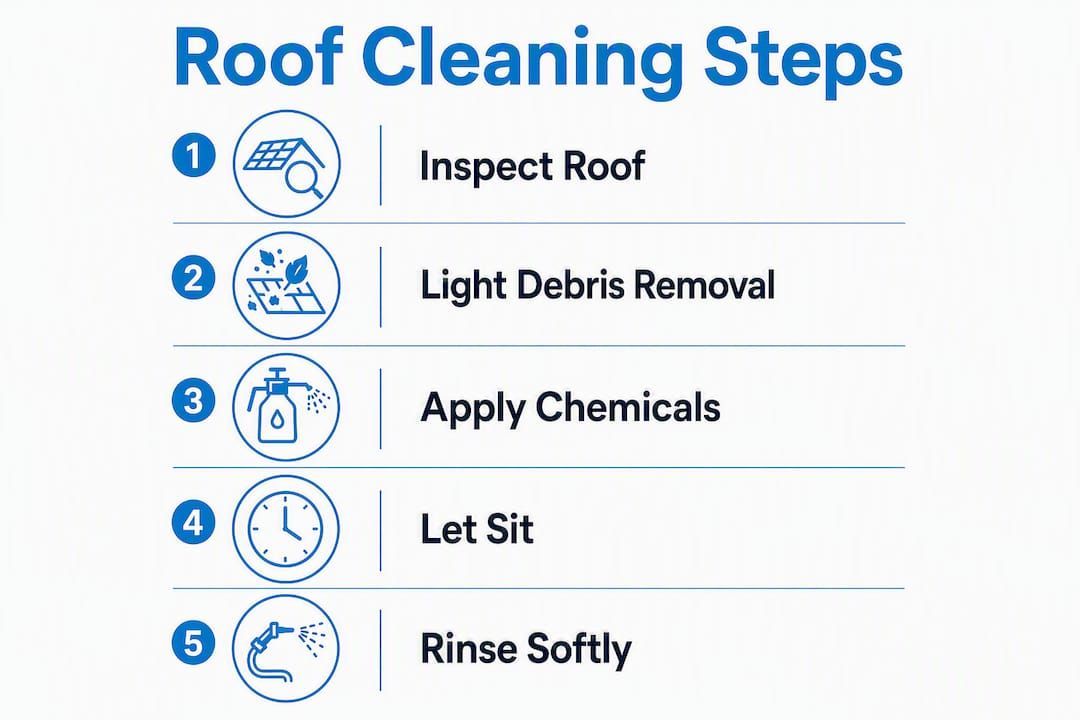
The professional process, step by step:
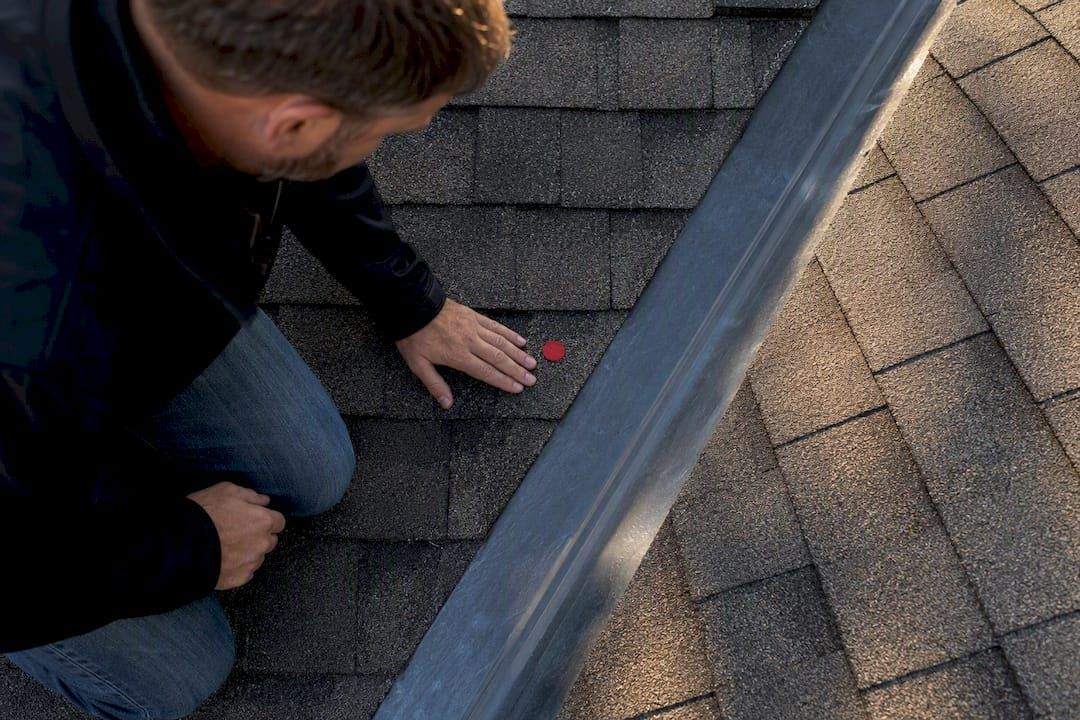
- Pre-inspection: Walk the roof to document soft spots, granule loss, and any pre-existing damage. Photograph everything.
- Pre-wet landscaping: Saturate all plants, shrubs, and grass within the runoff zone before any chemical is applied.
- Mix and apply: Use a proportioner pump to draw fresh water and chemical separately, mixing at the nozzle. Apply section by section from the ridge down.
- Dwell time: Allow 15–30 minutes of contact time. Professionals often skip the immediate rinse and let rainfall complete the final wash, because rinsing too early removes the active treatment before it kills root systems.
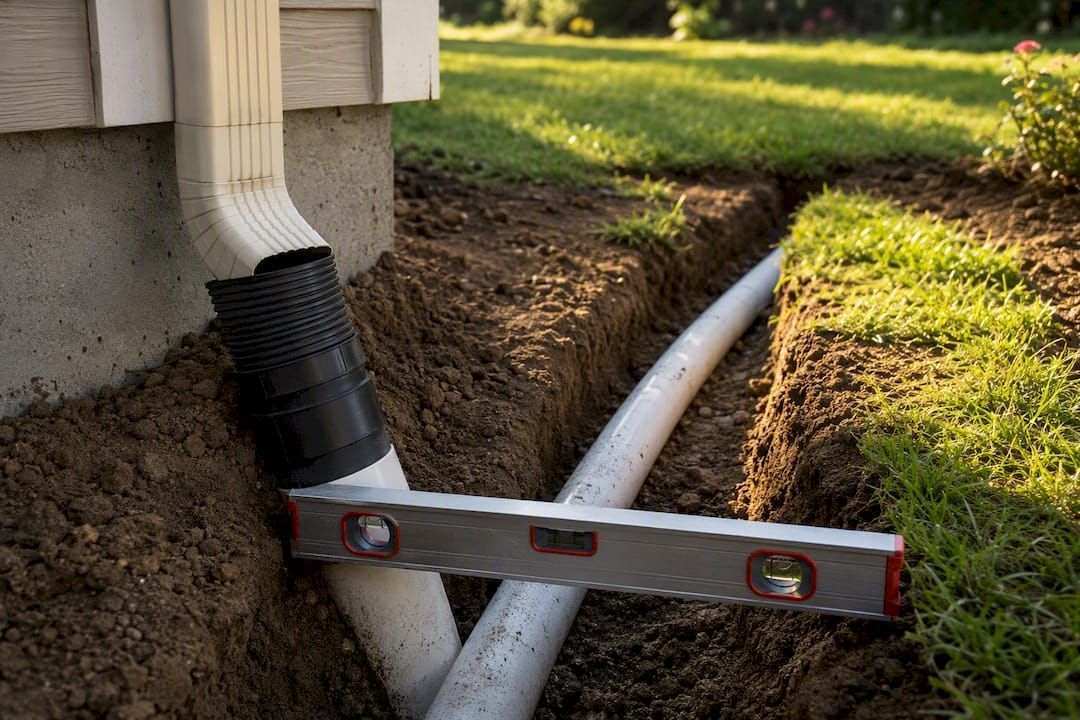
- Post-application flush: Rinse plants and soil thoroughly after the chemical has done its work. Flush gutters and downspouts.
- Equipment flush: Run clean water through the pump system to prevent sodium hypochlorite from corroding seals and pump components.
Environmental note: Never apply roof chemicals within 12 hours of expected rain if runoff could reach a storm drain or waterway. Check local ordinances, as some municipalities have specific rules about chemical runoff from residential properties. Protect irrigation heads and any water features before you start.
DIY or hire a pro? Here's how to decide
This decision comes down to three things: roof pitch, roof height, and how comfortable you are working at elevation. There's no shame in calling a professional. Falls from roofs are among the most serious home-maintenance injuries, and wet, chemically treated shingles are slippery.
| Situation | DIY | Hire a Pro |
|---|---|---|
| Single-story home, low pitch (under 4/12) | ✓ Manageable with proper safety gear | Optional |
| Pitch 4/12–6/12, single-story | Proceed with caution | Recommended |
| Pitch over 6/12, any height | Not recommended | ✓ Required |
| Multi-story home | Not recommended | ✓ Required |
| Heavy moss or lichen coverage | Difficult to treat effectively | ✓ Recommended |
| Manufacturer warranty in effect | Check warranty first | ✓ Safer choice |
| Fragile or extensive landscaping | High risk of chemical damage | ✓ Recommended |
DIY safety checklist — non-negotiable items:
- Use a properly secured extension ladder rated for your weight plus equipment
- Wear non-slip footwear and a safety harness anchored to a ridge strap
- Never walk on wet or chemically treated shingles
- Apply chemicals with a pump sprayer or garden sprayer, never a pressure washer
- Pre-wet all plants and rinse them thoroughly after application
- Have a second person present at ground level
Warranty and liability are real considerations. Some shingle manufacturers specify approved cleaning methods in their warranty documentation. If you're unsure, a pre-cleaning roof inspection can document pre-existing conditions and help you understand whether cleaning or repair is the right next step.
What roof cleaning typically costs and how long it takes
Most homeowners pay a moderate amount for a professional soft-wash job on a standard home, with heavily infested or larger roofs costing more. Typical professional soft-wash jobs cost $300 to $750 for many homes; larger or heavily infested roofs can cost more.
What drives the price up or down:
- Roof size: More square footage means more chemical, more time, more labor.
- Pitch and steepness: Steeper roofs require more safety equipment and slower, more careful work.
- Number of roof planes and penetrations: Valleys, dormers, skylights, and chimneys all add complexity.
- Severity of growth: Heavy moss or lichen requires more chemical and possibly mechanical pre-treatment.
- Access: A roof that requires scaffolding or a boom lift costs more than one accessible by ladder.
- Add-on services: Gutter cleaning or a house wash bundled with the roof job often adds $100–$200.
| Job type | Typical price range | On-site time |
|---|---|---|
| Standard single-family, light algae | Moderate price | Short duration |
| Standard single-family, moderate growth | Higher moderate price | Moderate duration |
| Large or steep roof, heavy moss/lichen | Higher price range | Longer duration |
On-site time for a typical residential soft-wash job usually spans a few hours. Total appointment time is longer when you include setup, pre-wetting, dwell time, and post-rinse tasks. Get a fixed-price quote whenever possible. Per-square-foot pricing can be useful for initial estimates, but a contractor who won't give a firm number after a site visit is a yellow flag.
Schedule cleaning during dry, mild weather. IKO's seasonal guidance recommends avoiding cleaning in icy or rainy conditions, both for safety and because wet conditions reduce chemical effectiveness and increase runoff risk. Spring and early fall are typically the best windows in most U.S. climates.
How to prevent algae and moss from coming back
Cleaning solves the immediate problem. Prevention determines how long before you need to do it again. Think of it like changing your car's oil: the maintenance interval matters as much as the service itself.
Recommended cleaning frequency by climate:
| Climate type | Suggested cleaning interval |
|---|---|
| Humid or semi-tropical (Gulf Coast, Pacific Northwest) | Every 2–3 years |
| Moderate (mid-Atlantic, Northern California) | Every 3–5 years |
| Dry (Southwest, high desert) | Every 4–6+ years |
Prevention steps that actually reduce recurrence:
- Trim overhanging branches. Branches drop organic debris and keep roof sections shaded and damp. Owens Corning's maintenance checklist recommends clearing debris at least twice a year and trimming branches that hang within a few feet of the roof surface.
- Clean gutters regularly. Clogged gutters back up moisture onto the roof edge, creating ideal conditions for moss at the eaves.
- Install zinc or copper ridge strips. These release biocidal ions during rainfall that inhibit spore establishment downslope. Installed costs vary by material: galvanized zinc runs $150–$300 with a 15–20 year lifespan; solid zinc runs $250–$450 with a 30–50 year lifespan; solid copper runs $400–$700 with a lifespan of 50+ years.
- Inspect flashing and vent seals. Failed flashing traps moisture at penetrations, which accelerates biological growth nearby.
- Choose algae-resistant shingles at replacement. AR shingles use copper-infused granules that inhibit Gloeocapsa magma growth. If your roof is approaching the end of its life, this is worth factoring into your replacement decision.
Pro Tip: Zinc and copper strips work best when installed at the ridge and along the upper edge of long roof slopes. Placement matters: the ions need rainfall to carry them downslope across the full surface.
Tree management deserves its own emphasis. Overhanging branches don't just drop leaves; they keep roof sections perpetually damp, which creates ideal regrowth conditions even after a thorough cleaning. Trimming is often more effective at extending your cleaning interval than any chemical treatment.
Risks of improper cleaning and what your warranty actually says
Roof cleaning done wrong causes real damage. Understanding the risks before you start protects both your roof and your wallet.
The main hazards:
- Granule loss from pressure washing: Standard pressure washers run at 1,500–4,000 psi. Anything over roughly 100 psi at close range risks stripping the protective granules from asphalt shingles, accelerating UV degradation and shortening roof life.
- Walking on wet treated shingles: Sodium hypochlorite makes shingles extremely slippery. Falls are a serious risk, and walking on treated shingles can also cause physical damage.
- Over-concentrated chlorine: Too strong a mix can bleach and degrade shingle surfaces. Stick to ARMA's recommended concentrations.
- Chemical runoff: Untreated runoff can kill landscaping and contaminate storm drains. Pre-wet plants, flush them after application, and follow local runoff rules.
- Cleaning a roof that needs replacement: If granule loss is already significant, cleaning can accelerate exposure and UV damage to the underlying mat. Check your gutters for accumulated granules before scheduling any cleaning.
Warranty checklist to run before work begins:
- Review your shingle manufacturer's warranty documentation for approved cleaning methods.
- Confirm the contractor uses soft washing, not pressure washing.
- Ask what chemical concentrations they use and whether they align with ARMA guidance.
- Request proof of liability insurance and workers' compensation coverage.
- Photograph your roof condition and gutter granule accumulation before work starts.
- Get the contractor's method and chemical plan in writing.
How to choose a roof-cleaning contractor you can actually trust
Not every contractor who offers roof cleaning knows what they're doing. The wrong choice can void your warranty, damage your landscaping, or leave you with a roof that looks worse than before.
Questions to ask every contractor:
- Do you use soft washing exclusively on asphalt shingles?
- What chemical concentrations do you use, and how do you mix them?
- How do you protect landscaping and storm drains during application?
- Are you licensed and insured, including workers' compensation?
- Can you provide before-and-after photos from similar jobs?
- Do you offer a guarantee if algae or moss returns within a set period?
Red flags that should end the conversation:
- Insists on pressure washing asphalt shingles
- Cannot describe the chemicals or concentrations they use
- Offers a very low price without a site visit
- No proof of insurance or vague answers about coverage
- No documentation process before or after the job
Trust signals worth paying for:
- Proportioner pump systems for precise chemical mixing
- Written pre-inspection documentation and post-job photos
- Familiarity with roofing manufacturer guidelines and ARMA recommendations
- A written guarantee covering algae or moss return within a defined window
- References from local homeowners with similar roof types
For a broader look at what separates a qualified contractor from a risky one, the commercial roofing contractor checklist from Shieldguardroofing covers vetting criteria and insurance checks that apply equally well to residential cleaning contractors.
| Evaluation criterion | What to look for |
|---|---|
| Method | Soft washing only for asphalt shingles |
| Chemistry | Can state concentrations; aligns with ARMA |
| Insurance | Liability + workers' comp, current certificates |
| Documentation | Pre-inspection photos, written scope |
| Guarantee | Written, time-bound algae/moss return policy |
| References | Local, verifiable, similar roof type |
Shieldguardroofing: professional roof care for Northern California homeowners
When cleaning reveals more than algae, you need a team that can handle what comes next. Shieldguardroofing is a family-owned roofing company with over 75 combined years of experience serving Northern California homeowners and businesses. The team follows ARMA-aligned soft-wash practices, documents roof condition before any work begins, and carries full liability and workers' compensation coverage on every job.
If cleaning uncovers granule loss, damaged flashing, or shingles that are past their serviceable life, Shieldguardroofing handles residential roof repairs and full residential roofing replacement using premium GAF, GAF Energy, and Brava materials backed by industry-leading warranties. You won't be handed off to a subcontractor or left guessing about next steps.
For homeowners who want ongoing protection, residential roof maintenance in Sacramento covers recurring inspections, preventive care, and the kind of proactive attention that keeps small problems from becoming expensive ones. Request your estimate today and get a clear picture of your roof's condition before the next rainy season.
Key Takeaways
Soft washing is the only method ARMA endorses for asphalt shingles, and it's the standard Shieldguardroofing applies to every residential job in Northern California.
| Point | Details |
|---|---|
| Use soft washing only | Pressure washing strips granules and can void your shingle warranty; soft washing at 3–6% sodium hypochlorite is the ARMA-endorsed method. |
| Budget a moderate amount for most homes; price varies with roof size, pitch, access difficulty, and severity of algae or moss growth. | |
| Prevent recurrence actively | Trim branches, clean gutters, and install zinc or copper ridge strips; AR shingles are the best long-term solution at replacement. |
| Know when to call a pro | Roofs with a pitch over 6/12, multi-story homes, or heavy moss coverage require a licensed, insured contractor. |
| Shieldguardroofing | Northern California's family-owned option for soft-wash cleaning, maintenance, and repair when cleaning reveals underlying damage. |
Why soft washing and documentation are the only approach worth taking
Most of the roof-cleaning advice you'll find online treats the job as a simple DIY project. Spray some bleach, rinse it off, done. That framing misses the two things that actually determine whether a cleaning job protects your roof or quietly damages it: the right chemistry at the right concentration, and a pre-job inspection that catches problems before they're made worse.
The reason Shieldguardroofing emphasizes documentation isn't bureaucratic. It's because a roof that looks dirty from the ground might already have granule loss, soft decking, or failing flashing that cleaning will expose rather than fix. Walking the roof first, photographing what's there, and checking the gutters for accumulated granules takes fifteen minutes and changes the entire scope of the conversation. Sometimes the right answer is cleaning. Sometimes it's repair. Sometimes it's a replacement timeline discussion. You can't know which without looking.
Northern California's climate adds its own wrinkle. The Central Valley and Sacramento area see hot, dry summers followed by wet winters, which creates a specific cycle of drying and rewetting that accelerates moss and algae growth on north-facing slopes. Cleaning intervals here tend to fall in the 3–5 year range for most homes, but properties with heavy tree cover or persistent shade may need attention more often. Prevention, particularly branch trimming and gutter maintenance, does more to extend that interval than any chemical treatment alone.
The soft-wash approach isn't just the safer choice. It's the one that respects what your roof is actually doing for your home.
Helpful sources for deeper reading
These are the most authoritative resources for homeowners who want to go further on roof cleaning methods, chemistry, and maintenance:
- ARMA: Algae & Moss Prevention and Cleaning for Asphalt Roofing Systems — The industry standard for cleaning guidance, including recommended bleach concentrations, dwell times, and the explicit caution against pressure washing asphalt shingles.
- How to Soft Wash a Roof: Full Process From a 25-Year Veteran — A detailed professional walkthrough covering proportioner pump setup, chemical concentrations (3–6% sodium hypochlorite), dwell time strategy, and equipment flushing after the job.
- Owens Corning: Roof Maintenance Checklist — Practical seasonal maintenance steps including branch trimming, debris clearing, and gutter care that reduce moss and algae recurrence.
- IKO: Seasonal Roof Maintenance Tips for Homeowners — Guidance on scheduling inspections and cleaning by season, with specific advice on avoiding cleaning in icy or wet conditions.
- The Roofing Brief: Algae Streaks on a Roof — Explains Gloeocapsa magma , how zinc and copper strips work, and why pressure washing causes granule loss, with installed cost comparisons for prevention strip types.
- Family Handyman: How to Clean Roof Stains — Covers plant protection protocols, chemical runoff precautions, and the case for oxygen bleach as a gentler alternative for sensitive landscaping.
Recommended