Best Solar Roofing Options for Homeowners: 2026 Guide
Best Solar Roofing Options for Homeowners: 2026 Guide
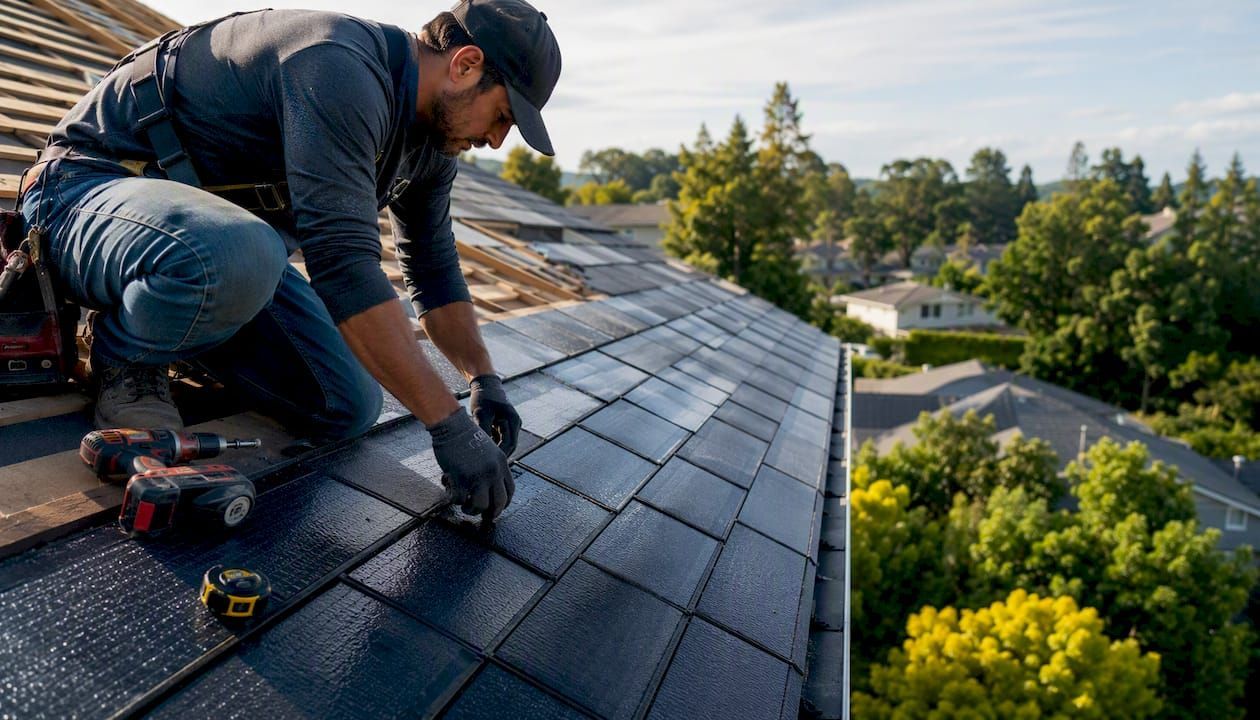
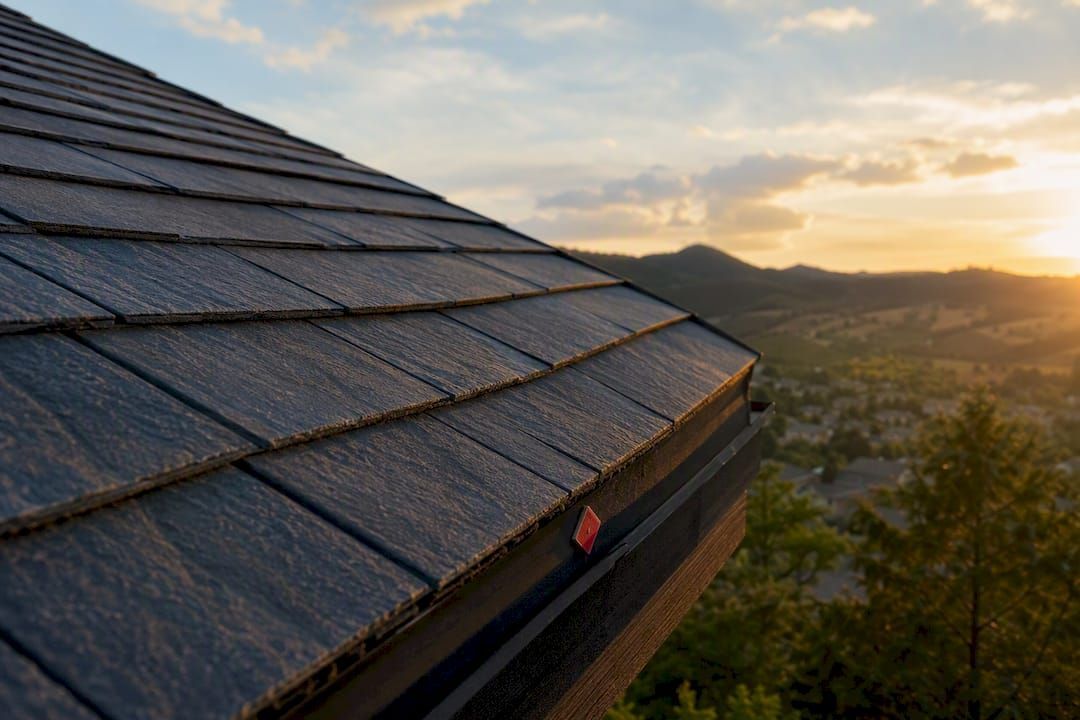
If you need a new roof and want solar, integrated solar shingles are the best solar roofing option for most homeowners. If your roof has years of life left, rack-mounted panels deliver faster payback at a lower installed cost per watt. That single fork in the road drives almost every decision on this page.
Here is the short list of top picks for U.S. homeowners:
- Shieldguardroofing(installation services): Local NorCal contractor that coordinates reroof and integrated solar in one project, with GAF Energy certification and warranty consolidation.
- GAF Energy Timberline Solar: The most installer-friendly integrated shingle on the market. Nailable with standard crews, combined roof and solar warranty, large certified network.
- Tesla Solar Roof: Glass-tile aesthetic and Powerwall ecosystem integration. Best for high-value homes where curb appeal is the top priority.
- CertainTeed Solstice: Shingle-style BIPV distributed through traditional roofing channels. Solid manufacturer pedigree.
- Suntegra: Tile and laminate BIPV formats for homes where matching the existing roof profile matters most.
- Luma Solar: Luxury-positioned shingles with high wind ratings for niche, high-spec installations.
- VOLTAIC: Tile-form photovoltaic products suited to HOA-sensitive or historic properties where rack-mounted panels are not acceptable.
Quick verdict by priority:
- Aesthetics first: Tesla Solar Roof or Luma Solar
- Fastest payback: Rack-mounted panels (not integrated shingles)
- Reroof + solar in one project: GAF Timberline Solar via Shieldguardroofing
- HOA or design constraints: VOLTAIC or Suntegra tile formats
- New construction: Any integrated BIPV system coordinated at the build stage
How do the best solar roofing options compare side by side?
The table below covers the leading products across the dimensions that actually affect your purchase decision. Shieldguardroofing leads as the featured installer coordinating these systems in Northern California.
| Product | Best For | Est. Cost Range (installed) | Warranty (roof + power) | Installation Complexity | Suitable Roof Types | Lifespan |
|---|---|---|---|---|---|---|
| Shieldguardroofing | Reroof + integrated solar coordination in NorCal | Varies by project scope | GAF warranty coordination + financing | Standard roofing crews (GAF-certified) | Asphalt shingle, compatible substrates | 25 years |
| GAF Energy Timberline Solar | Planned reroof with integrated aesthetics | ~$4.50–$7.00/W (system) | Combined roof + solar warranty | Nailable; standard crews | Asphalt shingle; 2:12+ pitch | 25+ years |
| Tesla Solar Roof | Curb appeal; Powerwall users | ~$4.50–$7.00/W (system) | Roof + power production warranty | Specialized crews required | Full-roof replacement | 25+ years |
| CertainTeed Solstice | Brand-backed shingle-style solar | ~$4.50–$7.00/W (system) | Manufacturer warranty | Traditional roofing channels | Asphalt-compatible | 25+ years |
| Suntegra | Custom roof profiles and aesthetics | ~$4.50–$7.00/W (system) | Manufacturer warranty | Moderate; custom profiles | Tile-compatible roofs | 25+ years |
| Luma Solar | Luxury/high-wind-rating installs | Premium pricing | Manufacturer warranty | Specialized | Asphalt and compatible | 25+ years |
| VOLTAIC | HOA/historic tile aesthetics | Varies | Manufacturer warranty | Moderate | Tile-form compatible | 25+ years |
Key differentiators worth knowing:
- The GAF Timberline Solar ES2 produces approximately 57W per energy shingle and installs with a nail gun, the same way standard Timberline shingles do. That matters because it keeps labor costs closer to a standard reroof than to a specialty installation.
- Tesla Solar Roof uses tempered glass tiles and typically requires Tesla-trained crews, which limits installer availability and can extend lead times.
- Suntegra, Luma, and VOLTAIC address specific niches: custom tile profiles, wind ratings, and HOA-sensitive aesthetics, respectively. SolarReviews notes these brands serve narrower use cases than the major two.
Cost reality check: Market analysis places integrated solar roofs at roughly $4.50–$7.00 per watt installed, compared with $2.50–$3.50 per watt for standard rack-mounted panels. That gap closes significantly when you factor in the cost of a reroof you were already planning to do.
Which roof types and conditions work best for solar?
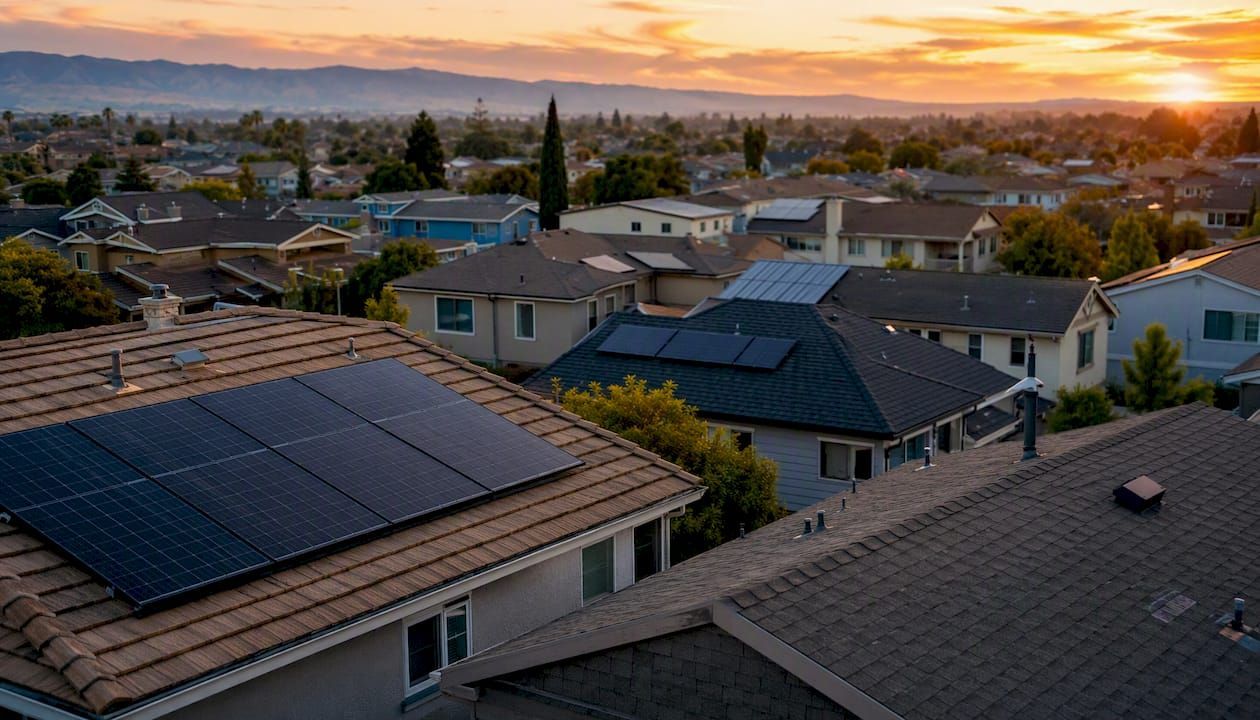
Your existing roof material and condition are the first filter. Aurora Solar's guidance confirms that roof material and condition materially affect installation complexity and long-term performance.
Best-fit roof types by solar option:
- Asphalt shingle roofs: The easiest and most cost-effective substrate for both rack-mounted panels and integrated shingles like GAF Timberline Solar. Most NorCal homes fall into this category.
- Metal roofs: Excellent for rack-mounted panels. Standing-seam metal allows clamp-on mounting with no penetrations. Less common for integrated shingles.
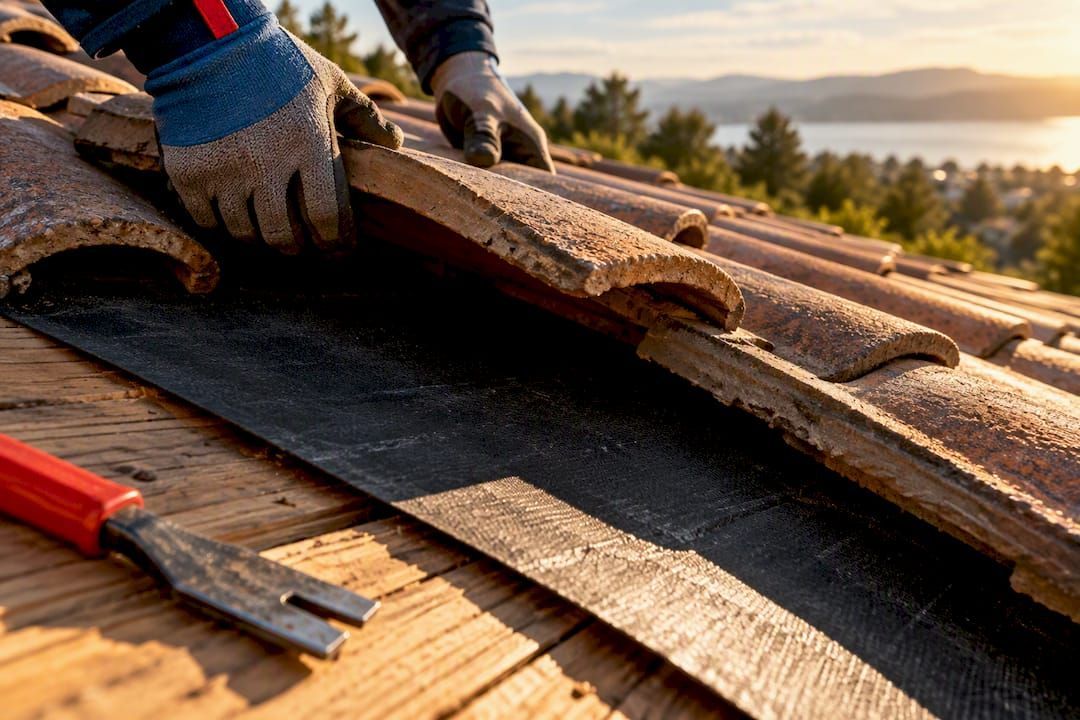
- Concrete or clay tile: Rack mounts require tile hooks and careful waterproofing. Integrated tile-form products like VOLTAIC or Suntegra are designed for this profile. Labor costs are higher.
- Slate: Fragile and expensive to work with. Rack mounts are possible but require experienced crews. Integrated shingles are generally not compatible.
- Flat or low-slope roofs: Rack mounts can be ballasted or mechanically attached. Integrated shingles require a minimum 2:12 pitch (GAF Timberline Solar specifies this). Flat roofs are not suitable for shingle-style BIPV.
You can also explore how residential roofing materials in NorCal interact with solar installation constraints before you commit to a product.
Roof condition checklist before going solar:
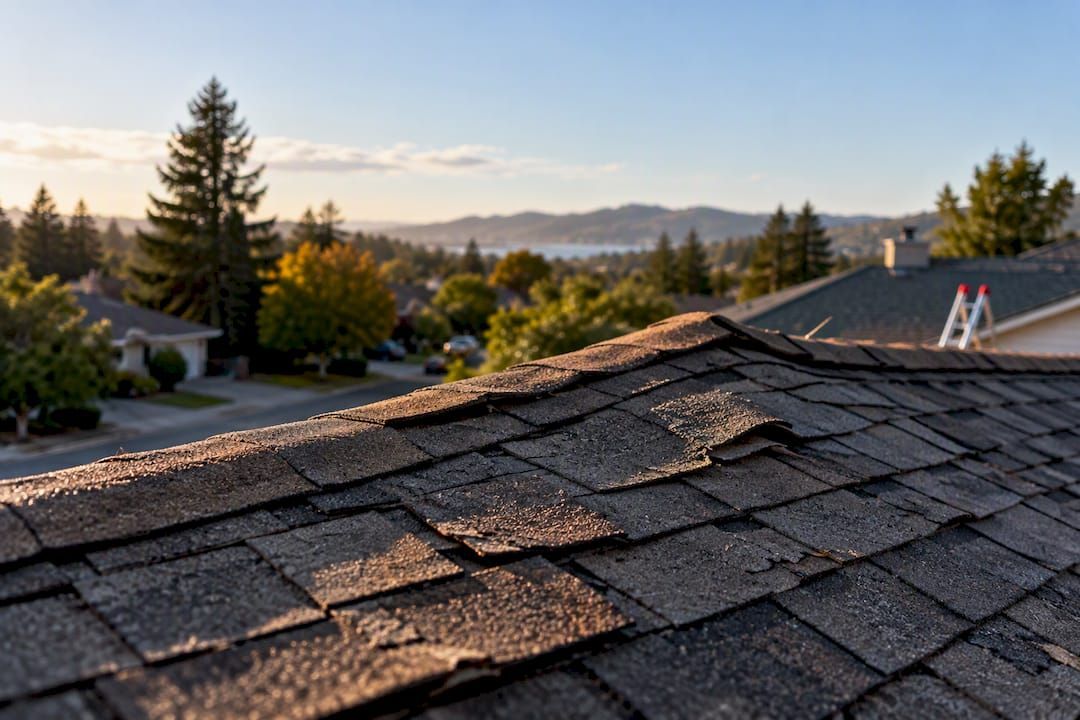
- Remaining roof life: if less than 5–7 years remain, replace before or with solar to avoid removing panels for a reroof later.
- Structural load: solar adds weight. Confirm your framing can handle it, especially on older homes.
- Shading: trees, chimneys, and neighboring structures reduce output. A shading analysis is non-negotiable before sizing any system.
- Roof plane complexity: dormers, valleys, and multiple small planes reduce usable area and complicate wiring runs. Rack mounts handle complex geometry better than integrated shingles.
- Orientation: south-facing planes at 15–40 degrees produce the most energy. East/west splits work but reduce output.
What does solar roofing actually cost, and how do incentives change the math?
Installed cost is where most homeowners get surprised. Per-watt installed averages place integrated solar roofs at roughly $4.50–$7.00/W and standard rack-mounted panels at $2.50–$3.50/W. On a 10 kW system, that difference is $20,000–$35,000 before incentives.
The IRS Residential Clean Energy Credit currently allows qualifying homeowners to claim a federal tax credit on eligible solar installations. Check the IRS directly for current rates and eligibility rules, as these figures are subject to change. The credit applies to both rack-mounted systems and qualifying integrated solar roofing, which meaningfully narrows the net-cost gap.
| Scenario | Installed Cost (est.) | After Federal Credit (est.) | Typical Payback |
|---|---|---|---|
| 10 kW rack-mounted panels | $25,000–$35,000 | Lower after credit | 6–10 years (varies by state rates) |
| 10 kW integrated solar roof | $45,000 | Lower after credit | 12–20+ years (varies) |
| Reroof + integrated solar (combined) | Incremental premium over reroof alone | Lower after credit | Closer to panel payback when reroof was needed |
Payback timelines vary significantly by local electricity rates. High-rate states like California compress payback windows because every kilowatt-hour produced offsets a more expensive grid unit. Solar's effect on resale value is an additional factor: homes with solar systems often sell at a premium, which improves the effective return on integrated systems even when the energy payback is longer.
Pro Tip: The reroof offset is the most underused argument for integrated solar. If you were already budgeting $15,000–$25,000 for a new roof, subtract that from the integrated solar quote before comparing it to a panels-only price. The incremental premium for going integrated is often far smaller than the headline number suggests. Financing options through Shieldguardroofing can also spread the cost across the project life.
For more on roof replacement financing options, Shieldguardroofing covers the avenues available to NorCal homeowners combining reroof and solar.
How do you choose between integrated solar roofing and traditional panels?
Six questions settle most decisions. Work through them before you request a single quote.
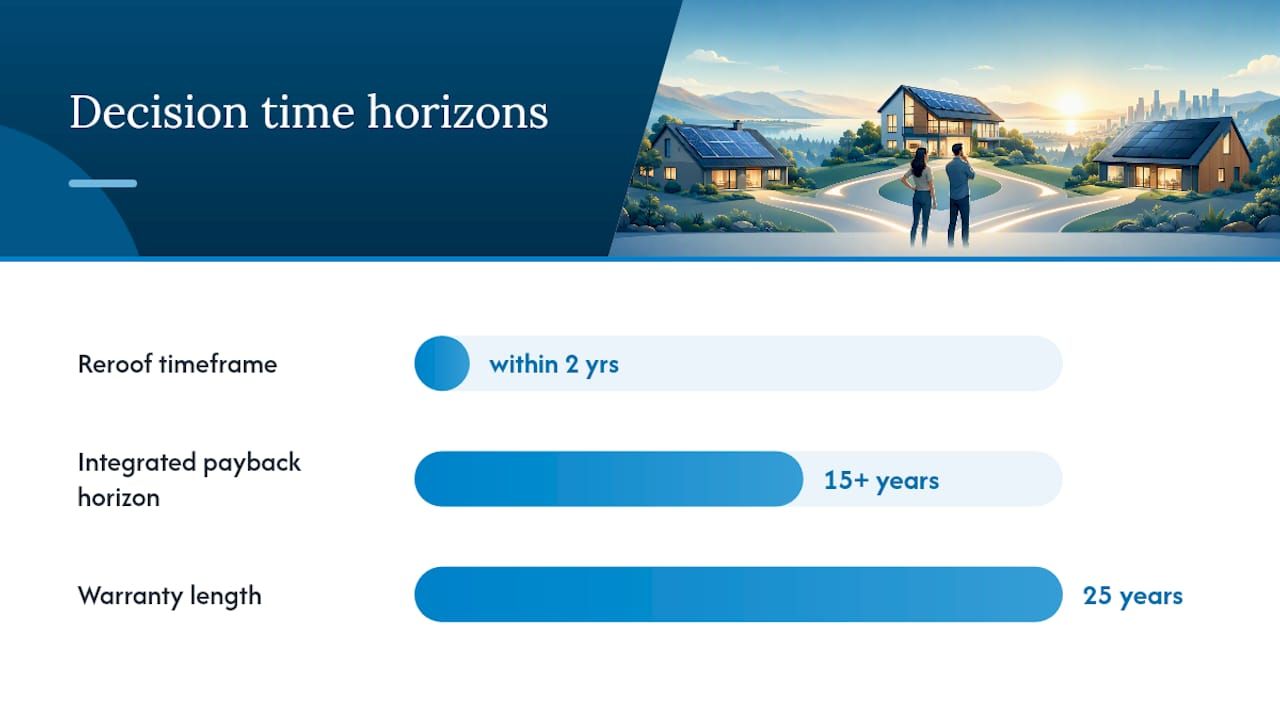
- Do you need a new roof now or within two years? If yes, integrated solar is worth a serious quote. If no, rack-mounted panels almost always deliver better payback.
- How long do you plan to stay in the home? Integrated systems favor long-term owners. The aesthetics and warranty consolidation pay off over 15+ years.
- What is your local electricity rate? Higher rates compress payback for both options, but panels still win on pure dollars-per-watt. In California, high rates make both viable.
- Do HOA rules or design guidelines restrict visible panels? If yes, integrated shingles or tile-form BIPV may be your only compliant option.
- How much usable south-facing roof area do you have? Complex geometry with small south-facing planes favors rack mounts, which installers can orient for maximum yield.
- What is your budget and financing preference? Integrated systems cost more upfront. Confirm whether your installer offers financing and whether the federal credit applies to your specific product.
Steps to compare quotes fairly:
- Get a reroof-plus-panel quote AND an integrated solar roof quote from the same contractor, or from comparable certified installers.
- Calculate the net incremental premium after the federal tax credit for each scenario.
- Ask specifically about installer certification. GAF Timberline Solar requires GAF-certified contractors; Tesla requires Tesla-trained crews. Uncertified installers can void manufacturer warranties.
- Request modeled annual kWh production for each option based on your actual roof geometry and local irradiance data.
- Confirm warranty scope in writing: does it cover weatherization (leaks), power output degradation, and who handles combined claims?
Watch out for these common quoting traps:
- Apples-to-oranges coverage: Some integrated roof quotes include only the solar-active area; others include the full roof replacement. Confirm what square footage each quote covers.
- Dummy tiles vs. active tiles: Tesla Solar Roof and some other systems use non-active tiles to fill non-solar areas. The ratio of active to dummy tiles directly affects system output and cost.
- Warranty scope gaps: A "25-year warranty" that covers only power output and not weatherization leaves you exposed to leak liability. Read the combined warranty language carefully.
For guidance on sequencing a reroof and solar project, phased roof replacement planning explains how NorCal property owners can structure the work to avoid rework and protect warranties.
What Shieldguardroofing sees on real NorCal solar roofing projects
For most Northern California homeowners, the right call is a coordinated reroof and integrated solar installation when the roof is within 5 years of end-of-life, or a rack-mounted panel system on a roof with 10+ years remaining. That recommendation comes from what we see on actual job sites, not just product specs.
Site assessment priorities before any solar roofing project:
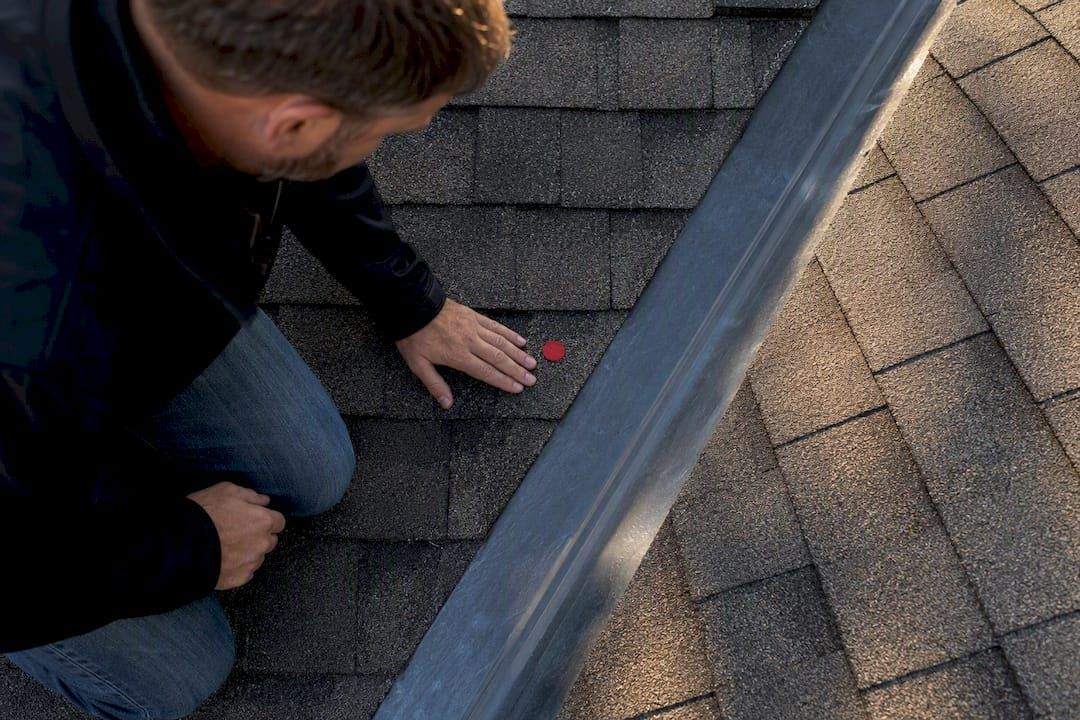
- Structural inspection: confirm rafter and sheathing condition can support added load.
- Shading analysis: use production modeling software to quantify shading losses before sizing the system.
- Electrical panel capacity: many older NorCal homes need a panel upgrade to handle solar interconnection.
- Roof geometry mapping: identify usable south-facing planes and flag dormers or valleys that complicate shingle runs.
- Utility interconnection timeline: NorCal utilities vary in interconnection queue times; factor this into your project schedule.
How we coordinate reroof and solar at Shieldguardroofing:
- Single-contract project management covering roofing and GAF Energy solar installation.
- Warranty coordination so one party is responsible for both weatherization and power production claims.
- Financing options for homeowners combining a full reroof with an integrated solar system.
Pro Tip: Before signing any solar roofing contract, request three documents: proof of manufacturer-certified installer status (GAF Energy certification for Timberline Solar, for example), the combined roof and PV warranty language in writing, and access credentials for the system monitoring platform. These three items tell you immediately whether you are working with a qualified installer or not.
Key Takeaways
Integrated solar shingles are worth the premium only when you need a reroof, face HOA restrictions, or prioritize long-term curb appeal over the fastest possible payback.
| Point | Details |
|---|---|
| Reroof timing is the deciding factor | If your roof needs replacement within two years, integrated solar shingles are economically competitive with panels plus a separate reroof. |
| Cost gap is real but narrower than it looks | Integrated solar runs $4.50–$7.00/W vs. $2.50–$3.50/W for panels; the reroof offset and federal tax credit close much of that gap. |
| Installer certification protects your warranty | GAF Timberline Solar and Tesla Solar Roof both require manufacturer-certified crews; uncertified installation can void combined warranties. |
| Complex roofs favor rack-mounted panels | Multiple small planes, heavy shading, or low-slope geometry reduce integrated shingle output; panels can be oriented to compensate. |
| Shieldguardroofing | Coordinates reroof and GAF Energy solar installation in Northern California under one contract, with warranty consolidation and financing options. |
The trade-off most homeowners don't see coming
Most articles on this topic frame the integrated-vs-panels decision as a pure cost comparison. That framing misses the most important variable: project coordination risk.
When you hire a roofer and a separate solar company, you create a gap in warranty responsibility. If a leak appears two years after installation, both contractors point at each other. The roofer says the solar penetrations caused it. The solar company says the roofing was defective. You are left in the middle, paying for an inspection to arbitrate the dispute.
Integrated solar shingles, installed by a single certified contractor, eliminate that gap. One warranty, one phone call, one party responsible. That is not a marketing claim. It is a structural difference in how liability is assigned.
The counterargument is real: panels on a sound roof cost less and pay back faster. If your roof has a decade of life left and you are not planning to stay in the home for 15+ years, panels are the rational choice. But if you are reroofing anyway and you care about what your home looks like from the street, the integrated premium buys you something concrete: a cleaner roofline, a simpler warranty, and a single contractor relationship for the life of the system.
The CNET roundup of best solar shingles and the Green Energy Calculators comparison both reach a similar conclusion: shingles make sense in a narrow but real set of conditions. Know which set you are in before you sign anything.
Shieldguardroofing installs and coordinates solar roofing in Northern California
Replacing your roof and adding solar in one project is the most cost-effective path for most NorCal homeowners, and that is exactly what Shieldguardroofing manages from start to finish. With over 75 combined years of roofing experience and GAF Energy certification, the team handles site assessment, material selection, installation, and warranty coordination so you are not managing two separate contractors and two separate warranty claims.
What you get when you work with Shieldguardroofing:
- Site assessment covering structural load, shading analysis, and roof condition.
- GAF Energy-certified installation of Timberline Solar integrated shingles.
- Single-contract warranty coordination covering both weatherization and power production.
- Financing options for homeowners combining a full reroof with an integrated solar system.
- Ongoing support for monitoring access and warranty claims.
Ready to find out whether integrated solar or a reroof-plus-panels approach makes more sense for your home? Request a residential roofing assessment from Shieldguardroofing and get a clear, honest recommendation based on your actual roof, not a generic sales pitch.
Useful sources and official references
Use these primary sources to verify incentives, technical specs, and warranty details before committing to any solar roofing product.
- Timberline Solar Roofing System for Homeowners
- GAF Energy Timberline Solar® ES 2: Solar Shingles
- Solar Shingles vs Solar Panels: Cost, Pros and Cons (2026) | Green Energy Calculators
- Expanding solar energy opportunities: rooftops and building integration — energy.gov
- Residential Clean Energy Credit — IRS
- What is the best roof for solar panels? — Aurora Solar
- Best Solar Shingles — CNET
- Solar roof US 2026 comparison: Tesla, GAF Energy, and panels-on-rails — what to buy — Earth Energy Log
- Solar Shingles: Pros and cons — SolarReviews
Recommended