What Is an Emergency Roof Repair? A NorCal Guide
What Is an Emergency Roof Repair? A NorCal Guide
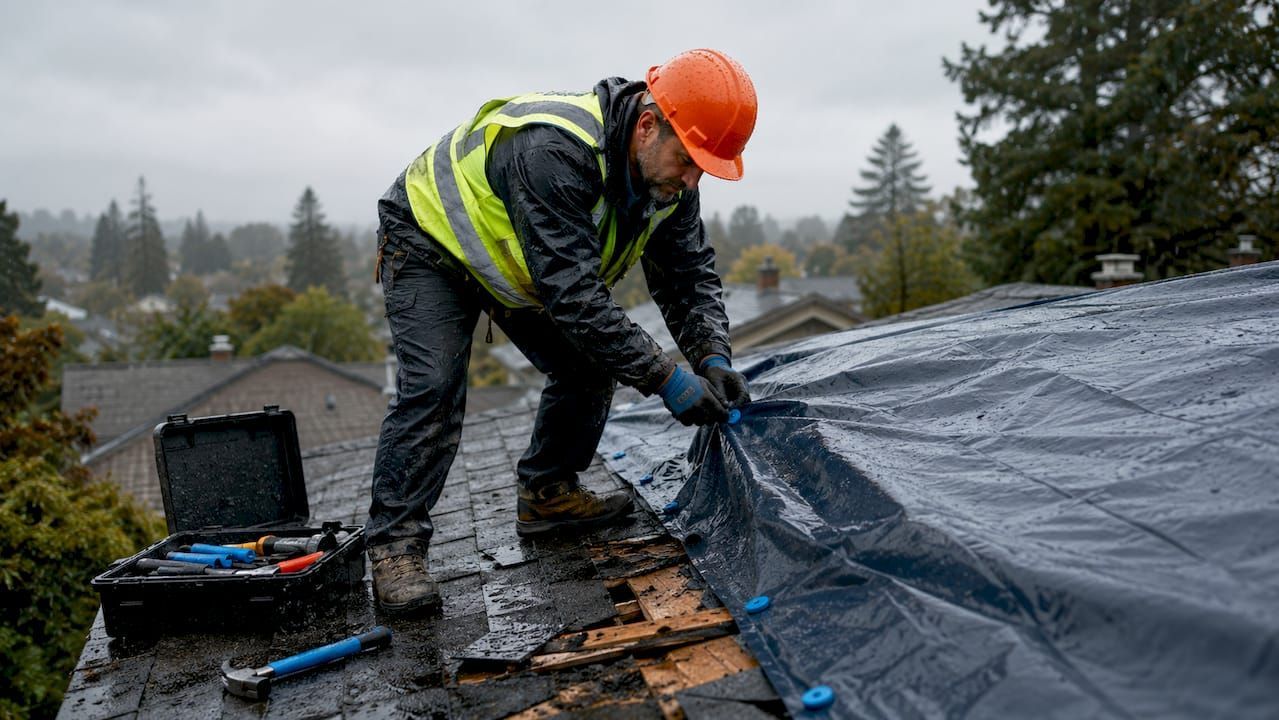
An emergency roof repair is immediate, unscheduled roofing work performed to stop active water intrusion or structural failure that threatens your home and its contents. In the roofing industry, this is also called emergency roof triage or urgent roof stabilization. It is not a permanent fix. It is a rapid response to prevent a bad situation from becoming a catastrophic one. If you are a Northern California homeowner dealing with storm damage, a sudden leak, or a fallen branch on your roof right now, this guide tells you exactly what to do, what it costs, and what to expect from professional help.
What is an emergency roof repair vs. a standard repair?
Emergency roof repair addresses active or imminent failures like water intrusion or structural compromise that cannot wait for a scheduled appointment. That distinction matters more than most homeowners realize. A standard repair is something you schedule next week. An emergency repair is something you need before the next rain.
The clearest test: if water will enter your home before a normal appointment can be made, you have an emergency. Here are the conditions that qualify:
- Active water dripping or pooling inside the home from a roof breach
- Visible structural deflection in roof decking, meaning the roof surface is sagging or bowing
- A fallen tree, large branch, or debris that has punctured or displaced roofing materials
- Missing shingles or flashing after a windstorm that leaves the underlayment exposed to rain
- A chimney, skylight, or vent that has shifted or cracked and is no longer sealed
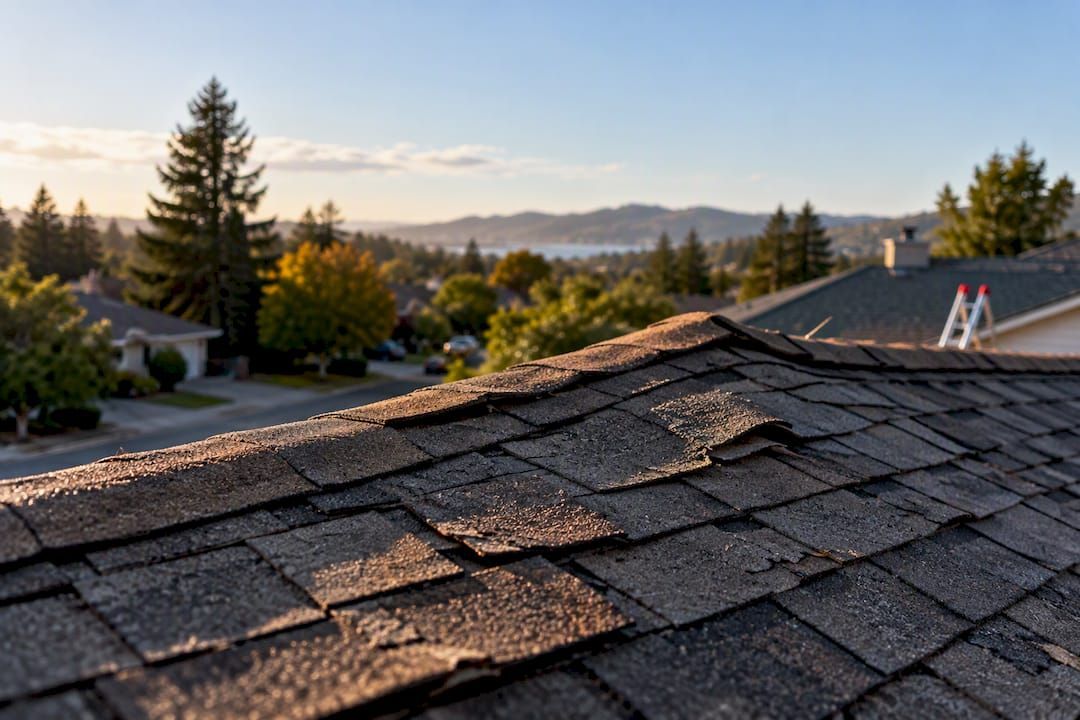
By contrast, a few cracked shingles with no active leak, minor granule loss, or small areas of surface wear are not emergencies. True emergency status depends on an immediate threat to interior spaces or occupants, not cosmetic damage. Homeowners often mistake surface deterioration for a crisis, which leads to unnecessary after-hours service charges. Knowing the difference saves you money and helps you communicate clearly with your roofing contractor.
The cost difference is real. Emergency repairs carry after-hours, weekend, and storm-surge premiums that scheduled work does not. Acting fast on a genuine emergency is smart. Calling for emergency service on a non-urgent issue is expensive.
What temporary roof solutions actually do
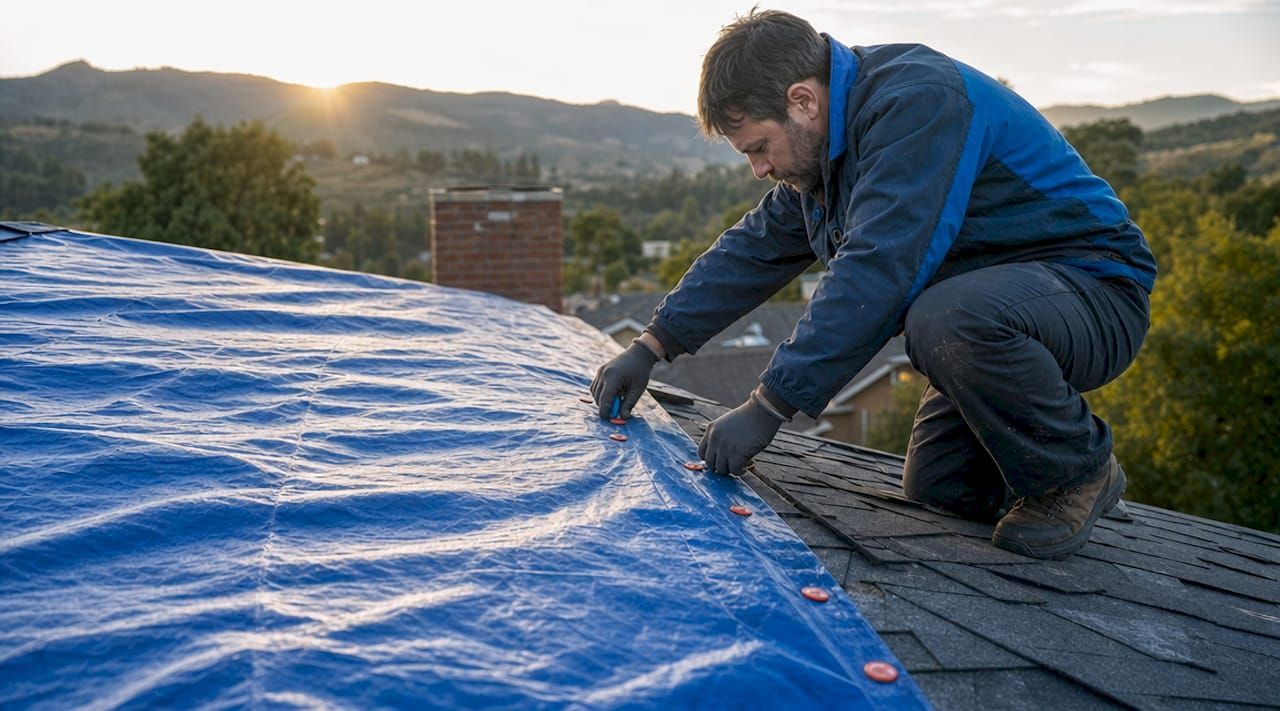
Temporary weatherproofing such as heavy-duty tarping is the most common first response to an active roof failure. A tarp does one thing well: it blocks rain and debris from entering the breach until permanent repairs can be planned and completed. It is not a fix. Think of it the way you would think of a bandage on a cut. It stops the bleeding while you get to a doctor.
Professional emergency tarping involves securing a polyethylene or reinforced poly tarp over the damaged area, extending it past the ridge line and anchoring it with weighted boards or strapping to prevent wind uplift. The quality of installation matters enormously. Poorly installed tarps can worsen roof damage by allowing wind to lift them or directing water underneath, which defeats the entire purpose and can void your insurance claim.
Pro Tip: Take photos and video of your roof before the tarp goes on. Insurance adjusters need to see the original damage, not just a covered roof. Document everything from multiple angles, including interior water damage.
| Temporary solution | Best use case | Key limitation |
|---|---|---|
| Heavy-duty poly tarp | Large breach, missing shingles, punctures | Wind can displace if poorly anchored |
| Roofing cement or sealant patch | Small cracks, flashing gaps, minor splits | Not effective on large or structural damage |
| Self-adhesive roof tape | Temporary flashing repair, small seam gaps | Degrades quickly under UV and heat |
| Plywood sheeting | Structural punctures from fallen debris | Requires proper sealing to prevent water bypass |
DIY tarping is possible if you can safely access your roof and the damage is clearly visible. However, working on a wet or storm-damaged roof carries serious fall risk. For most Northern California homeowners, calling a professional emergency roofing service is the safer and more effective choice. A professional crew also provides documentation that supports your insurance claim, which a DIY tarp job typically does not.
How much does emergency roof repair cost in Northern California?
Professional tarping costs range from $200 to $1,500 or more, depending on roof size, damage extent, and access difficulty. That range is wide because a small tarp over a single missing shingle section costs far less than covering a 30-foot breach on a steep-pitch roof after a major storm. Permanent emergency repairs, once the immediate threat is stabilized, typically run from a few hundred to several thousand dollars.
Several factors push costs higher in Northern California specifically:
- After-hours and weekend premiums: Emergency calls outside business hours carry surcharges of 25% to 100% above standard rates. A repair that costs $800 on a Tuesday afternoon may cost $1,400 on a Saturday night.
- Storm surge demand: When a major storm hits the Sacramento Valley or the Bay Area foothills, every roofing crew in the region gets called at once. High demand drives prices up and response times out.
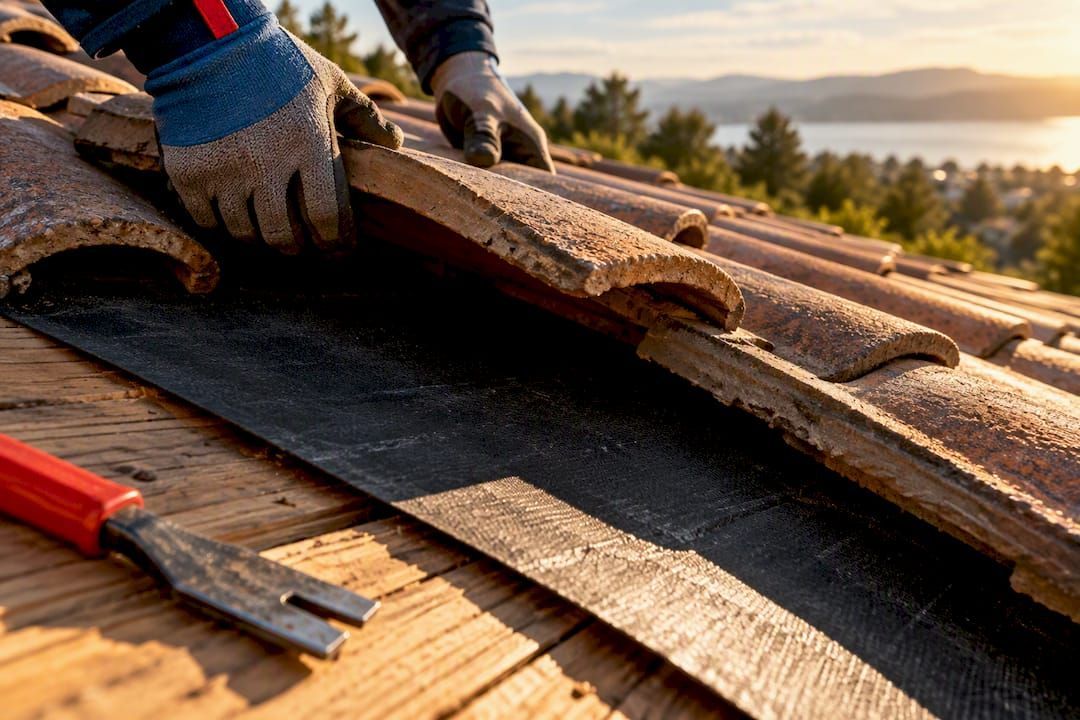
- Roof type and pitch: Tile roofs common in Sacramento-area neighborhoods require more care and specialized handling than composition shingle roofs, which adds labor time and cost.
- Damage severity: A single puncture is a different job than a 10-foot section of decking that needs temporary sheathing and waterproofing.
A few ways to manage costs without cutting corners: call during business hours if the damage is contained and rain is not imminent. Get a written estimate before work begins, even in an emergency. Ask whether the contractor works directly with your insurance carrier, since companies like Shieldguardroofing that handle storm damage restoration regularly can often help document and process claims more efficiently.
What to do right now if your roof is damaged
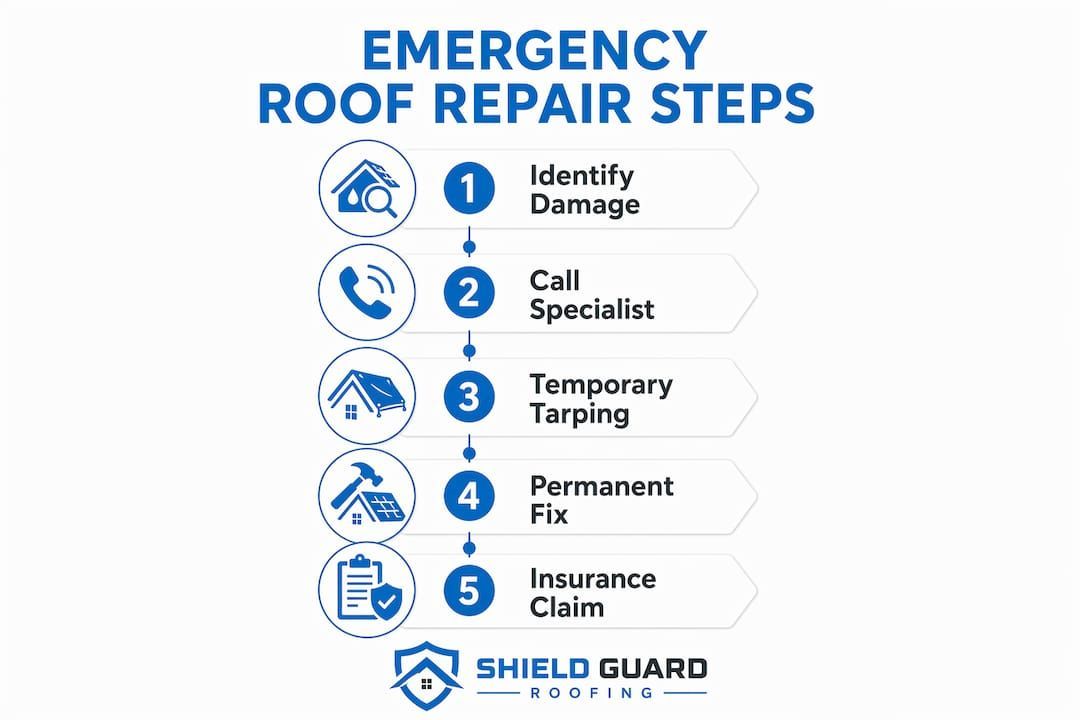
Speed matters. Wet materials need to dry within 24 to 48 hours to prevent mold growth and secondary structural damage. Every hour of delay increases the repair scope and the cost. Here is what to do before professional help arrives:
- Stay safe first. Do not go onto your roof during active rain, high winds, or if you see any structural sagging. A damaged roof can fail under added weight.
- Contain the water inside. Place buckets under active drips. Lay down towels or plastic sheeting to protect flooring and subfloor materials. Move electronics, furniture, and valuables away from the affected area.
- Document everything. Photograph and video the interior damage, the ceiling staining, and any visible exterior damage from the ground. This documentation is your evidence for an insurance claim.
- Turn off electricity in affected rooms if water is near light fixtures, outlets, or your electrical panel. Water and electricity are a serious hazard.
- Call emergency roofing services immediately. Do not wait to see if the leak gets worse. Standard emergency actions include moving valuables, photographing damage, and calling for an emergency inspection as quickly as possible.
Pro Tip: When you call a roofing contractor, describe the damage in specific terms: "I have a 3-foot section of missing shingles on the north slope and water is dripping through my ceiling." Specific descriptions help the crew arrive prepared with the right materials.
Avoid the temptation to climb up and fix it yourself during a storm. Emergency roofing contractors specialize in rapid triage, temporary stabilization, and occupant safety during active roof failures. That expertise is worth the call.
Why Northern California homeowners face unique emergency risks
Northern California's weather is not uniform, and that directly affects how roof emergencies happen and how fast they escalate. The region's storm damage patterns include heavy atmospheric river rains, high-wind events in the foothills and valleys, and post-wildfire debris flows that can overwhelm drainage and deposit material on roofs.
A few regional realities worth knowing:
- Atmospheric river storms deliver intense, sustained rainfall that overwhelms aging flashing, clogged gutters, and worn underlayment faster than a typical light rain would reveal a problem.
- Wind events in the Sacramento Valley and Sierra foothills regularly produce gusts that lift shingles, blow off ridge caps, and send tree limbs onto roofs.
- Post-wildfire conditions leave hillside properties vulnerable to debris flows and ash accumulation that can block drainage and accelerate roof material breakdown.
- Seasonal timing matters for contractor availability. The window between October and March is peak emergency season in NorCal. Booking a pre-season inspection in September can identify vulnerabilities before storms arrive and roofing crews are stretched thin.
Local insurance considerations also apply. California homeowners with older roofs may face coverage limitations or higher deductibles for storm damage claims. Reviewing your policy before an emergency, not during one, puts you in a much stronger position.
Key takeaways
Emergency roof repair is the fastest way to stop water damage from compounding into a far more expensive structural problem.
| Point | Details |
|---|---|
| Define the emergency correctly | Active water intrusion or structural compromise qualifies; cosmetic damage does not. |
| Act within 24 to 48 hours | Delaying mitigation increases mold risk and drives up total repair costs significantly. |
| Use professional tarping | Poorly anchored tarps can worsen damage and complicate insurance claims. |
| Know your cost range | Emergency repairs in NorCal run $200 to $1,500 or more, with after-hours surcharges of 25% to 100%. |
| Document before anything else | Photos and video of original damage are required for insurance claims to be processed accurately. |
What I have learned after years of NorCal roof emergencies
I have seen homeowners do everything right and still end up with a bigger repair bill than necessary, simply because they waited too long to call. The 24 to 48 hour window is not a guideline. It is the line between a $1,200 repair and a $6,000 one. Moisture hidden beneath roofing materials causes damage long before you see a stain on your ceiling, and by the time that stain appears, the decking underneath may already be compromised.
The other mistake I see constantly: homeowners try to tarp their own roofs during a storm. I understand the impulse. You want to protect your home. But a tarp that shifts in 40 mph winds does more damage than no tarp at all, and the fall risk on a wet roof is real. The best thing you can do in the first hour is document, contain, and call.
What separates a good emergency roofing contractor from a bad one is not just speed. It is the quality of the temporary work and the accuracy of the damage assessment. A crew that rushes a tarp job and misses secondary damage points is setting you up for a second emergency. Ask for a written scope of work even in an emergency. Ask what they found beyond the obvious breach. A contractor who gives you a thorough answer is one you can trust with the permanent repair.
For homeowners who want to understand why repairs fail even after emergency work, the pattern is almost always the same: the temporary fix was treated as permanent, or the underlying cause was never addressed.
— Cesar
Shieldguardroofing is ready when your roof is not
When a storm hits Sacramento or the surrounding NorCal region and your roof takes damage, you need a crew that knows the area, knows the weather, and shows up prepared. Shieldguardroofing is a family-owned roofing company with over 75 years of combined experience serving Northern California homeowners with honest assessments and quality workmanship.
From emergency tarping to full storm damage restoration, Shieldguardroofing handles the immediate response and the permanent fix using premium GAF and Brava materials backed by industry-leading warranties. The team works directly with homeowners on residential roof repairs throughout the Sacramento area and surrounding communities. Do not wait for a small leak to become a structural problem. Contact Shieldguardroofing today and get a fast, honest assessment from a team that treats your home like their own.
FAQ
What qualifies as an emergency roof repair?
A roof repair qualifies as an emergency when water is actively entering your home or will enter before a scheduled appointment can be made. Structural damage from fallen trees, missing shingles after a windstorm, and displaced flashing that exposes the underlayment also meet the threshold.
How much does urgent roof repair cost in Northern California?
Professional emergency tarping runs $200 to $1,500 or more, with after-hours and weekend surcharges adding 25% to 100% on top of standard rates. Total emergency repair costs vary widely based on damage severity, roof type, and contractor availability during storm season.
Can I fix a roof leak myself during a storm?
Temporary interior containment, such as placing buckets and moving valuables, is safe and recommended. Climbing onto a wet or storm-damaged roof is dangerous and risks making the damage worse. Call a professional emergency roofing service for any exterior work.
How long does an emergency roof repair take?
Emergency tarping or patching typically takes two to four hours for a professional crew. Permanent repairs are scheduled separately once the immediate threat is stabilized, and timelines depend on damage scope, material availability, and contractor scheduling.
Does homeowners insurance cover emergency roof repairs in California?
Most standard homeowners policies cover sudden storm damage, including emergency tarping and repairs. Coverage depends on your policy terms, the cause of damage, and your deductible. Document all damage thoroughly with photos and video before any work begins to support your claim.
Recommended