What Does a Roofing Contractor License Mean in NorCal
What Does a Roofing Contractor License Mean in NorCal
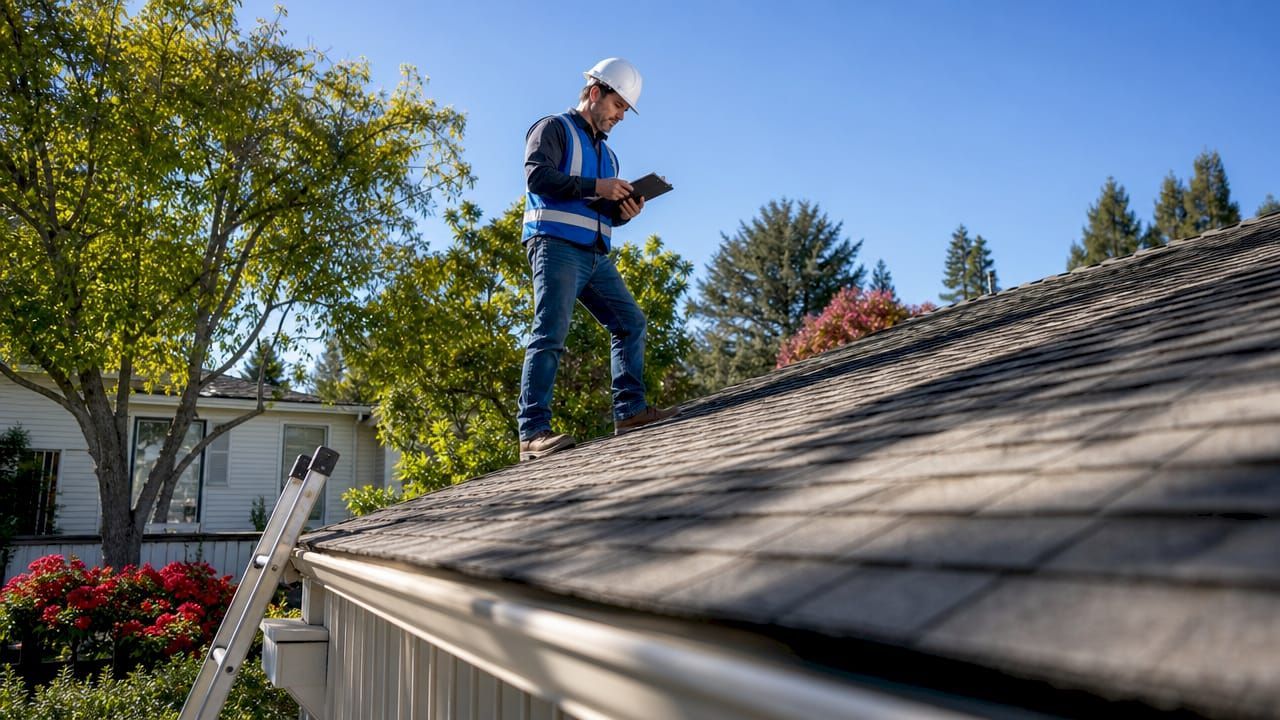
A roofing contractor license is a legal authorization that permits a business or individual to perform roofing work within a jurisdiction, proving verified experience, financial accountability, and compliance with state law. In California, this credential is formally known as the C-39 Roofing Contractor license, issued and regulated by the California Contractors State License Board (CSLB). Understanding what does roofing contractor license mean goes beyond a piece of paper. It tells you whether the person on your roof is qualified, bonded, insured, and legally permitted to be there. For homeowners and business owners across Northern California, that distinction protects your property, your money, and your peace of mind.
What does a roofing contractor license require in California?
The C-39 license is not handed out freely. California sets a high bar because roofing failures are expensive and dangerous. To qualify, a contractor must meet every one of the following requirements before the CSLB will issue a license.
- Four years of experience. Applicants must document four years of journey-level roofing experience within the last 10 years. This means hands-on, skilled work, not just supervision or sales.
- Two licensing exams. Candidates must pass a Law & Business exam covering California contractors law, and a C-39 trade exam covering roofing materials, installation methods, safety, and code compliance. Both must be passed before a license is issued.
- A $25,000 contractor bond. The CSLB requires every licensed contractor to post a $25,000 bond as a condition of licensure. This bond protects consumers if the contractor fails to complete work or breaches contract obligations.
- Workers' compensation insurance. Contractors with employees must carry workers' comp. Solo operators may qualify for an exemption, but they must prove it.
- Background check and application. The CSLB reviews criminal history and verifies all submitted documentation before approving any application.
One detail most people miss: every licensed roofing company must maintain a qualifying officer, a designated individual who holds the actual license credentials on behalf of the business. Losing that qualifying officer can suspend or void the company's license entirely, even if the business has operated for decades.
Pro Tip: Ask any contractor you are considering to name their qualifying officer and confirm that person is still active with the company. A quick CSLB search takes less than two minutes and can save you thousands.

Why is a roofing contractor license important for you?
Licensing is designed to separate legitimate businesses from transient operators who move from job to job without accountability. That separation has real consequences for you as a property owner.
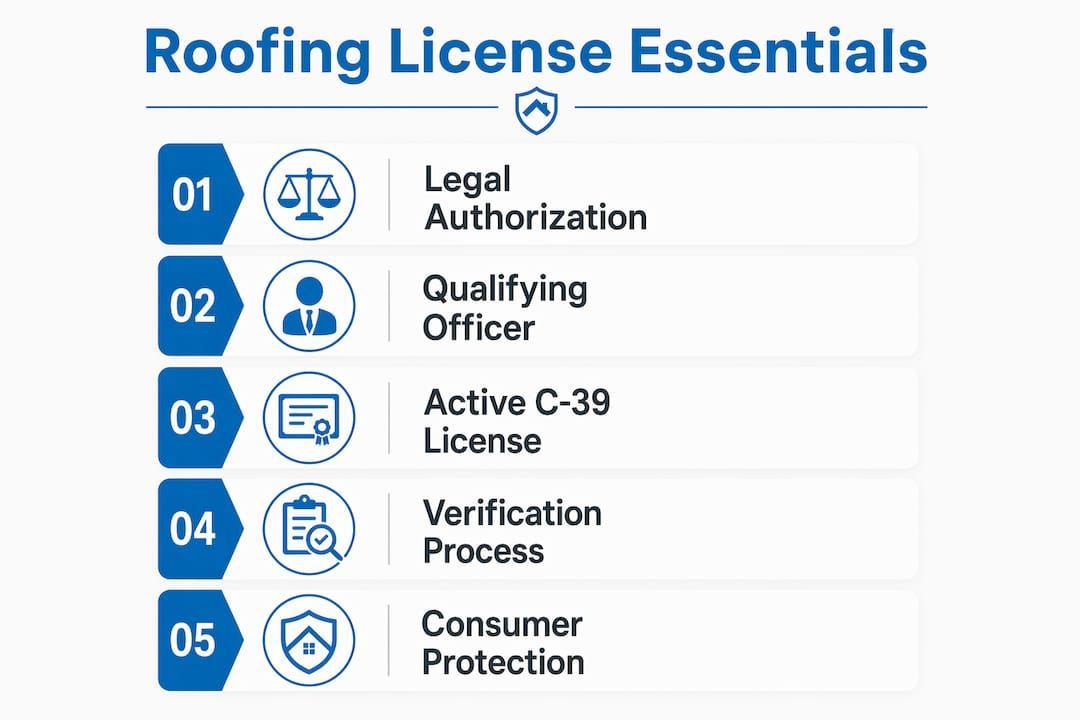
A licensed contractor can legally pull permits, advertise roofing services, obtain commercial insurance, pass inspections, and bid on public projects. Each of those capabilities matters. Without a permit, your roofing work may not pass inspection, which can create problems when you sell your home or file an insurance claim.
The financial protections are equally significant. The $25,000 contractor bond acts as a safety net. If a licensed contractor abandons your project or causes damage, you have a formal financial remedy. Unlicensed contractors carry no such obligation.
"Roofing is a specialty trade requiring distinct licenses separate from general contracting to ensure expertise and code compliance. A general contractor license does not authorize roofing work in California. Only a C-39 license does."
The benefits of licensed roofers extend to warranty coverage as well. Premium roofing products like GAF require installation by certified, licensed contractors to honor manufacturer warranties. If an unlicensed crew installs your roof, your warranty may be void from day one.
- Verified skills through documented experience and trade exams
- Financial protection through bonding and insurance requirements
- Legal permit authority for inspections and code compliance
- Access to manufacturer warranties tied to licensed installation
- Accountability through the CSLB complaint and enforcement system
What are the legal consequences of unlicensed roofing work?
The risks of hiring an unlicensed contractor are not abstract. California law treats unlicensed contracting as a serious offense.
- Criminal charges. Unlicensed contracting is a misdemeanor in California, punishable by fines up to $15,000 and imprisonment up to six months. That penalty applies to the contractor, not the homeowner, but the homeowner still suffers the consequences of bad work.
- Unenforceable contracts. Contracts with unlicensed contractors can be deemed unenforceable under California law. This means you may be able to reclaim money paid, but the legal process is complex and time-consuming.
- No bond protection. Without a $25,000 bond, you have no formal financial recourse if the contractor disappears mid-project or causes structural damage.
- No workers' compensation coverage. If an unlicensed worker is injured on your property, you could face liability claims that your homeowner's insurance may not cover.
- Permit and inspection failures. Work done without a license often cannot be permitted. Unpermitted roofing work creates complications with insurance claims, home sales, and code enforcement.
The $500 threshold matters. California requires a C-39 license for any roofing project valued at $500 or more, including labor and materials. That threshold is low enough to cover nearly every residential repair, not just full replacements.
The financial exposure for homeowners is real. You pay for work that may be structurally unsound, legally unpermitted, and completely unrecoverable if the contractor vanishes. The consumer protection aspects of licensing exist precisely because these situations happen regularly.
How do you verify a roofing contractor's license in Northern California?
Verification takes minutes and costs nothing. The CSLB provides a free online tool where you can check licensing status, bond, and insurance coverage for any California contractor. You need only the contractor's name, license number, or business name to run a search.
Here is what to look for and what to avoid:
- Active license status. The CSLB search will show whether the license is active, expired, suspended, or revoked. Active is the only acceptable status.
- Correct license classification. Confirm the contractor holds a C-39 license specifically. A general contractor's B license does not cover specialty roofing work in California. The C-39 is distinct from general contractor licenses due to different code requirements and scopes of work.
- Bond status. Confirm the $25,000 bond is current. A lapsed bond is a red flag even if the license itself appears active.
- Workers' compensation coverage. Verify the contractor carries workers' comp or has a valid exemption on file with the CSLB.
- No disciplinary actions. The CSLB record will show any complaints, citations, or disciplinary history. A pattern of complaints is a warning sign.
Pro Tip: Always ask for the license number before the first meeting. Any legitimate contractor will provide it immediately. Hesitation or vague answers are a red flag worth taking seriously.
A licensed contractor also protects your roofing maintenance contracts and warranty coverage long after the job is complete. Licensing is not just a hiring filter. It is the foundation of every enforceable agreement you sign.
| Verification step | What to check |
|---|---|
| CSLB license search | Active C-39 status, not expired or suspended |
| Bond confirmation | $25,000 bond current and active |
| Insurance verification | Workers' comp coverage or valid exemption |
| Disciplinary history | No unresolved complaints or citations |
| License classification | C-39 specifically, not a general contractor license |
Key Takeaways
A California C-39 roofing contractor license is the single most reliable indicator that a roofer has the experience, financial accountability, and legal standing to work on your property.
| Point | Details |
|---|---|
| C-39 is California's roofing license | Only a C-39 license authorizes specialty roofing work; a general contractor license does not qualify. |
| Four years of experience required | Applicants must prove journey-level roofing experience within the last 10 years before sitting for exams. |
| $25,000 bond protects you | The bond gives consumers a financial remedy if a contractor fails to complete work or causes damage. |
| Unlicensed work carries serious penalties | Fines up to $15,000 and jail time apply to unlicensed contractors; contracts may also be unenforceable. |
| CSLB verification is free and fast | Use the CSLB website to confirm active license, bond status, and insurance before signing any contract. |
Licensing is the floor, not the ceiling
After years in the roofing industry across Northern California, I have seen the same pattern repeat itself. A homeowner or property manager hires someone based on a low bid and a confident handshake. The work gets done, problems appear six months later, and the contractor is nowhere to be found. No license. No bond. No recourse.
Licensing does not guarantee perfect work. What it does guarantee is accountability. A licensed contractor has passed exams, posted a bond, and registered with the state. They have something to lose. That changes how they operate.
The qualifying officer requirement is one detail I think more clients should know about. A company can hold a license, but if the person who passed the exams leaves, that license is at risk. I always recommend asking who the qualifying officer is and confirming they are still with the company. It takes 30 seconds and tells you a lot about how seriously a contractor takes compliance.
For NorCal property owners specifically, the stakes are higher than in many other states. California's seismic activity, fire risk zones, and strict building codes mean that roofing work must meet elevated standards. A licensed contractor understands those standards. An unlicensed one may not even know they exist.
Use licensing as your baseline, not your only filter. Check the CSLB record, ask about the qualifying officer, and confirm the bond is current. Then ask about experience with your specific roof type and local conditions. That combination will get you to the right contractor far more reliably than price alone.
— Cesar
Shieldguardroofing: licensed, bonded, and ready to protect your roof
Shieldguardroofing holds a California C-39 Roofing Contractor license and maintains the bonding and insurance required by the CSLB. The team brings over 75 years of combined roofing experience to every project across Northern California, from Sacramento to the surrounding region.
Whether you need a full residential roofing replacement or a commercial roofing inspection, Shieldguardroofing operates with full legal compliance and uses premium materials from GAF, GAF Energy, and Brava Roofing. Every project is backed by manufacturer warranties that require licensed installation. You get the protection of a properly licensed contractor and the confidence of a family-owned business that stands behind its work. Contact Shieldguardroofing today to verify credentials and schedule your project assessment.
FAQ
What does a roofing contractor license mean legally?
A roofing contractor license is a state-issued authorization confirming that a contractor has met experience, exam, bonding, and insurance requirements. In California, the C-39 license is required for any roofing project valued at $500 or more.
What is the difference between a C-39 and a general contractor license?
A C-39 is a specialty roofing license distinct from a general contractor's B license. California law does not permit general contractors to perform specialty roofing work under their general license alone.
How do I verify a roofing contractor's license in California?
Use the free CSLB online search tool to confirm active license status, bond, insurance, and any disciplinary history. You need only the contractor's name or license number to run the search.
What happens if I hire an unlicensed roofer in California?
Contracts with unlicensed contractors can be unenforceable, leaving you with limited legal recourse. You also lose the protection of the contractor's bond and workers' compensation coverage, increasing your financial and liability exposure.
How long does it take to get a roofing contractor license in California?
The process requires documenting four years of journey-level experience, passing two exams, and completing the CSLB application. Total timeline varies based on exam scheduling and application processing, but most applicants complete the process within several months of meeting the experience requirement.
Recommended