Phased Roof Replacement: What NorCal Property Owners Must Know
Phased Roof Replacement: What NorCal Property Owners Must Know
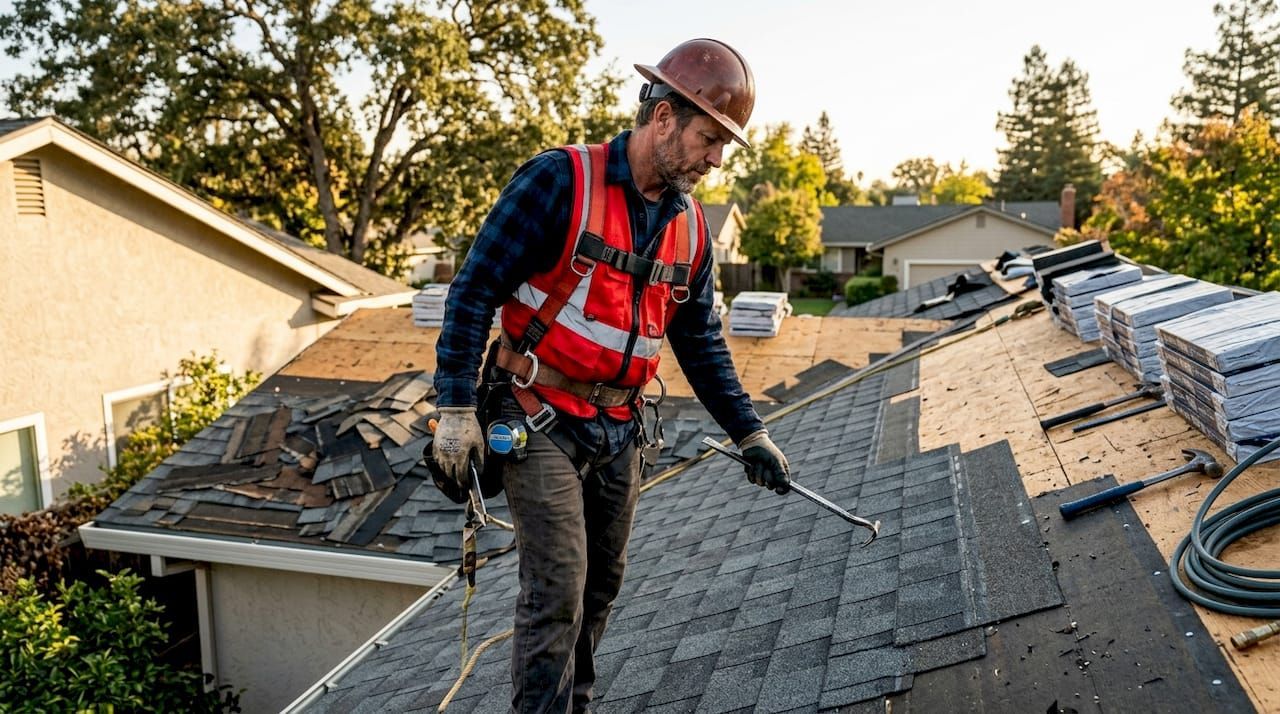
A phased roof replacement is a fully engineered strategy where a roof is replaced in distinct sections over multiple construction cycles, rather than all at once. Property owners and managers in Northern California use this approach to spread large capital costs across budget cycles while keeping buildings fully operational during construction. The industry term for this method is "Phased In-Place Reroofing," and it applies to both residential and commercial properties. Understanding what is a phased roof replacement, how it works, and when it makes sense can save you from costly mistakes and budget surprises.
What is a phased roof replacement and how does it work?
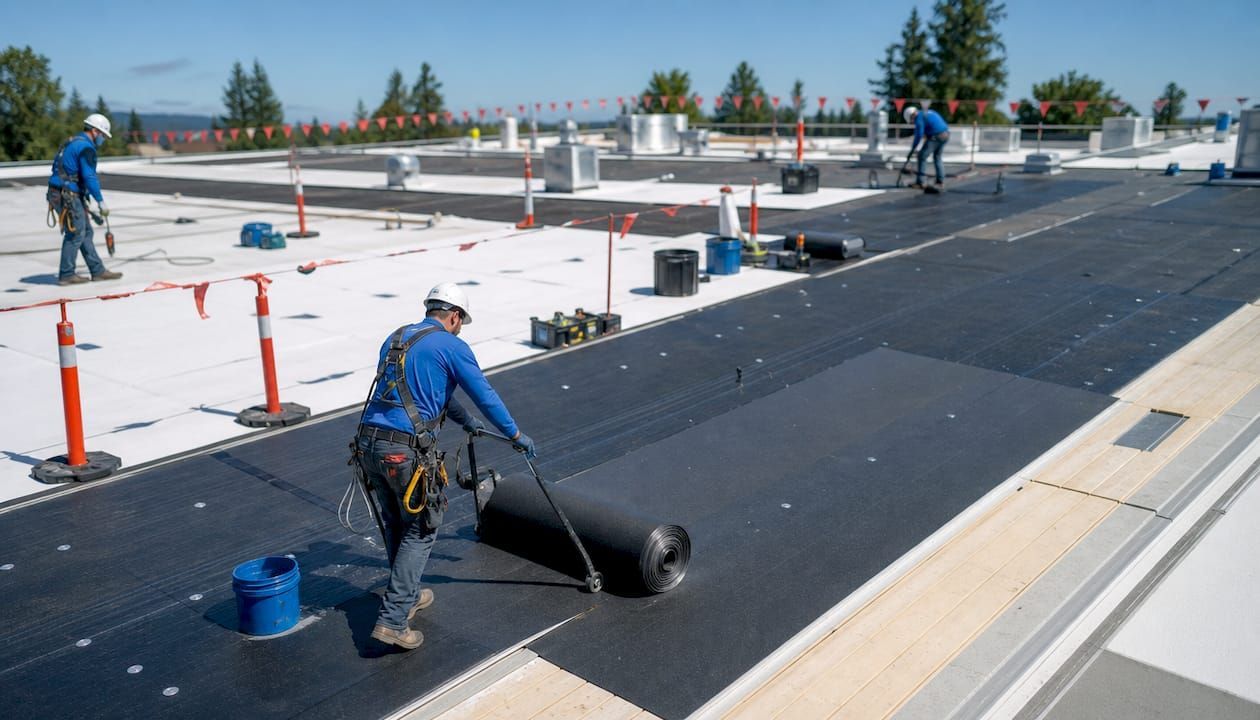
Phased In-Place Reroofing divides a roof into distinct zones of 10,000–40,000 square feet, replacing each zone sequentially while the rest of the building stays protected and in use. Zone size depends on roof area, building occupancy, and the available work window each phase allows. Each zone is treated as a complete, self-contained replacement, not a patch job.
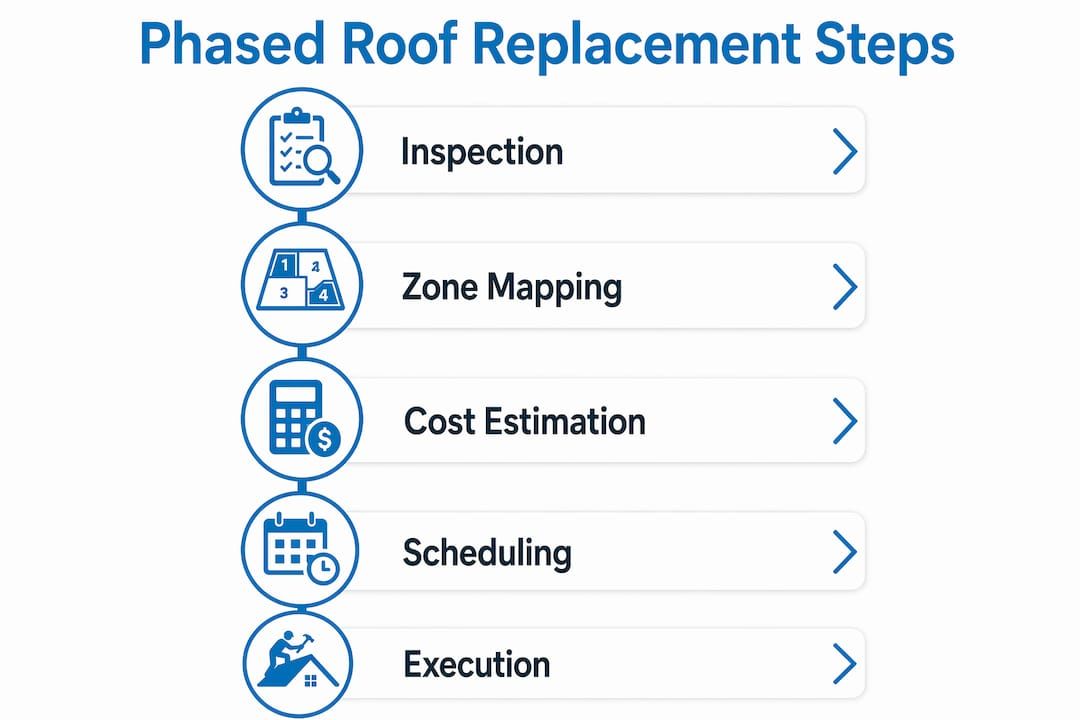
The process follows a clear sequence:
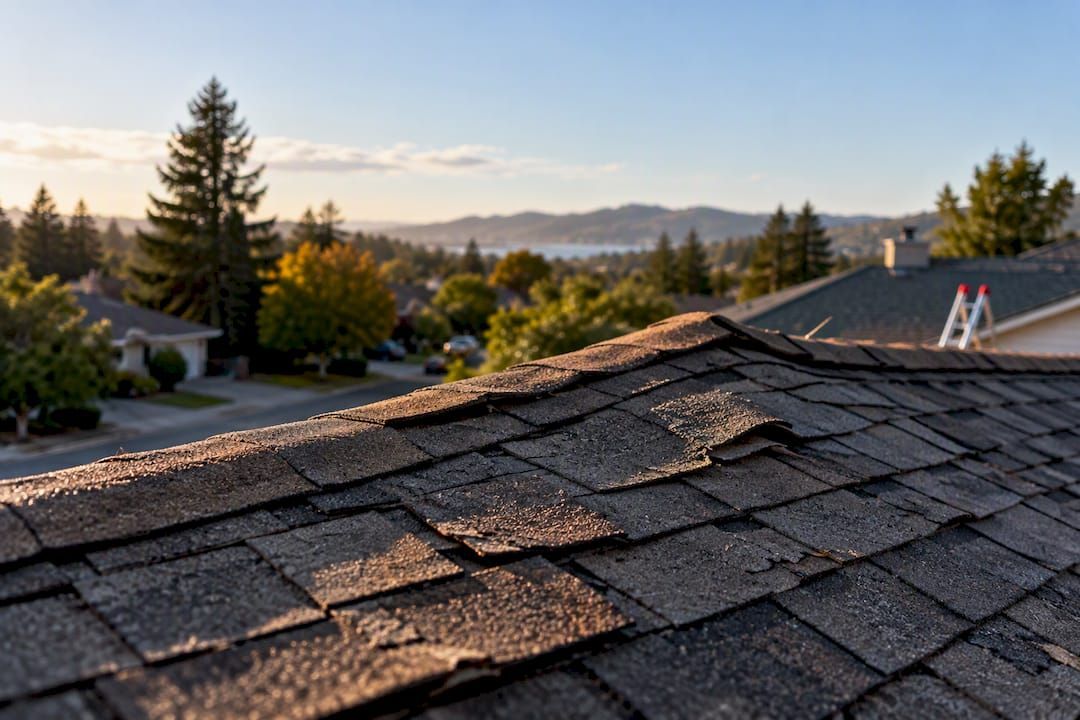
- Roof inspection and condition assessment. A qualified contractor surveys the entire roof, maps existing damage, and identifies which zones need replacement first. Hidden moisture or decking damage often only becomes visible after partial tear-off, so this step sets the foundation for every decision that follows.
- Zone planning and scheduling. The roof is divided into logical sections based on condition severity, building use, and tenant activity. The most vulnerable areas get addressed first to protect building integrity.
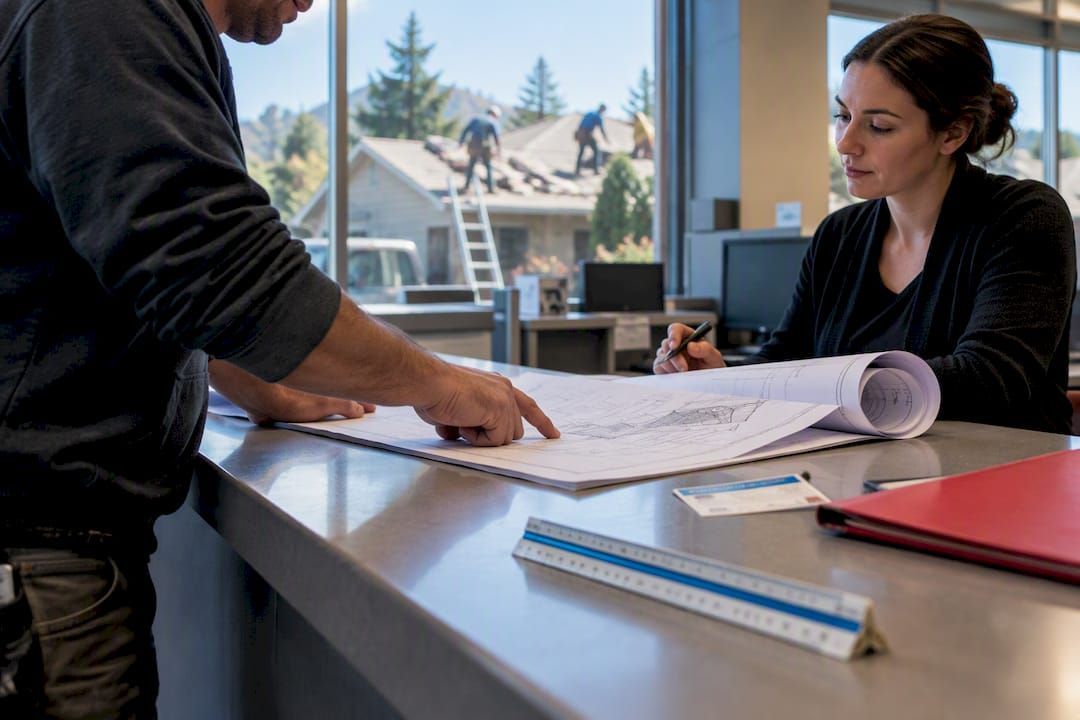
- Pre-install administrative phase. This step surprises many property owners. Pre-install paperwork, architect submittals, and manufacturer approvals typically span 4–8 weeks. Skipping or rushing this phase is the leading cause of warranty failures and project defects.
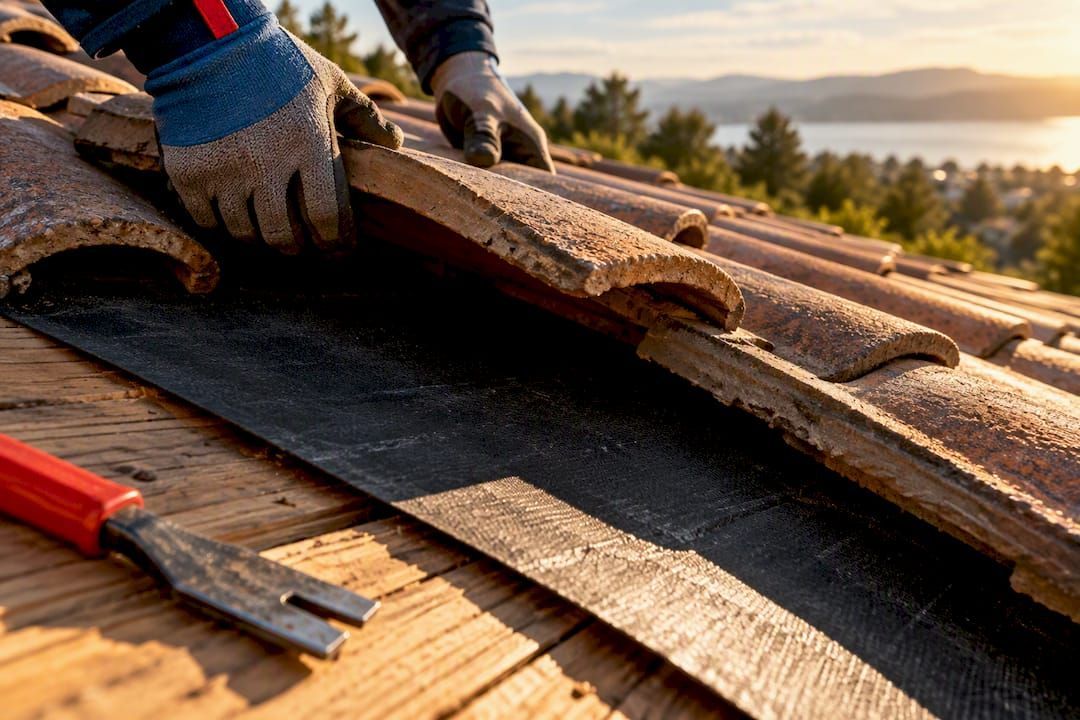
- Phase-by-phase construction. Each zone is torn off, the substrate is inspected, and new roofing material is installed. Temporary weatherproofing protects the transition boundary between the completed zone and the next section awaiting replacement.
- Phase transition and membrane integration. At each zone boundary, the new membrane bonds to the existing or next-phase material. This step is technically demanding and must be executed correctly to prevent water intrusion.
- Final inspection and warranty documentation. After all phases are complete, a full submittal package confirms manufacturer compliance and activates the warranty.
Each residential phase typically requires 1–2 days of on-site work. Commercial projects may extend total timelines by 40–75 working days, but the building stays open throughout.
Pro Tip: Schedule each phase during Northern California's dry season, typically april through october, to reduce the risk of rain exposure at open transition boundaries.
What are the advantages of phased roof replacement for property owners?
The financial case for a staged approach is straightforward. Spreading replacement over 3–4 years lets you replace 25–30% of your roof annually, turning one large capital expense into a series of manageable budget line items. That matters a great deal for property managers working with annual maintenance budgets rather than large reserve funds.
The operational benefits are equally significant:
- No building shutdown. Tenants, equipment, and daily operations continue uninterrupted while each zone is replaced.
- Priority sequencing. Addressing the most vulnerable areas first protects the building from active leaks and structural damage while the rest of the project is funded and scheduled.
- Shorter on-site disruption windows. Each phase lasts days, not weeks, limiting noise, debris, and contractor traffic at any one time.
- Weather flexibility. You can schedule phases around Northern California's seasonal patterns, avoiding the wet months that create risk at open seams.
- Proactive damage control. Replacing worn zones before they fail prevents water intrusion that damages insulation, decking, and interior finishes, all of which cost far more to repair than the roofing itself.
For mission-critical facilities, the math is even clearer. Shutdown losses can range from $50,000 to $500,000 or more per day, making the cost of a phased approach a fraction of the risk of a full building closure.
What are common misconceptions about phased roof replacement?
The biggest misconception is that phased replacement is just a series of repairs. It is not. A repair patches a specific defect. A phased replacement removes and replaces entire roof sections to a new standard, using new materials, new membranes, and full manufacturer specifications. The distinction matters for warranties, building codes, and long-term performance.
Phased roofing is a fully engineered replacement strategy requiring high-level planning and weatherproofing. Property owners who treat it as a repair shortcut end up with mismatched materials, voided warranties, and phase boundaries that leak within a season.
A second misconception is that the lowest bid is the best deal. Phased projects carry a 15–35% cost premium over a single full replacement. That premium covers multiple contractor mobilizations, temporary weatherproofing at each phase boundary, and off-hour labor to avoid disrupting tenants. A contractor who bids below that range is almost certainly cutting corners on weatherproofing or skipping the administrative pre-install phase entirely.
Pro Tip: Ask every contractor bidding on a phased project to show you their phase-transition detail drawings. If they cannot produce them, they have not done this type of work before.
A third misunderstanding involves timing. Property owners sometimes assume they can pause between phases indefinitely. Phase boundaries with temporary weatherproofing are designed for a specific window, not open-ended delays. Letting a transition boundary sit unprotected through a wet Northern California winter invites exactly the water damage you are trying to prevent.
How to plan a phased roof replacement project in Northern California
Effective planning separates a successful phased project from an expensive failure. Start with a thorough roof inspection that documents every zone's condition, drainage performance, and decking integrity. You cannot build a logical phase sequence without knowing which areas are deteriorating fastest.
Use the inspection results to develop your zone map. Logical zone divisions follow natural roof breaks, drainage boundaries, and building use patterns. A warehouse section with heavy equipment overhead gets different priority than an office wing with finished ceilings below.
Budget planning across multiple years requires a clear cost-per-phase estimate before you commit. Work with your contractor to lock in material pricing for all phases upfront where possible, since roofing material costs fluctuate. GAF and Brava Roofing products, both offered by Shieldguardroofing, carry manufacturer warranties that require specific installation standards across all phases, so consistency in materials matters from phase one through the last.
| Planning element | What to confirm before starting |
|---|---|
| Roof inspection | Full condition map with zone-by-zone damage ratings |
| Zone sequencing | Priority order based on damage severity and building use |
| Pre-install approvals | Architect submittals and manufacturer sign-off in hand |
| Multi-year budget | Per-phase cost estimates with material pricing locked |
| Contractor qualification | Documented experience with phased projects and transition details |
| Warranty compliance | Confirmation that all phases meet GAF or manufacturer specs |
Selecting the right contractor is the single most important decision you make. Look for documented experience with commercial roof replacement projects specifically involving phased sequencing. Ask for references from similar projects and verify that the contractor has completed the pre-install administrative process, including formal pre-job conferences with the manufacturer.
Key questions to ask any contractor before signing:
- Can you provide phase-transition membrane detail drawings?
- Have you completed the manufacturer's pre-install submittal process before?
- How do you handle hidden decking damage discovered mid-phase?
- What temporary weatherproofing do you use at phase boundaries?
Shieldguardroofing brings over 75 combined years of roofing experience to projects across Northern California, with direct access to GAF's warranty programs and the technical knowledge to manage phased projects from the pre-install conference through final inspection.
Key Takeaways
A phased roof replacement is the most practical way for Northern California property owners to replace a deteriorating roof without shutting down operations or exhausting a single year's budget.
| Point | Details |
|---|---|
| Definition and scope | Phased In-Place Reroofing replaces a roof in sequential zones, not all at once. |
| Cost management | Spreading replacement over 3–4 years converts a large capital expense into annual budget items. |
| Cost premium is real | Phased projects cost 15–35% more than full replacement due to mobilizations and weatherproofing. |
| Pre-install phase is critical | Skipping architect submittals and manufacturer approvals is the leading cause of project failures. |
| Phase transitions require expertise | Membrane bonding at zone boundaries is the most technically demanding step and the most common failure point. |
What I have learned after years of phased roofing projects
A perspective from Cesar
Property owners often focus on the per-phase cost and miss the bigger risk sitting right at the zone boundary. I have seen projects where the construction work was excellent but the transition detail between phase one and phase two was rushed. One wet season later, the owner had interior water damage that cost more to fix than the savings from the cheaper bid.
The pre-install administrative phase is where most phased projects either succeed or fail before a single shingle is removed. Getting the manufacturer's formal approval, completing the architect submittal, and holding a proper pre-job conference takes time. Owners who push contractors to skip that step to start faster almost always regret it when a warranty claim gets denied.
For Northern California specifically, I recommend planning phase transitions to close before november. Our rainy season is unforgiving to open roof boundaries. A phase that finishes in october with a properly sealed transition can wait safely until spring. A phase that finishes in december with a rushed boundary is a liability.
The cost premium for phased work is real, and it is worth paying. The alternative, a full replacement that shuts down a commercial building for weeks, or a deferred replacement that lets leaks destroy decking and insulation, costs far more in the end. Think of phased replacement the way you think about regular oil changes on a vehicle. Staying ahead of the problem is always cheaper than fixing the damage after the fact.
— Cesar
Shieldguardroofing's approach to phased roofing in Northern California
Replacing a roof in phases takes more than good materials. It takes a contractor who has managed the full process, from pre-install approvals through final warranty documentation, on projects just like yours.
Shieldguardroofing is a family-owned company with over 75 combined years of experience serving property owners and managers across Northern California. The team handles residential roofing and commercial roofing projects with access to GAF and Brava Roofing products and the manufacturer relationships needed to keep your warranty intact across every phase. If you are ready to build a phased replacement plan that fits your budget and keeps your building running, contact Shieldguardroofing for a full roof inspection and phase-by-phase project estimate.
FAQ
What is the difference between phased roof replacement and a repair?
A repair patches a specific defect in the existing roof. A phased replacement removes and installs entirely new roofing material in a defined zone, meeting full manufacturer specifications and warranty requirements.
How long does a phased roof replacement take?
Each residential phase typically takes 1–2 days on site. Full commercial phased projects may span 40–75 working days total, spread across multiple years, while the building stays operational throughout.
Does phased roof replacement cost more than a full replacement?
Yes. Phased projects carry a 15–35% cost premium over a single full replacement, reflecting multiple mobilizations, temporary weatherproofing, and off-hour labor requirements.
Can I pause between phases for as long as I want?
No. Temporary weatherproofing at phase boundaries is designed for a limited window. Leaving a transition boundary unprotected through a wet season creates the water intrusion risk you are trying to prevent.
How do I know which zone to replace first?
A qualified contractor performs a full roof condition assessment and maps damage severity across all zones. The most deteriorated and leak-prone areas get priority to protect the building while the rest of the project is funded and scheduled.
Recommended